Dr. Alan Rozanski [00:00:00]:
Your social life, the connections you have, ultimately will be very important. They feed our biology. They make us feel secure, safe, happy, and so forth. But it's so easy to sublimate that in midlife and just let many relationships wither. So, you reach old age and you didn't have the friendships you could have had just because you weren't paying attention.
Mike Capuzzi [00:00:21]:
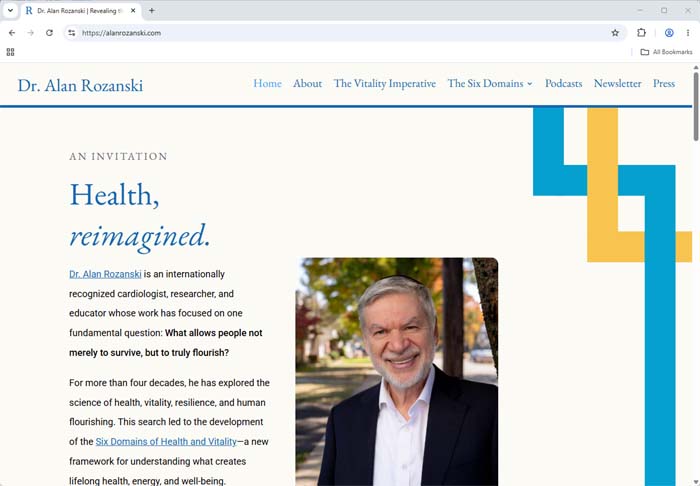
This is Unstoppable After 50, the podcast for men who refuse to slow down. Each week, I share smart strategies and expert insights to help you stay strong, healthy, and unstoppable. Welcome back to Unstoppable After 50. This week, my guest is Dr. Alan Rozanski, a cardiologist and professor of medicine at the Icahn School of Medicine at Mount Sinai, and also the director of nuclear cardiology at Mount Sinai Morningside. I was looking forward to meeting Dr. Rozanski because of his profound work at helping men and women lead longer, stronger lives. Well, thank you for having me.
Mike Capuzzi [00:00:59]:
Stay tuned for a very interesting conversation with Dr. Rozanski. Dr. Rozanski, welcome to the show.
Dr. Alan Rozanski [00:01:06]:
Thank you. It's a pleasure to be here with you.
Mike Capuzzi [00:01:09]:
Well, I appreciate this. You bring literally decades of experience today. As I was preparing for this interview, Dr. Rozanski, I thought we could literally talk for hours. I know you don't have that. And there's so many different topics we could talk about. But the one we're going to talk about today and focus on is something that I'm hearing and reading more and more about. I've not a guest on yet to talk about this, and I'm really looking forward to this.
Mike Capuzzi [00:01:35]:
But before we do, I'd like you to describe your 6 domains of health and vitality, because I love the framework that you have created. So at a very high level, Doctor, could you describe each of them?
Dr. Alan Rozanski [00:01:49]:
Sure. Well, I would introduce that, that this is all evidence-based, and I didn't arrive at this overnight. This was decades of understanding and my own work and the work of many others and just following what was going on. But early on, I became very interested in my medical career as to really defining what is health. I knew what disease was, but I thought we were very vague about health. And I came to this realization that we can be extremely objective about this. Those things which would promote longevity, which protect your biology, which decrease your risk for disease, those are healthy things. No one's going to argue with that.
Dr. Alan Rozanski [00:02:24]:
And those things which shorten longevity and cause disease, like smoking, is the opposite. So I followed the ball slowly over time in the physical domain. Outside of smoking, the key things is, you know, exercise, resistance training, which people don't talk enough about. Obviously, the quality of your diet and your sleep. Those are the key 4 pillars, I say, of physical health. But that's only one domain of health. If you look in the let's say cognitive area, in terms of our mental health, in terms of our mental vitality. We know, for example, that people who are optimistic actually live longer, they have less heart disease, and they certainly have a better quality of life.
Dr. Alan Rozanski [00:03:06]:
Pessimism is the opposite. People who live with a sense of gratitude in a deep sense, actually the data show that they live longer as well. So that's a legitimate health domain. Then the third domain is The domain of emotional life. So we've known since the 1980s that people who are depressed, actually it's a major risk factor for heart disease. Literally the body goes haywire when people are chronically depressed and it's not treated. And you have the whole physiology. I could go through the whole thing in terms of what falls apart in the body.
Dr. Alan Rozanski [00:03:40]:
But on the opposite end, people are happy, they have actually better health and also live longer. So that's your third domain. The fourth domain that you'd like to discuss today in terms of the social domain, very profound. We've known since the late 1970s that the larger your social network, the better the quality of your social life, the better your health. And loneliness is the opposite. People who are lonely actually have worse health as well. The fifth domain, one very much overlooked, and maybe a Johnny-come-lately because it's only been studied over the last 15 years in a medical sense, in the medical sense, is our sense of purpose. People who have a strong sense of purpose, who are called to it, actually are more vibrant and live longer as well.
Dr. Alan Rozanski [00:04:22]:
And then the 6th domain is in the area of stress. And here people get a little confused. You hear stress, you hear it's bad, bad. It's not like that. It turns out that there is something called toxic stress, stress which is ongoing that you can't control, that has a lot of negative emotional overlay, that doesn't have a sense of purpose with it. That's bad stress and can affect your health. But when you're thriving in goals and you're pursuing goals and you're succeeding and you have the stress of it, the pursuit of that stress of those goals and the stress you have, that's building your self-esteem, confidence. And people thrive actually with a moderate amount of stress as opposed to toxic stress or the lack of stress.
Dr. Alan Rozanski [00:05:03]:
So those are your 6 domains of health, all evidence-based.
Mike Capuzzi [00:05:06]:
And again, very robust, very comprehensive. Again, any one of these could be a really nice in-depth conversation. Just before where we focus on social connection, that, that one on stress, it's something I talk a lot about with, with my sort of my inner circle of friends and family members, because you're right. So many people automatically default like, oh, we gotta avoid stress. There was a great book written. I cannot remember the title off. It was just a couple years ago about how we've gotten so comfortable in our lives that the lack of stress, physical stress, for example, really has a detrimental effect. So, uh, yeah, like I said, any of these domains is very, um, very important for longevity.
Mike Capuzzi [00:05:47]:
I encourage my audience to, you know, you're going to share your website here in a little bit. Check them out. I was going through your articles. Great, great information.
Dr. Alan Rozanski [00:05:56]:
Thank you.
Mike Capuzzi [00:05:56]:
So, Doctor, we're going to focus on one of the ones you call this like overlooked vital sign, which is social connection. And it's something that you said now it's been, I think you said since the '70s, but As a guy that's pretty focused on health and wellness, I have not heard a lot about this. And I'm sure a lot of guys don't really think about their social connection being that important, especially when it comes to long-term health. Why do you, why do you think that is? First of all, why do you think this is one of these things like, what?
Dr. Alan Rozanski [00:06:30]:
Well, because if it's in the medical domain, you know, we have a tendency to look at health in terms of, you know, physical factors. There's a general tendency. And then there's another tendency to just watch out for things that might go wrong in terms of your blood pressure, your cholesterol, your, you know, and then if you go to health habits, focus on sleep and exercise. So there's no medical agenda. It's not built into, let's say, the work of an intern or resident or anything you're gonna train in medical school practically. There will be, There'll be some things mentioned because I think we are— we're moving in a direction to understand the importance of social connection more. I wanna emphasize that. But it still isn't out in the general world in the same way.
Dr. Alan Rozanski [00:07:23]:
Like there's movements, exercise is medicine, food is medicine. There's these— these are powerful movements now because there's a movement toward, you know, better health. And there's a movement toward, let's not just talk about longevity, but let's talk about healthspan and things like that. But the social part there doesn't have a big advocacy out there, I think, number one. And then number two, it's interesting because in the social domain, the expression of people's social needs are so varied. It's not like you can say, look, for exercise, you know, go do moderate brisk walking 3 times or 5 times a week, right? Do resistance training twice a week. There's not a prescription. In terms of your social life, you know.
Dr. Alan Rozanski [00:08:11]:
So that's, uh, I think there should be, but, uh, you know, uh, I think those are some of the reasons.
Mike Capuzzi [00:08:18]:
Quick pause. If you're not getting my Unstoppable After 50 Playbook, you're missing out. Every week I send a one-page playbook with my key interview takeaways and simple actions to help you stay strong and in control. Get it free each week at unstoppableafter50.com. Now back to the show. Yeah. And I think, and I'm sure you probably agree to a certain level. I mean, you know, again, we're focusing on guys.
Mike Capuzzi [00:08:42]:
I think it's guys' sort of nature, you know, I mean, yeah, you can have buddies and all that, but it's just not, we don't have that emotional connection that women tend to exhibit with relationships. And guys can be a little more standoffish. You know, I know I am like, I'm an, I'm by default an introvert. I'm happy just being alone. I have friends, but my default mode is just, you know, doing my own thing. And I love quiet time. What's so interesting about your work and what you have focused on for all these years as a cardiologist, as a researcher, is that you've studied this. So what does the science tell us about, you know, social isolation and how it affects the heart and the cardiovascular system?
Dr. Alan Rozanski [00:09:28]:
It's a great question. So first of all, our need to be connected to other people is what has been called by theorists, but all across the board consistently, a basic psychological need. So what do we mean by that? A need, just like we have physical needs to eat, to sleep, etc., we have basic psychological needs of which the 2 most profound are our need for meaning and purpose and our need to be connected to other people. When we meet this need, we enjoy a sense of vitality. It's very interesting to take that— very easy to take that sense of vitality, certainly in early life, midlife, for granted. But you derive a sense of vitality. And when you don't meet that need, it's not like the physical— it's not physically apparent. You feel maybe a sense of tension.
Dr. Alan Rozanski [00:10:25]:
You feel a sense of fatigue, maybe. You feel things aren't right. Maybe you're going to the fridge a lot for more food. So what happens is you can misplace this need very easily. But when people feel lonely, first, there's— you haven't met that need, and there's just this general feeling that, gee, you know, things aren't right. But then it can be an overlay in depending on the level of loneliness in terms of almost feeling a stress response, feeling I don't have friends in life, I don't have— you lose confidence. So there's an emotional cascade that can occur in terms of being down, maybe not depressed per se, but you feel down. Okay, so then what happens is that this has both a physiological expression depending on the severity.
Dr. Alan Rozanski [00:11:16]:
You can see actually elevations in stress hormones. You can see changes in glucose metabolism. You can see evidence of inflammation. Now, none of these things are as profound, let's say, as with having diabetes per se. But it is— the data shows that people who have— who are lonely, about 40% increased risk in significant illness and impact on longevity. So that's substantial, number one. The other area where this is very operative is that when people are lonely, when people aren't socially feeling socially connected, we lose out on our basic health habits. People are less likely to exercise, do resistance training, their sleep may be impacted, their diet tends to go south.
Dr. Alan Rozanski [00:12:09]:
If you look at this empirically, if you look at all the domains I just mentioned, when people, not just when they're lonely, but when they're depressed, when they're pessimistic, when they're very anxious, when they're highly stressed, the data show, and we know from personal experience, that people are less likely to pursue their health habits. They become more Constricted in terms of their confidence, in terms of their thinking, and their health habits go south. And that's a big aspect of how that affects our health.
Mike Capuzzi [00:12:38]:
Yeah, it's a slippery slope for sure. And, Doctor, just before we go any further, let's, let's just define, like, when you say social connection, or, you know, what are we referring to? I mean, is it, you know, my wife and I, are we socially connected, or do I have to have 20 friends to be socially connected? How do you define that?
Dr. Alan Rozanski [00:12:58]:
Important question. The social needs that people have, very remarkably, you have the extroverts who must be around people. You have introverts who maybe one friend does it.
Mike Capuzzi [00:13:14]:
My dog.
Dr. Alan Rozanski [00:13:16]:
Your dog. Pets can make a big difference for people. But so it's extremely varied. And then the quality of relationships also vary, you know, but ultimately what people do need is a sense of there's someone there for me, there's someone I can be there for. There is a basic need to feel my life makes a difference. You want to be connected to other people. You want to, on some level, give generally. I mean, we can distort these needs, you know, and people do.
Dr. Alan Rozanski [00:13:53]:
And so it can get misplaced. But, you know, there's no litmus for this except how you feel internally. It's how do I feel like, you know, I'm connected? Am I feeling lonely? Am I not feeling lonely? You know, we can't measure it like we measure blood pressure. It's an internal subjective feeling.
Mike Capuzzi [00:14:13]:
Well, I think that That concept that you just shared where, you know, do I feel like someone needs me or I need some? You know, that that sort of crystallizes it for me, right? And again, I don't think you know my target audience. I'm hoping you know this is not an issue, but it's very common for men and women as they age. And you know, unfortunately, if their spouse or partner passes away, it's very easily very. easy to become isolated and really retract from the world. It's something to be aware of. And now that, you know, there's professionals like yourself that can really overlay the data and the true scientific effects of this on our bodies and our health, it's, you know, that much more important. Doctor, what are some warning signs that a man's social disconnection may actually be starting to affect his health? Like, how, how, you know, you mentioned some of them, but is there anything that you've seen where the social disconnect is really manifesting itself a certain way?
Dr. Alan Rozanski [00:15:19]:
So what happens is that, and why this is a bit of a slippery issue, is that we can in fact totally sublimate our need to be socially connected to other people. We can sublimate that. We have, as I mentioned, the other basic need to be, have a sense of purpose, a sense of meaning. a sense that we're growing, you know, a sense of to make contribution. So you can sublimate your need to be socially connected to other people. And what happens, I think, in midlife, we're talking about men 50 and over. Well, you're at that stage in life where you're— you've been building your career and you're building it further. You've got maybe teenage kids.
Dr. Alan Rozanski [00:15:59]:
You're maybe wanting, you know, you got to— today's world is really fast-paced. Maybe beginning to think about what's my life all about? You know, maybe you're revisiting all of that. And you can get so absorbed in all of those kind of pursuits, and they can be so meaningful, and they can feed your sense of vitality, and you can ignore your sense, your desire to be connected with other people. You can just let things atrophy naturally. But what happens is that, and then the other part of that is that in midlife, we also have, if we're working in offices, we're having social connections that often become our most important feeder of being socially connected outside of, you know, our immediate family, right? And then as you get older and your job, maybe you're retiring, maybe you've downsized in your work, maybe you've lost some family members, things like that. That's when our social needs, having that reservoir, those things that, you know, I wrote a blog on, don't let the bookshelf become bare. You know, in terms of your social relationships, that's when it begins to manifest. You just— it hits you.
Dr. Alan Rozanski [00:17:10]:
You feel, wow, you know, I don't feel connected enough to people, you know. So it often hits people when they— in older age, I think, very often. But it can— but look, let's face it, you can be lonely at any age. You can be lonely as a teenager. I think it's a big issue with many college kids. So it's at any age. But there's a built-in need, I think, when you get older that, you know, you're wanting to be connected to people. And I think a mistake we make is letting friendships just naturally ebb away.
Mike Capuzzi [00:17:44]:
Yeah. Amen to that. No kidding. And it's really crazy. I speak from my own experience. Like, it's really nuts.
Dr. Alan Rozanski [00:17:55]:
Me too. I mean, I I trained in— I went to college, so I had new friends. Then I went to medical school. Then I had internship residency. Then I went across country for 10 years. I lived in Los Angeles. Each time I was making new friends and letting, you know, good friendships kind of just atrophy. And the thing about that is, you know, you probably say now, if you went into a friend of yours from high school that you haven't seen in 30 years, you would quickly be able to pick up a pretty intimate conversation, right? You would, right?
Mike Capuzzi [00:18:33]:
Yeah, for sure.
Dr. Alan Rozanski [00:18:34]:
For sure. Because there was those relationships that were built as we were growing and we were like intimate with each other and we shared, you know, our pathways to growth. So it's hard to reproduce that, although you can definitely develop new friendships as you get older. But there's something special about those early relationships, and I let those atrophy in my life. I didn't— I wish I hadn't, but I did. Yeah.
Mike Capuzzi [00:18:59]:
Well, you know, I think it comes down to— because I just had another guest. We didn't focus on this topic, but it was a gentleman I knew him in a business context. We were friends and we hadn't talked in years, you know, probably 7 or 8 years. And he reached out to me. He had me on his podcast. I had him on my podcast. And all of a sudden now we have it. We're working on a project together, right? And this all happened very quickly and very organically.
Mike Capuzzi [00:19:23]:
And he shared that it's all about intentionality, right? Just like I just got done working out before you and I talked today. Uh, I didn't necessarily feel like doing it before, but I'm like, you know what? I got to get it done. I want to get it done, you know, showered and all that. So I could be ready for you. I was intentional, but I think a lot of guys are not intentional when it comes to keeping those relationships. Maintaining those relationships. And I think if, if we can, just like trying to eat better, trying to exercise, trying to do more resistance training, being intentional about those, why can't we be intentional about our social connections?
Dr. Alan Rozanski [00:19:59]:
The reason is, by the way, that's a great point that your friend made. The reason is that it isn't any one specific thing, is that we have a life where we have so much on our plates. That is modern life. You know, every generation has its different issues and challenges. But today's world is a world where it has so many blessings. I mean, in terms of now social media, artificial intelligence, all these new things, all these new ways to be connected to other people. We got to grow in our jobs. We have to keep up with new skills.
Dr. Alan Rozanski [00:20:39]:
Raising kids might be a little bit more complicated today, I would say. So what happens is you have to be a juggler. That is the first thing one has to come to realize in life, in modern life. You know, 100 years, 200 years ago, it was probably true anyway. But I mean, I think that is very characteristic of our lives today. So, you know, it's— you have to make compromises. I can't do everything perfectly. So, you know— There is, you know, what comes to mind.
Dr. Alan Rozanski [00:21:12]:
It's so classic. It's this book, remember, by Stephen Covey, The 7 Habits of Highly Effective People. So he has a chapter in that book about time management. Brilliant. He didn't invent this quadrant, but he popularized it. He described time in terms of what we do in terms of importance, important, not important, urgent, not urgent. And he said, you know, people are drawn to what's important and urgent. People are also drawn into what's urgent and not necessarily important.
Dr. Alan Rozanski [00:21:42]:
You know, like your boss, you know, has things you want to do. You're getting pings on your phone and you respond to it. He says there's the quadrant of greatness is the quadrant where you're doing those things which are important but not urgent. So Your health is in that quadrant. Your relationships, your social relationships are in that quadrant. It's never urgent. So if you're living a life where you have a lot of time pressure or things are different urgencies of different sorts, your social life is one of the areas that is naturally easy to be ignored.
Mike Capuzzi [00:22:22]:
And just out of curiosity, in the work that you do and the research and the information you're sharing, Social connections, I'm thinking of friends, like you said, you know, friends from whatever, high school, college, whatever it might be. What about our family relationships? Are they considered part of that same, under that same umbrella, doctor? Or, you know, like your spouse, your significant other, your kids, your parents, is that a different classification, just out of curiosity?
Dr. Alan Rozanski [00:22:49]:
No, no, no, it's all, it's part of all of the same thing. And again, to emphasize, people's social needs are varied. You know, it could be that, you know, your spouse is sufficient, you know, but, you know, generally in life, there's another aspect of it, which is coming back to just using this insight from Stephen Covey. He had an exercise that he asked people to do. It's one of the 7 habits is to have the end in mind. Have the end in mind. And he goes to the end. He says, imagine you're at your own funeral and there 4 people are speaking about you and it's, you know, a family member, your best friend, someone at work, and someone in your community.
Dr. Alan Rozanski [00:23:36]:
And imagine what you want them to say to you, you know? And if you do the exercise, it's never about that you started a factory, you know, or you, you know, did, you know, you wrote 400 papers. It's about, you would want your family member and your friends and so forth to say what you did for people, how you were sensitive, how you were giving and so forth. This is what, you know, we get in touch with when we do that exercise. And we get more in touch with that at the end. But we don't want to wait till the end. You know, you want it to be earlier. So there is a pleasure in giving to people. There's a pleasure in smiling at the cashier at the store, of just spending a few extra minutes with somebody, or if you're in a taxi, actually talking to the taxi driver.
Dr. Alan Rozanski [00:24:26]:
And there's a pleasure in all of that, you know, or you're on the plane and making a connection to the person next to you, you know. So, but it's easy to get just, you know, into our world of doing, doing, doing and ignore that pleasure that we can have, these social snacks, if you will.
Mike Capuzzi [00:24:45]:
Social snacks, I love it. That's great. I've heard of exercise snacks. Now, yes, social snacks. That makes sense. It makes sense. Dr. Rozanski, before I ask you to share your information and your blog and all that good stuff, is there anything else that— now we can take a step back and, you know, maybe it's not social connection, maybe it's one of your other domains.
Mike Capuzzi [00:25:07]:
But is there anything else relative to a guy over 50 and his health and wellness that you'd wanna share with my audience?
Dr. Alan Rozanski [00:25:17]:
Yeah, well, I will tell you this, that because you, you've, you've got a lot of people talking about health on your, on your podcast and, and interesting guests, that I do think we get health a little wrong because there's a tendency to define health as, you know, in terms of health is the absence of disease. As long as I don't have disease, I'm healthy. Instead of seeing the spectrum of health in terms of a continuum. And really the way I look at health is that health, the positive aspect of health, is feeling a sense of vitality.
Mike Capuzzi [00:25:52]:
Feeling—
Dr. Alan Rozanski [00:25:52]:
by that I mean an inner sense of feeling pleasurable, an inner pleasurable sense of feeling energetic and alive. And really, as you go through life and when you hit 60, 70, 80, even 90, you can't have the same physical energy at 90 as you had at 60 or even 19 for sure. You can be every bit as energetic at 90 as when you were 19. You can be. And that's all of these domains. And the point and the great news is that Each of those domains affects the other. So when you start doing more in one domain, it can start, just like you can have a vicious cycle, you can have a virtuous cycle. Given that knowledge, where I start with anybody, if I'm gonna give 'em one piece of advice, make sure that they do what you did this morning.
Dr. Alan Rozanski [00:26:46]:
You know, go out, exercise, and make sure you're moving because being physically fit In terms of not just the physical part of what it does for us, but in terms of that sense of vitality, I call that the master key to all of the other habits. So, you know, that is what I would tell people to put, you know, make sure that's part of their life for sure. You know, it wasn't part of our podcast today, but if you ask me what else to put in that we've not talked about, I would really emphasize that very dearly.
Mike Capuzzi [00:27:17]:
Well, do you mind me asking for your own personal, like, what are you doing? You mentioned, you know, weight training. training, resistance training a couple times. What, you know, what does Dr. Alan Rozanski do on a regular basis to be resilient and, you know, have that vitality?
Dr. Alan Rozanski [00:27:35]:
Well, you know, I, I, I, uh, I, uh, definitely do what I preach here. Um, since I was a young kid, I was always physically active. I became a jogger when I was a medical resident. I was on a call every third night. I would run the morning of being on call. And even if I didn't get sleep the night after, I was a fanatic about that. In my early 50s, I tore up my knee and then I was not able to run anymore. So, I since then have, you know, used other stuff.
Dr. Alan Rozanski [00:28:08]:
But I grew up in a generation where I thought being physically fit was just about, you know, running and running and running. And that's what I would do. Now we know that that's wrong. You really have to do a lot of resistance training as well. And I've added that more to my repertoire, but that I need to have a trainer for because I'm not as easily called to it. So I do that, you know, and I make sure that— but I'll tell you one thing, you know, my safe place is going to the gym. Once I walk in there, I feel at home, you know, and I wish everybody would know that.
Mike Capuzzi [00:28:41]:
I've never heard anyone describe that. How'd you used to say it? I'm gonna have to listen to the recording. I'm not called to it, but I'll go Gosh, I get that too. There's definitely some days I'm not called to it too.
Dr. Alan Rozanski [00:28:51]:
Right. No, it's habits. You know, if you're, you know, I assume you do this as a regular habit. I do too. And, you know, we train the body to do anything. You know, the brain has plasticity, the whole body has plasticity. So, you know, if you get into the groove of doing exercise, you feel funny when you don't.
Mike Capuzzi [00:29:14]:
Well, you know, I just have to—
Dr. Alan Rozanski [00:29:15]:
I have a place to be for sure.
Mike Capuzzi [00:29:17]:
And I, I got to put a plug in for something I just— I'm working on right now because I just published a new book. I've published many books for myself, and it's called Resilience Rituals. And the— it's a whole— the whole point is reframing habits and workouts and routines into trying to turn them into rituals, because there is a difference with language, right? We know that language matters, words matter. And if I can create rituals, which I had— I outlined 50 of them. Like, some of them I do on a daily basis, some I do on a regular basis. But if they become rituals— and I know, I'm sure you agree with this— you don't think about it. And I, I never thought I could be in a place like that. I'm 60 years old.
Mike Capuzzi [00:29:57]:
I never thought I could be in a place where, you know, working out, resistance training, cardio, whatever it might be, would become a ritual. But it does. And that's what this book is about, is trying to help other guys adopt these rituals.
Dr. Alan Rozanski [00:30:13]:
It's so precious what you just said. I'm going to order your book. That is 100% spot on. Exactly. Make things into rituals. 100%. It's, it's, uh, it's, it's one of the great techniques for, for anything you want to do. Yeah.
Dr. Alan Rozanski [00:30:28]:
Yeah.
Mike Capuzzi [00:30:29]:
And it's not— I'm not saying it's like the magic wand, but it definitely changes that, uh, you know, that feeling. So, Doctor, please share your website. How can my audience learn more about you?
Dr. Alan Rozanski [00:30:42]:
Sure. So I have a website. It's plainly under my name, alanrozansky.com. Um, as you mentioned, there's a lot of blogs, a lot of other podcasts, and I'm actually putting on a whole course on health on it. It's going to be on it in a couple weeks. And And I have a newsletter that people can sign up for, and I have a whole series of— on there on optimism that people can also get if they sign up for that. And I'm active on LinkedIn, so people can follow me there. They can connect with me.
Dr. Alan Rozanski [00:31:12]:
I love connecting with people. So those are all different ways people can be connected.
Mike Capuzzi [00:31:17]:
Very good. Well, Dr. Rozanski, before we leave, I have my Unstoppable After 50 trifecta. It's 3 quick questions, 3 Fairly quick answers, if you don't mind. So what do you think is one cold, hard truth that men over 50 need to hear from you?
Dr. Alan Rozanski [00:31:32]:
Hard truth. Look, you can't do it all. You know, you have to decide in life what are your priorities, and people don't spend enough time, you know, just acknowledging that. And you can't be perfect in all you do, so you have to make sure you know what your priorities are and pursue them.
Mike Capuzzi [00:31:47]:
What about something you think most men are doing right now that are is quietly wrecking their future?
Dr. Alan Rozanski [00:31:54]:
They don't have minimal standards in all of the key areas of life. They're— that's part of the difficulty of life is I got a lot of things I have to attend to: my health, my family, my social life, and so forth. The key is to have minimal standards in them, not to be perfect in any of them, but to have those minimal standards and, and adhere to them.
Mike Capuzzi [00:32:13]:
And finally, Doctor, what's one thing every man watching or listening to us right now can do this week If you're not walking, get going.
Dr. Alan Rozanski [00:32:24]:
You know, movement is the key to success. It's not just physical, but it's spiritual, just as we talked about.
Mike Capuzzi [00:32:31]:
Well, Dr. Rozanski, thank you very much. I was truly looking forward to meeting you. And again, I would encourage my audience, check out his blog. There's some great articles. I just found it, you know, very, very worthwhile of my time. So thank you very much.
Dr. Alan Rozanski [00:32:44]:
Thank you so much. It's been a pleasure.
Mike Capuzzi [00:32:46]:
Well, I hope you enjoyed that conversation with Dr. Alan Rozanski as much as I did. He shared how old he is, and I'll tell you, he's in his 7th decade of life, and he's, he's just doing great work and trying to help more and more people. And I just, I really enjoyed his insights and the information he's putting out there. So by all means, check out his website and his blog. And if you like what I'm doing here with Unstoppable After 50, please make sure You like and subscribe to the show. Go check out the YouTube channel. Appreciate you subscribing there.
Mike Capuzzi [00:33:20]:
And also make sure you check out unstoppableafter50.com and sign up for my weekly playbook. Every week I send a recap to my group of men who've asked for it, a PDF that's designed to be printed and saved, and it's a recap of that previous week's episode. So check out unstoppableafter50.com.


 Apple Podcasts
 Spotify
 Amazon Music
 YouTube
 iHeartRadio
 CastBox
 PocketCasts
 Deezer
 Podcast Addict
 Listen Notes
 Podchaser
 Player.fm
 Castro
 Goodpods
 RSS