
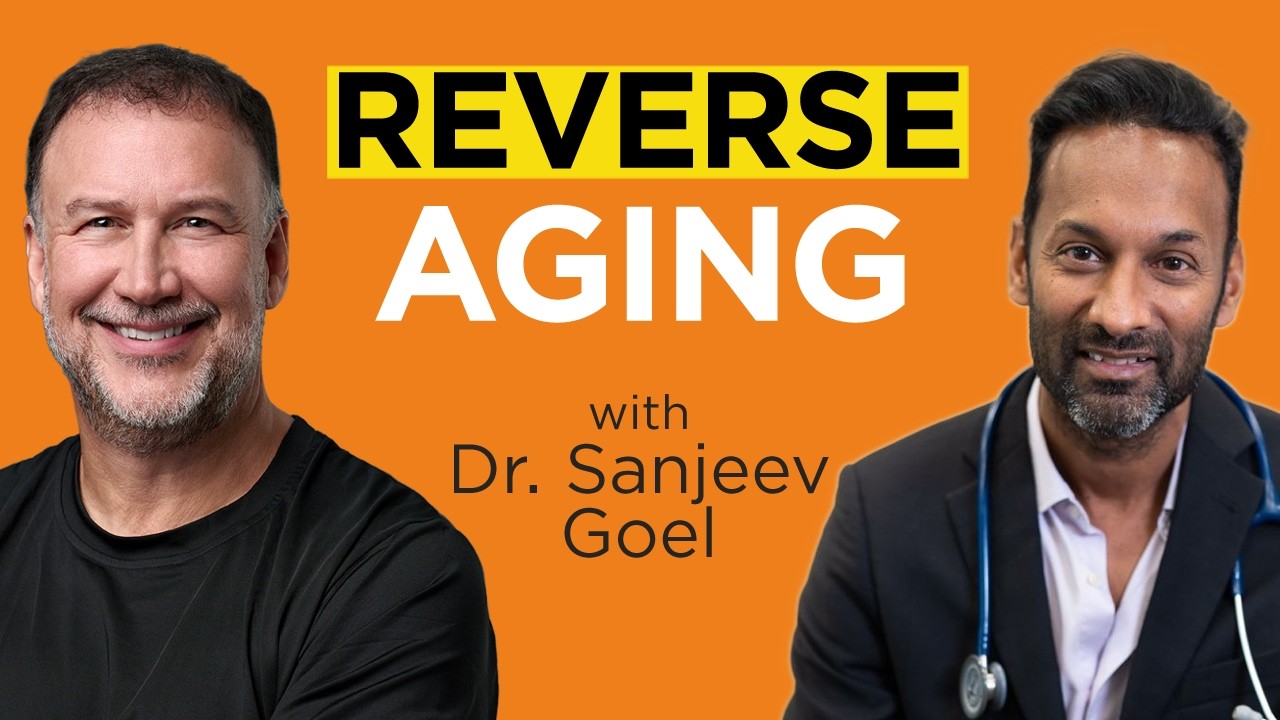
WHY THIS CONVERSATION MATTERS TO MEN OVER 50:
The body gives you less room for error after 50.
Poor sleep hits harder. Recovery takes longer. Muscle becomes easier to lose. The foods you handled well at 35 may affect you differently today.
That does not mean decline is inevitable. It means you need to pay closer attention to what your body is telling you and make smarter decisions based on real information.
This conversation offers a practical look at male longevity, including strength training, recovery, sleep, metabolic health, fasting, blood testing, and biological aging.
THE BIG IDEA BEHIND THIS CONVERSATION:
The foundation of better health after 50 is not another pill, supplement, or complicated protocol.
It is awareness.
You need to understand how your body responds to training, food, sleep, stress, alcohol, and recovery. Once you have that information, you can make better decisions instead of following generic advice.
Male longevity is not built through one dramatic intervention. It is built through consistent actions, careful tracking, and a willingness to adjust as your body changes.
The goal is not simply to live longer. It is to maintain the strength, energy, mental clarity, and physical capability needed to keep living well.
KEY MOMENTS YOU’LL WANT TO HEAR:
00:00 Importance of Exercise Variety
03:39 Importance of a personal trainer
09:18 Health tips for men over 50
12:45 Impact of real-time health data
14:26 Discussing new self-help book
17:32 Discussing new sleep medications
20:40 Impact of diet on health
23:48 Importance of circadian rhythm
27:44 Tracking biological and chronological age
31:50 Creating Peak Humans for Longevity
THIS IS FOR YOU IF:
- You are training hard but not recovering as quickly as you once did.
- You are concerned about losing muscle, strength, or physical capability.
- You want to improve your health without chasing every new supplement or trend.
- You are curious about using wearables, bloodwork, or a biological age test.
- You want to understand whether biohacking has practical value after 50.
- You are trying to improve your sleep, metabolism, body composition, or energy.
- You want a more personalized approach to health instead of generic advice.
- You care about maintaining peak performance as you move through your 50s, 60s, and beyond.
KEY TAKEAWAYS FOR MEN OVER 50:
Strength training becomes non-negotiable: Muscle loss accelerates with age, and maintaining lean body mass supports strength, metabolism, mobility, and independence. The answer is not always more training. It is better training combined with enough recovery.
Track small improvements: Adding one repetition, making a small weight increase, or maintaining your performance can produce meaningful results over time. Recording your workouts makes progress visible and helps prevent stagnation.
Recovery needs change with age: The training schedule that worked at 35 may no longer be right at 55 or 65. Sleep quality, protein intake, heart rate variability, soreness, and energy can help you determine when your body is ready to train again.
Use data to build self-awareness: Wearables, continuous glucose monitors, body composition devices, bloodwork, and biological age testing can reveal patterns you might otherwise miss. The value is not in collecting numbers. It is in using those numbers to make better decisions.
Protect your metabolic health: Insulin resistance, fatty liver, inflammation, high cholesterol, and excess body fat can quietly develop over time. Understanding your fasting insulin, eating patterns, body composition, and response to food can help you take action earlier.
UNSTOPPABLE STRENGTH FOCUS:
Body: This conversation directly supports physical strength, metabolic health, sleep quality, recovery, muscle preservation, and long-term capability. These are central to staying active and independent after 50.
Inner: Improving your health requires curiosity, discipline, patience, and honest self-assessment. Dr. Goel’s emphasis on awareness reinforces the importance of understanding yourself rather than blindly copying someone else’s routine.
WHY THIS GUEST IS WORTH YOUR TIME:
Dr. Sanjeev Goel is a physician who has spent years studying longevity, biohacking, biological aging, and emerging health technologies.
He also brings a useful personal perspective. As a man in his mid-50s, he has adjusted his own training, recovery, sleep, diet, and health tracking based on how his body has changed.
His message is practical. Pay attention. Measure what matters. Experiment carefully. Keep what works. Stop assuming the same approach works for every man.
WHY THIS MATTERS RIGHT NOW:
The decisions you make in your 50s and 60s can shape how strong, mobile, sharp, and independent you remain later in life.
You do not need to follow every anti-aging trend. You do need to understand your current health, identify the areas that need attention, and begin making informed improvements.
Male longevity starts with awareness, but it only works when awareness leads to action.
Learn your numbers. Track your progress. Protect your muscle. Improve your sleep. Give your body the recovery it needs.
The objective is simple: stay capable enough to keep doing the things that give your life meaning.
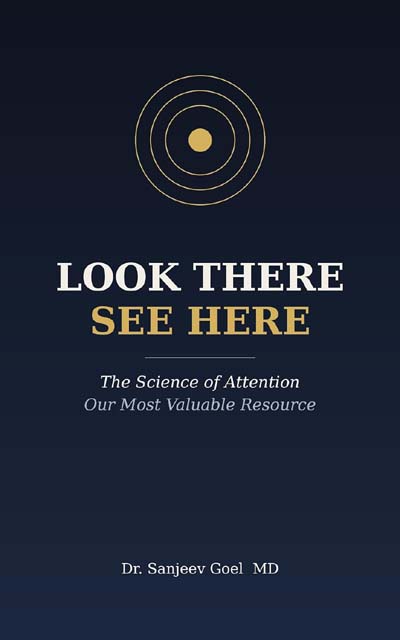
DR. SANJEEV GOEL'S NEW BOOK
DR. SANJEEV GOEL'S WEBSITE

PLEASE SHARE WITH FRIENDS AND FAMILY:
If you found this episode helpful, it would mean the world to me if you shared it and this podcast with your friends and family. Thank you!
YOUR WEEKLY EDGE FOR STAYING UNSTOPPABLE AFTER 50:
Every Monday, I send one high-value UA50 Playbook for men over 50 which is built around the powerful conversation from that week's podcast (click here to see an example). UA50 Each Playbook includes key takeaways, a clear challenge, and practical ideas you can use immediately, or file away for future reference. No hype. No filler. Just useful ideas and tips for men who refuse to slow down.
No spam. No nonsense. Unsubscribe anytime
FULL EPISODE TRANSCRIPT:
Dr. Sanjeev Goel [00:00:00]:
The issue is that there's about a hundred different pills and treatments out there that potentially help with longevity. But if you don't understand your own body and have awareness of it, it's very hard to implement any of these things. So the first step is understanding your own body so you can make those changes.
Mike [00:00:16]:
This is Unstoppable After 50, the podcast for men who refuse to slow down. Each week I share smart strategies and expert insights to help you stay strong, healthy, and unstoppable in the second half of life. Welcome back to unstoppable after 50. This week, my guest is Dr. Sanjeev Goel. He's known as Canada's longevity doctor, and he was going to share a ton of ideas and wisdom for guys over 50 to enhance their life and their longevity. So stay tuned for an eye opening conversation with Dr. Sanjeev Goel.
Mike [00:00:51]:
Sanjeev, welcome to the show.
Dr. Sanjeev Goel [00:00:54]:
Thank you so much.
Mike [00:00:55]:
I was looking forward to this because you've got literally decades of experience in helping people. A specialty that you focus on is longevity. So that's going to kind of frame our conversation today, Sanjeev. And you've written many several books. You're publishing a very nice magazine, so congratulations there. And I want to kind of talk about some of the things you've talked about in your books, in your magazine and really how it applies to guys over 50. So I'd like to start with exercise for longevity. A lot of guys are thinking, do I have to strength train? Can I just do cardio or do I can just do strength training and not cardio? What's your viewpoints on those?
Dr. Sanjeev Goel [00:01:38]:
You know, so one thing, let me thank you for having me on, on the show. And, and I'm 55 myself and actually 56 now. And I've realized that, you know, I was training, you know, five to seven days a week in the gym, and I may have been even over training. And I realized since I was able to cut it down and so personally, I, you know, I. Some things I ask my patients a lot is that they're trying to get their gains, is that you need to kind of train and allow a certain amount of time for recovery. You may vary that. You may vary the activities law. I think that's extremely important as well.
Dr. Sanjeev Goel [00:02:12]:
You can't do the same exercise all the time. You need to kind of change it up. And so, you know, for myself, I'm doing my cardio on the soccer field or pickleball court, but doing, you know, weights in the gym twice a week for me I need three days a week now of recovery, which may have been not the same way when I was 35. So, and, and I find I'm getting just as much gains, if not even better. So I think that's, that's one piece of advice is people don't need to understand their own bodies. How much are they eating? You know, if you're not eating enough protein and all that, you're just. And I'm not a big eater, so for me, I can't just go and break those muscles every single day and expect that to regrow. And so people need to understand where they're at, how much are they consuming of things to help them recover.
Dr. Sanjeev Goel [00:02:55]:
And then if they're wearing a wearable, understand, you know, look at their HRV and see how long does it take for their HRV to come back down into normal. And for me, that used to be about two days after a soccer game. I would see that, you know, take about two days for me to get down to what would be great. It would even be better after two days. But, you know, it wasn't the next day. So I think this is a bit of where the awareness comes in.
Mike [00:03:18]:
You hit on a bunch of things there. I'd like to ask you to go a little deeper on your own because I'm always interested in hearing what other guys. I just turned 60, so I've got a couple years on you, but I'm interested in hearing what does your strength training routine look like. You say you're at two days a week. Are you in there for half hour, an hour, 45 minutes? What does that look like?
Dr. Sanjeev Goel [00:03:39]:
For me, it's, it's basically about an hour, 45 minutes to an hour. I have a trainer and I do believe, you know, if you want to achieve something like that, you do need trainers because you need someone to help push you. And so within 45 minutes to an hour with a trainer, you probably could. Everything is done to the max and he does vary it up too, so it's not always the exact same training. So, you know, one day will be, you know, higher reps and, and slightly lower weight, you know, whereas some other ones would be, you know, eight reps, you know, 100, 100% weight. So I think that's important that, to having the trainer. One thing I have noticed that was really important is that the trainers that record how you're performing, probably a better, probably a very good technique because if you can keep on adding on very small gains or at least keep the gains, you have Every week, it might feel you can't do it. But one extra rep, if you keep adding it up every single week, eventually translate into outcomes.
Dr. Sanjeev Goel [00:04:41]:
And if people feel that they're stagnating, which a lot of people do, it's because it's very hard. They're not tracking where they're at. So again, awareness of where you're at and then pushing yourself even a little bit more I think will end up with long term gains. So that's how I do it.
Mike [00:04:56]:
Yeah, I'm a huge believer in that. I write down, I keep a. Every month I print up an 8 and a half by 11 worksheet for that next month's workouts. And I just fill it in and I know what I'm doing.
Dr. Sanjeev Goel [00:05:06]:
And a lot of people think that's crazy. A lot of people think, oh, that's
Mike [00:05:09]:
like, I don't know how you do it it. I don't. When I used to go to a gym, I have a gym in my office. But when I used to drive to a gym, I would have a little notebook. I actually printed up my own notebooks. I got so into it, like, I'd print up with my own. They were already formatted and I was nuts. The other thing you shared, which I think is very important, I had a guest on early on, early in the year.
Mike [00:05:29]:
He was actually a manufacturer of microplates. So plates that you could add to your dumbbells or your barbells that would go up in like one, one and a half, two, two and a half pound increments. Right. Because most increments are like five pounds typically. And as you, not only as you age, but as you start hitting your max weight, it's hard to add five pounds to a curl or to something. Right. So I love, I've been doing that for years. I love that micro progression concept and wholeheartedly.
Dr. Sanjeev Goel [00:06:00]:
That's very interesting. Yeah, that's a great point. I mean, my trainer always goes up by one rep and he doesn't change over till you've hit 20 or 25 reps. And so, you know, so that way it's, it's much slower. Any, you know, even one extra rep is a big. That's a new best. I Try to hit 10 personal best every workout.
Mike [00:06:19]:
That's awesome.
Dr. Sanjeev Goel [00:06:20]:
That's it.
Mike [00:06:21]:
Wow. Are you doing, just out of curiosity, are you doing one set that high or are you doing multiple sets? Or. I guess you said it changes up.
Dr. Sanjeev Goel [00:06:27]:
Yeah, it's, it's. It changes up. But generally for the one workout do that for one particular trainer. I do two sets of every of, of every body part. And I try to hit a. Hit a new best.
Mike [00:06:38]:
Yeah, well, and I guess another takeaway from this is. And it's, you know, for some guys this is going to be sort of like, you know, 101 stuff. But strength training is a non negotiable, right?
Dr. Sanjeev Goel [00:06:49]:
Absolutely. Because, you know, we're losing lean body mass every year as we're getting older. One percent, they say, per year. And if you just, you know, extrapolate out if you want to live up to 90 or 100, how much lean body mass you need to have now to have that when you get older. I think that's why it's so critical. And then muscle has a lot of metabolic benefits. It helps you burn more energy just by just sitting so you keep your fat down and. Yeah, so I think you're right.
Dr. Sanjeev Goel [00:07:20]:
Non negotiable. Maybe in some ways more important than cardio.
Mike [00:07:25]:
It's something that I used to always weight train when I was younger and then I kind of got a little lazy into my 40s and 50s. Actually more in my 50s. I used to do Kett Bells in my 40s. That was a good workout. And it makes a difference. All of a sudden my wife's looking at me going, your shoulders look a lot bonier. Your butt's looking a lot skinnier. I'm like, damn, there's nothing more of a motivator than your wife telling you you're shrinking.
Mike [00:07:49]:
And it's real. It's real. So I quickly decided to change that
Dr. Sanjeev Goel [00:07:54]:
and just maybe just jump in. Just tell the viewers that they should have one of these body impedance devices so they can check what their, you know, their body fat is and their lean muscle mass. Because these devices are pret good.
Mike [00:08:07]:
Now, like what are you like a smart scale or.
Dr. Sanjeev Goel [00:08:10]:
Yeah, I guess, you know, we know we have in the office called a SECA or there's, you know, in body. In body or second, but these might be. I'm sure they have versions for home. Yeah, there's versions for home that maybe aren't as like a smart scale where basically it's going through your feet. Yeah, it's still giving you, you know, not a bad number. It's still good again to build awareness. Sorry, I interrupted you, but no, no,
Mike [00:08:30]:
listen, no, I appreciate that. That's. I know you've written a couple quote hack books. So you kind of think like I think which are these little simple things guys can do. As a matter of fact, I just upgraded my scale not to the one you have. That's like a $5,000 device.
Dr. Sanjeev Goel [00:08:45]:
That's for the office. I could not afford that for myself, but.
Mike [00:08:47]:
Yeah, but I just, I just bought one of the ones that you're talking about where you, you have the, you hold the handles and then you also. And it goes through your whole body. And it's. The report that it generates is amazing. You know, it's. It's so detailed. I don't know how accurate it is, but it's detailed.
Dr. Sanjeev Goel [00:09:03]:
Pretty accurate. Well, I can just tell you just jump in there is that I had a guy do a DEXA and then compare it to a SECA and he was, I was, he was within like 1% body fat difference. That's still pretty accurate, you know, for like no real cost.
Mike [00:09:18]:
What is, what it's real. What's realistic? Sanjeev, in your experience, again, you. This is what you do for a living as a medical doctor. You're helping people. Guys over 50, you know, the ones that aren't going for the bodybuilder or, you know, physique but want to be healthy. Where do you like to see them on the body fat scale? Quick pause. If you're not getting my Unstoppable After 50 playbook, you're missing out. Every week I send a one page playbook with my key interview takeaways and simple actions to help you stay strong and in control.
Mike [00:09:49]:
Get it free each week at unstoppable after 50. Now back to the show.
Dr. Sanjeev Goel [00:09:55]:
You know, so most guys will come in with the body fat in the high 20s. Like, that's a general kind of, you know, you don't. You have a little bit of extra on your belly. You can't see any. You have, you know, you probably were very fit in your 30s and 40s, maybe even. But I like to tell people a reasonable way to get to. With just taking care of their diet, get into the gym. You can get into your low 20s now.
Dr. Sanjeev Goel [00:10:21]:
I would love people to be 15 to 19% and I think that's, you know, where I aim to be. But I think it's, again, if you pick too high a target, people get demotivated. And I think it's very important to pick targets that people can reach. And then it becomes addicting. People on their own start to do things because they realize, you know, I'm not doing it because someone told me to do it. I want to do it because I can see I can do it. So I generally pick something like that. I Say try to get 22%.
Dr. Sanjeev Goel [00:10:48]:
You know, if somebody walks in 22%, I want you to get to 18%. Something like that. Good.
Mike [00:10:52]:
Well, you're making me feel good. I'm under that, so that's good. And my day on a good note there, when I was going through some of your content I taught you, I saw you were talking about something you call your sweat equity prescription. What do you mean by that?
Dr. Sanjeev Goel [00:11:08]:
Yeah, what I mean is that you have to put in a certain amount of effort and. And that's. That nobody can do that for you. You know, that is. I'll give you an example. Like that's. You know, I always talk about becoming more aware of your own body. And, and one of the first things people can start doing is, is understanding what they're putting into their mouth.
Dr. Sanjeev Goel [00:11:32]:
That takes effort. That's not a, like a thing. That's. Hey, just someone's gonna give you a plan and start do following that. You need to actually go and start understanding what you're eating and, and why you're eating it, at what time you're eating that. And that's the sweat equity part that needs to happen if you want to make lasting changes. Like, even without even trying to make a change. Go and figure out what's happening right now.
Dr. Sanjeev Goel [00:11:53]:
So that's an example of something I would say, you know, becoming. Becoming if, you know, someone trying to figure out about what supplement stack they need to take. Well, first of all, maybe go get like a, you know, figure out what your assessment is of your blood work. Like, what metabolic stage are you in? Do you have fatty liver disease? What's your insulin fasting level? I think these would be a type of things I would talk about.
Mike [00:12:20]:
Yeah, very good. You know, I wanted this conversation to be kind of free form because you have so much experience and, you know, this idea of awareness. Just to kind of share a quick story of my own. Recently, like in the last two months, I became aware. Well, my younger daughter got me on to using a cgm, a continuous glucose monitor. Right. Oh, my gosh. And I'm a numbers guy to begin with.
Mike [00:12:45]:
Right. So I'm just. I'm an engineer by degree, so I think like that. Right, Sanjeev, And I know you, you know this, but having that thing and seeing the real time data and seeing, well, if I eat a bowl of pasta, what it does in my blood sugar or if I go for a walk after dinner or whatever. Amazing. I am a total convert. I know you can go nuts with this stuff, but it just I end up losing five pounds, not even trying because all of a sudden now I'm like oh I shouldn't be doing that or maybe changing the order or whatever. So that awareness is so critical and there's technology.
Mike [00:13:21]:
You talked about wearables. There's so much technology out there that can really help for sure.
Dr. Sanjeev Goel [00:13:27]:
I was just to jump in on that. So you know most of those things are like a 10 day or 14 day cycle so that you know, we're not asking people do a lot. All we're saying is do it once. And you know what I noticed was that if, if I eat it just even at 9pm at night my blood sugar didn't return to normal till 3am like it just took me a long time. Maybe that's me. You know, everyone's very different and I think that's the people is that your doctor cannot tell you what you are. This because we're just too different. So for me, you know I, I have to be more careful.
Dr. Sanjeev Goel [00:13:58]:
I need to. My blood sugar takes some time to go down. Maybe somebody else that's totally different. Maybe the type of food, because I'm you know, vegetarian. It just takes longer to like get that carbs digested. I just don't know. But it was really eye openening and I think again that's, that's an example of why I don't even drink alcohol. I, I'm very careful because I'm like oh my God, even two drinks messes up my, my sleep.
Dr. Sanjeev Goel [00:14:20]:
So it's a, you know. But everyone's different. I wouldn't say that. Hey, that's for everybody. We need to do that. But you know that's.
Mike [00:14:26]:
And it goes again to awareness, self awareness like at least experiment if you truly want to serious about longevity, living your best self, being unstoppable. I'm getting ready to publish a brand new book of mine and I'm working on it as we speak and it's all about these, I call them rituals. So instead of calling something a routine which is sort of mundane, I love that what are my rituals? What are my daily rituals? And I came up with 50 of them. And you know it's. It's kind of like your, your hacking book if you will and that it's just these short tips that have worked for me. They might not work for everybody but I'm encouraging readers just find one or two out of 50 that might work for you. So anyway, I digress. Biohacking, it's another topic I know you talk about first of All.
Mike [00:15:14]:
Can you explain what biohacking is and then maybe share some of your favorite topics? Biohacks, for sure.
Dr. Sanjeev Goel [00:15:20]:
For sure. You know, I, I got into this whole thing because of this term biohacking. I ran a biohacking conference in Toronto back in 1920, 17. But the idea really, you know, you know, the father biohacking of Dave Asprey. The idea was that we, we should be ex. We can be experimenting with ourselves. We need to experiment and get more awareness of our own bodies because ultimately we're the best people to do it. And, and because everybody is so unique the physiology and so what we're trying to do as physicians, that we're just trying to be guides so people can gain more awareness and biohack on themselves because that's where technology is today.
Dr. Sanjeev Goel [00:16:01]:
And I'd say that's, that'd be my definition. I know it's a bit of a long one, but that's how I would describe it. And, and it kind of forms a philosophy in my life where and with. When I'm with my patients that I'm trying to guide people to become better biohackers. And that means they need to, like, they need to be curious, they need to be willing to experiment. They need to love numbers being used, data and facts and not just intuition. If we're, you know, unless we have, we have no other choice.
Mike [00:16:29]:
Any recommended or suggestions for guys over 50? Some biohacks to consider?
Dr. Sanjeev Goel [00:16:35]:
Yeah, I mean there's all the, the very ones that are really out there and I'd say they still have a huge impact. Like let's, let's turn to sleep, for example, which I've spent, you know, of time working, working on making it better because, you know, I do have this family history of Alzheimer's in my family. And one of the things we see is when people start to get dementia, sleep is one of the first problems. As we get older, everyone's brain starts to fragment their sleep. They have less deep sleep. So the question is that how can we make sure we maintain a good amount of sleep quality, good amount of deep sleep and REM sleep as we get older, sleeping the right time at the same time every day, avoiding things that can mess up your sleep. Like I mentioned alcohol or sleeping, eating late or, you know, putting bright screens. Like I have a, we have, we actually have a whole line of blue light blockers that, you know, I, I really believe in to make a big difference.
Dr. Sanjeev Goel [00:17:32]:
I take a, you know, I, I don't think all medications are bad and I Take. There's a new class of medications called Adoras which are a REX and Reps receptor agonists, which are a new category of medication that's not addictive but actually makes you sleep deeper. It's like a lifestyle sleep medication. If you think about a Cialis for sleep, it's a consider, I would consider people to look at these things. If your sleep is not where it should be and you're not, and you're not having go to sleep and then wake up at 7 o' clock in the morning and you're then I think, you know, we could do better. Like there are a lot of people just from the stress of life, they wake up at 4 o' clock in the morning, are thinking for a few minutes, you know, and, and that's not, that means that they got out of sleep and, and, and maybe it takes a few minutes to go back. Maybe if they go pee or something in the middle of night. So there are things that can be done now, but sleep is number one.
Dr. Sanjeev Goel [00:18:27]:
Obviously food. I, you know, everyone's got their own different way of what's the right diet for them. I take a lot of interest in that. I'm very careful and I think generally eating less is better or just you know, being mindful at not taking excess calories that are not needed. So being very careful and aware of what we're eating. Having periods without food obviously is extremely important. You know, that's just having the feeling of eating when you're hungry, which is an important important thing. You know, I think for other types of hacks I would say yeah, this is where I'd get into like, you know, testing to understand if you have, if you have a high inflammation state in your body that we can check in blood work these days.
Dr. Sanjeev Goel [00:19:16]:
And now we do have tests that look at biologic age, which are really interesting and fascinating and we're getting better and better. Like I think we're just at the early days of this. But it's really interesting, could open up some thinking in your mind. Hey, if you know what your speed of aging is very fast or like your brain age is like super high or low. Like it's it. These are interesting things. They may not give you the full answer, but they might direct you in a certain way to say hey, this is something I could be focusing on. So that's.
Dr. Sanjeev Goel [00:19:45]:
Those would be just some of the quick things.
Mike [00:19:46]:
Yeah. And I want to go in a little deeper on a few of those. So let's talk about anti aging foods now. You mentioned you're vegetarian. So are there certain foods for you'd recommend for guys that you know or you know, have a, you know, a big impact on helping them live longer?
Dr. Sanjeev Goel [00:20:07]:
Yeah. For anti aging foods, again I think everyone's very unique here. I don't believe in there's a perfect diet at all. And it's not that I'm, you know, I, I have eaten meat here and there and it's not really for complete health reasons but. And my wife is a meat eater and all that. I think everyone's very different. But I think the general gist about it is that we need to eat foods which are not going to cause metabolic damage. Since some people have the ability to process a certain amount of sugar.
Dr. Sanjeev Goel [00:20:40]:
If they go burn it off exercising, then there's not an issue. But if you're not, if you're going to eat a certain way but then not if that extra calories turns into fat because you don't know what to do, your body doesn't know what to do with it, then that causes the, that causes the, you know, insulin resistance and diabetes to occur and fatty liver and high cholesterol and all the repercussions from that. So I think it's, it's again understanding where people are at generally I would say, you know, plant based or you know, low on the food chain diet with high protein and it could include meat. That's, I'm not against meat. I don't think there's anything, it's just high quality meats and, and getting proper fats in as well is very important. I don't, I'm not against that either. I think these things are very unique to each person and it's very interesting. Like for me if I start eating a bunch of eggs, which I think eggs are extremely healthy, if I start eating a bunch of eggs, my cholesterol just jumps right up.
Dr. Sanjeev Goel [00:21:49]:
So for whatever reason, but my wife, she's her, she can keep her, you know, her LDL and APOB down extremely low even while eating, you know, two eggs every morning. It's just people are very different and so it's too quick to make a judgment on what is specifically is an anti aging food. Now of course there are antioxidants, these super FL. Antioxidants that exist in all colored vegetables and fruits. So blueberries and strawberries and various peppers and various things like that and goji berries and pomegranates, they all contain very specific molecules that are anti cancerous and have effect to mop up free radicals so those are obviously anti aging in some aspect. But I think if your metabolism is amazing, that is by far the best anti aging thing you can do. And your inflammation is as low as it could be. When your metabolism is great, you're keeping a less inflammation in your body and inflammation is ultimately what kills people.
Mike [00:22:51]:
Oh yeah, yeah, yeah. It's, you could have a whole, you know, podcast about that and it's scary, I mean it's scary because we're so many of us are walking around inflamed and not even realizing it and then you're right all the different impacts, stress, diet, whatever you mentioned early on, fasting. So I'm a fan of time restricted eating. I've tried, you know, I've never done multi day fasts. I think the max I've ever done was 24. But I, I really like, you know, time restricted eating. I really, it's something I learned later in life. I like giving my body a break.
Mike [00:23:25]:
I like the way I feel, I like to going, going to bed. Like I try to be done our evening meal no later than 6 o' clock and then I don't eat till 10 o' clock the next morning. That's just what I've been doing currently and I just like the way it makes me feel. What, what's your opinion on time restricted eating? Fasting, you know, and specifically for maybe again for guys over 50.
Dr. Sanjeev Goel [00:23:48]:
Basically as we're getting older we're already having a lot of systems that we could have maybe handled when we're 20. You know, we could have handled eating at different times of the day and eating all types of food and all that we can. As you get older you got to be a bit more careful and the things that you could have got away before with, you can't get away with anymore. So I, I, one of my key principles is that being in alignment with your internal and external rhythms, extremely important because as soon as we're out of rhythm with our circadian rhythm, which is, you know, there's a circadian rhythm for food as well as there is for sleep and as soon as we're out of rhythm with that, there's extra stress that happens to the body. So if you eat like you're saying at 9 o' clock at night, a big carb dinner, the response to you digesting that food, the insulin response is not as good as when, if you ate it in the daytime. That's just because the body's meant to release hormones at a certain time of the day. So I'm A big believer in time restricted feeding. I, I don't necessarily think we need to be so regimented for certain people, they could get away with, you know, skipping the breakfast and e.
Dr. Sanjeev Goel [00:24:57]:
Starting later. Some people, you know what, they should be skipping the dinner or ending the dinner early and having early breakfast. There's now protocols that are have a meal in the morning and have a meal in the evening and don't eat anything all day. That seems to be very effective. There's the, you know, the, the plan of just not eating anything the whole day and then eating whatever you want the second day. I mean, alternate day fasting. So I think all of these things have benefit because as soon as you put the body under some amount of stress, which is again the principle of hormesis, as soon as you put any type of stress of food stress where your body's looking for calories and if you don't provide it right away, it actually provides a good adaptive stress to your body because then your body's like, oh my God, there's no food around. I better make some changes to become more efficient and get rid of some garbage that's there.
Dr. Sanjeev Goel [00:25:50]:
That's ultimately the principle. I mean, you know, in our, in our modern lifestyle, we've made a 168 protocol that kind of fits. And. But hey, there's no magic to 16 8. It could be, could be, you know, could be something else. And so I don't, you know, I, But I think for you that, that works like it has to fit your lifestyle. It's got to fit what you can eat when, you know, everybody else is eating. And so I encourage people to just think about, yeah, only eat when you really need to eat.
Dr. Sanjeev Goel [00:26:17]:
And it's good to have breaks wherever those breaks are. And generally we should be eating during the daytime. Generally. Obviously our ancestors may have eaten at nighttime, late at night. They may have. It's possible.
Mike [00:26:33]:
I noticed also you were writing about how you've recently reduced your biological age. Can you just give a quick overview? What is biological age? And you reduced it by, I guess, a decade or more. How'd you do that?
Dr. Sanjeev Goel [00:26:46]:
You know, I'm really excited by this, this whole new, you know, testing that used, that was never available before, but in the last 10 years we have a number of these clocks. They're really based on epigenetic markers. So on top of the DNA, there are these epigenetic marks that change over your lifestyle lifetime and are very predictive of your age. And, you know, we have marks that are very predictive of a chronological Age. And now we have marks that appear to be more predictive of what we would call biologic age are more tied to disease and death. And there's multiple clocks out there, first generation, second generation, third generation clocks, and they keep getting better all the time. And now there's even clocks looking at age of different organs. So, you know, I was, you know, I started, you know, doing this testing, you know, probably six, seven years ago, and there's a number of companies out there.
Dr. Sanjeev Goel [00:27:44]:
I use a company called True Diagnostics, but they gave, they provided me the agent. And I've been working on this, you know, quite a bit over the last few years. But just through the things I've been talking about, the hacks and all that, is that, you know, my biological age is about 10 years younger than, than my chronological age now. And my speed of aging, which is the, that the score that Brian Johnson uses for his challenge the Rejuvenation Olympics, I think he's aging at half the speed as the average person. My score is 0.7, which puts me in around 100 out of 10,000 people who do the test. So relatively low speed of aging, which is great, means I'm aging at seven months or six months out of 12 months, something like that. Seven months, yeah. So, but I think it's just at the beginning, like this is where we're, you know, we're, we're understanding that these clocks have some benefit, but the size keep getting better.
Dr. Sanjeev Goel [00:28:50]:
I was just in touch with the company that's looking at the protein. They can now do a protein clock because as we get older, the proteins start to change and become malformed. And when you have malformed proteins, they send bad signals to their neighbors. And that's what we cause one of the causes of aging is, is messed up signaling between cells. So when cells are telling each other, you know what, I'm getting old, you're old, you should start releasing old chemicals, go to sleep, fall asleep, die, whatever. That's what happens in aging. So if we can find a way to reverse that aging or that the signaling and make it more like a youthful state, that's gonna, that's how the current treatments seem to be helping with slowing down aging. Obviously autophagy, like getting rid of dead cells and all this is one way to slow down aging.
Dr. Sanjeev Goel [00:29:45]:
Because those dead cells, instead of releasing bad messages to other people, just are eliminated, which is a much better way of solving the problem. You know, one of the things I'm super excited about is a treatment called plasmapheresis, which is Pretty much the most studied and effective treatment for right now to reverse age, and it involves a blood exchange. I'm not sure if you're familiar with this, but it means it remains. Removing your plasma, call it like an oil change, you take out your plasma, it gets replaced with saline and albumin. But in the process, it. Basically, the new plasma that's created is that of a young person's plasma. So temporarily you have aging. You're aging at a younger speed.
Dr. Sanjeev Goel [00:30:34]:
And so they've had, you know, the first experiments were done with mice where they connected, you know, the young mouse and the old mouse, and they found that the old mouse became young and the young mouse became old because their blood supplies were connected. Now, we know you don't have to take in young blood. Obviously, if you're taking young blood, that would be you. That would be helpful. But just removing old blood is a benefit. And what that does, it creates new blood, new plasma, which is youthful in its. In its characteristics and has all the health benefits of. Of having a young, young body.
Dr. Sanjeev Goel [00:31:11]:
So, you know, those are the type of things that are really exciting to me right now.
Mike [00:31:17]:
Yeah. I mean, given that you've dedicated years up to this point, I'm sure. Yeah. The next 20 years, who. It just. It is. It really is crazy. And, you know, AI and how that's going to have some effect and just.
Mike [00:31:30]:
It just. There's so much. But it's quite interesting. I'll probably read about that. That procedure in one of your future magazine issues. Sanjeev, you created something called Peak Human. Can you tell. Tell my audience what that is and how they can learn more about it, you and your books?
Dr. Sanjeev Goel [00:31:50]:
Sure. You know, I created pqumin, like I said, after this conference on biohacking that I ran in 2017, and because I wanted to, you know, get the same things. I was hitting 50 around that time or so, and I wanted to get access to the latest and greatest medical treatments because I think we're living in a golden age and where, you know, the next 10 or 15 years are going to determine, you know, how the rest of your life will be. So, you know, I created Peak Humans so that we could give access to people, to the, you know, the latest technologies and knowledge about how to. How to prolong their longevity. Because I truly believe in the next 10 years, if you can stay in a certain amount of health and resources, you will be able to live, you know, far longer than our parents did. Yeah.
Mike [00:32:42]:
How can my audience learn more about that?
Dr. Sanjeev Goel [00:32:44]:
Yeah, I have a website, peakhuman ca. I also have another website called peakhuman AI where we're now providing people can get all access to the latest knowledge on various interventions, supplements, molecules. Everything's all being done through AI now. Quite impressive. And obviously, like you mentioned, I have a book. It's on. It's on Amazon. We can put it in the show notes.
Mike [00:33:10]:
Yeah.
Dr. Sanjeev Goel [00:33:10]:
Thank you so much. Yeah.
Mike [00:33:12]:
Well, listen, I appreciate this, Sanjeev. And before we go, I have my unstoppable after 50 trifecta. It's three quick questions, three quick answers, and the first one, Sanjeev, because you're 55, I'd like to hear your answer. What is a decision or a habit? I know there's probably a ton of them, but what's just one decision, Habit action that you decide to make after 50 that's had biggest impact.
Dr. Sanjeev Goel [00:33:37]:
Yeah. I would say that the biggest action I've taken, and I would say this is more. More recently, is that I have five things I say to myself every morning. You know, I have five. Five sentences that I say to myself. And I. And I think that kind of frames the rest of all the actions I'm going to try to do. I can.
Dr. Sanjeev Goel [00:33:58]:
I can say them for you, but, yeah, different.
Mike [00:34:01]:
Yeah. Are you willing to share?
Dr. Sanjeev Goel [00:34:02]:
Yeah, sure, sure. I'm grateful for this new day. I cultivate compassion for myself and others. I embrace impermanence. Everything's changing always in the world. I walk the path of wisdom, and I'm at peace with myself. Those five things I have created for myself, they might be different for different people, but I would encourage people just go and find those. What are those five things you tell yourself to make yourself unstoppable? I think that's one thing I would say.
Mike [00:34:27]:
What's a book that you Recommend?
Dr. Sanjeev Goel [00:34:29]:
Guys over 50 read this book I've written. I would love to promote that. It's called Going Nowhere, Getting Somewhere. It's basically, you know, over 20 years of just reading of things I think they should be thinking about, and they're just like concepts that might. Might pique their interest for further reading. Because, again, there's no one book that can have everything. But I think, again, it's about learning and always rediscover discovering and learning new things. So I'm hoping that book might be of interest to her listeners.
Mike [00:35:03]:
All right, well, we'll link that in the show notes for sure. And finally, Sanjeev, what is something a guy can go do this upcoming week to be unstoppable?
Dr. Sanjeev Goel [00:35:15]:
If they haven't done it already, they should go get a blood test done to look at their insulin fasting level, check if they have fatty liver disease with maybe an ultrasound. And I would say if they can get a biologic age test, I would recommend to do that.
Mike [00:35:30]:
Awesome. I'm again a huge fan of that proactive blood testing. As a matter of fact, I just had a guest on and that's what we talked about for the entire time because it's so reasonable, it's so accessible these days. You don't need a doctor and the information is just so invaluable. Sanjeev, thank you very much. I was looking forward to this. I appreciate your wisdom. I appreciate all that you shared today.
Dr. Sanjeev Goel [00:35:56]:
Thank you so much for having me. It was a pleasure to be here.
Mike [00:35:59]:
Hey, I hope you enjoyed that conversation with Dr. Sanjeev Goel. He shared a bunch of different things to at least consider and maybe do your own research a little bit further just to see how you can apply that to your own life. And if you like what I'm doing here with unstoppable after 50, please make sure you like and subscribe to the show. Go check out the YouTube channel. Appreciate you subscribing there. And also make sure you check out unstoppable after50.com and sign up for my weekly playbook. Every week I send a recap to my group of men who've asked for it, a PDF that's designed to be printed and saved, and it's a recap of that previous week's episode.
Mike [00:36:40]:
So check out unstoppable after50.com.