Dr. Tommy Rhee [00:00:00]:
The problem is, is that as we age, we get that kind of like that aging process, right? And part of that big excuse is the signaling. We don't have the ability to tell our existing tissue to do its job. So, if we have that weak signal, we have to introduce it with a brighter signal, and that's regenerative medicine.
Mike Capuzzi [00:00:16]:
This is Unstoppable After 50, the podcast for men who refuse to slow down. Each week, I share smart strategies and expert insights to help you stay strong, healthy, and unstoppable in the second half of life. Welcome back to Unstoppable After 50. My guest today is Dr. Tommy Rhee, a nationally recognized sports chiropractor, regenerative medicine expert, and author. Today's conversation is critically important for guys because recovery makes all the difference in how we feel and operate on a day-to-day basis. This conversation is focused on stem cell therapy and the ability to really make you feel better in a whole new way. So stay tuned for an eye-opening conversation with Dr.
Mike Capuzzi [00:01:01]:
Tommy Rhee. Dr. Tommy Rhee, welcome to the show.
Dr. Tommy Rhee [00:01:04]:
Hey, Mike Capuzzi. Thank you very much. I'm excited about this.
Mike Capuzzi [00:01:07]:
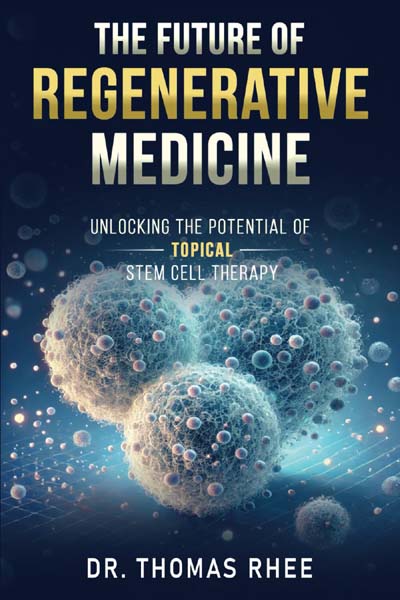
Yes, Tommy, I was looking forward to having you on. First of all, thank you for sending me a copy of your book, The Future of Regenerative Medicine, which is going to actually frame our conversation today. Though I did happen to check, you just published another book this year, didn't you?
Dr. Tommy Rhee [00:01:21]:
Yeah, I, um, I wrote another book. I'm just trying to just capture the health industry and really how us guys, you know, I'm 50-ish. So, I'm just trying to capture that we have to keep that progress going in a positive way. So, that's that book I wrote for the second way.
Mike Capuzzi [00:01:38]:
Awesome. And, that progress and that momentum, it's not like— the thing that I'm quickly realizing, it's not like, oh, you could do it for a couple days and sort of coast for a couple days. It is every day. Certain days you can lighten up, but it is a lifelong commitment. So, I'll have to check that book out. So, Tommy, Before we get into a deep discussion, probably a good chunk of my audience, you know, they may not exactly understand what is regenerative medicine and how it's really different from traditional medicine and also why it's so important for guys over 50.
Dr. Tommy Rhee [00:02:12]:
I think the big thing with regenerative medicine and the terminology, it's like a broad stroke. So you think about anything that you can do for your body's ability to heal. And that could include like devices, meditation, something that helps you heal, you know, and And you're looking at the ability of this existing tissue to get the proper signal. So, it could be a good environment like de-stressing yourself. And then, if you look at that mental side of it that takes care of— controls the physical side of it, well, that's a component of it. But then, you look at other devices that's trying to introduce a proper type of vehicle to get those signals to your body. Then, you go into the world of these cells, these stem cells, the regenerative medicine that we get these cells from either our own body or we get it from a donor tissue like the umbilical cord or the placenta. And then we're trying to achieve that signal again.
Dr. Tommy Rhee [00:03:01]:
It's that stem cell, the mesenchymal stem cell, that gives our ability to do that regeneration that we don't have at a later age, right? When you're 60s, 70s, you're starting to slow that process down. Because our body always wants to regenerate, right? Out goes the bad, here comes the new, right? 1-to-1 ratio. So as we age, we start losing that ratio because the signaling we need to introduce. And there's a lot of types of signals out there in the form of like, you know, like— microRNAs, cytokines, proteins, information that our existing tissue needs to get the signal to do its job to that tissue.
Mike Capuzzi [00:03:36]:
So, Tommy, before we get much further, I should, uh, ask you to, you know, explain a little bit of your background. I don't always ask all my guests, but your background is so deep and wide with helping a lot of people. You served our country, so thank you for your service, but Tell me a little bit more, if you don't mind. Share with my audience sort of how you've ended up where you are today and, you know, the kind of men that you've helped over these past few decades.
Dr. Tommy Rhee [00:04:03]:
So yeah, I'm a sports chiropractor and luckily I'm involved with that elite level of the sports world. So my starting point was UCLA, UCLA Athletics. So you're talking about, you know, high-caliber collegiate athletes. Now with those guys, you know, they had the luxury of being young and then, you know, they get hurt, they can recover quick. But once these kids graduate and they go in the pros or the Olympics, now they're in a different kind of elite level, right? You're talking the top elite, elite players. Now they want the edge, and the edge is not so much performance, it's the recovery. And that's where you really kind of get involved with the actual pushing your body to the maximum but have the ability to come back to neutral so then you can go and tax yourself again. So because of that, looking at these elite athletes for all these years from UCLA, then the Olympic level, then the Tampa Bay Buccaneers.
Dr. Tommy Rhee [00:04:55]:
And then having that scene that I'm always around this type of athletes and how they get back to normal or recover from their injuries or workouts. And that's how regenerative medicine, stem cell therapy, and the understanding of what's really going on with tissue. So we are always trying to get this tissue back to its perfect performance. And that's the difficulty because when you're an athlete and you're in season, you don't have the luxury of recovering back to normal in a timely manner. Sometimes you have to speed up that process or what athletes do nowadays because they wanna keep playing because of their contract stipulates that in order for you to get those bonuses, you have to play so many games. So they go into pain management. They wanna mask the pain. Well, that's why you hear about those things about off-season surgeries or recovery.
Dr. Tommy Rhee [00:05:42]:
So it's about really understanding how to recover back. And that's why when I'm in this world, you're seeing these athletes looking for the edge. And that edge is regenerative medicine, a better way of signaling your own tissue as you do deplete that signaling to replace with something. And, that's where these stem cells and this whole mesenchymal world comes involved with these regenerative world.
Mike Capuzzi [00:06:04]:
So, without getting super technical because it's even for me, it starts making my head spin, let's discuss what it looks like briefly for this high-level athlete. But then, I'd like you to kind of segue, Tommy, to guys like you and me. What are guys who are older than 50, What does stem cell therapy look like? Well, first of all, what's happening in their life that the kind of stuff that you're doing and helping with can help with?
Dr. Tommy Rhee [00:06:35]:
Okay, let's go with the athlete first. So the athlete, what they're trying to do is have an injury and recover quickly. So let's say it's offseason and they have the luxury of doing regenerative medicine. So when you do regenerative medicine, you're taking tissue. Let's say they have a patellar tendonitis right there in the kneecap, right there on the upper portion of the kneecap. So because it's avascular, it doesn't heal correctly or fast as what an athlete wants. So you have to speed it up. So you have to introduce it with a larger signal, a signal that says to that particular area to do 2 things: regenerate that tendon and bring on more vessels.
Dr. Tommy Rhee [00:07:09]:
You know, you want to bring more vascular tissue around that joint. So that's what stem cell does. It gives you that channel to give you more of a processing to that area. And then another signal that says, all right, Tendon grow quickly so we can heal fast. Now they deliver it via the injections, right? So you have to recover from the injection site and then you've got your primary injury with the tendon. So that's where that athlete enjoys that kind of therapy. Now when you go into a person like my age, see, the thing with us is that when we age, we start losing that ability to have that strong signal, right? When we're 20 years old and you get injured, Give it a couple of days, weeks, you're fine. When you're old like me, now you're having the ability to like— yeah.
Dr. Tommy Rhee [00:07:52]:
So you know how— so you have the ability to heal, but you need longer time. You need a longer process. So in order for you to recover from an injury when you were 20, like 3, 4 days, now it's taking you maybe a week or 2, right? So it's because the signal is not as bright as before. Now you have to say, what can I do to my body? How can I get that regenerative type of community in my body to do its job? Well, you have to introduce it. Now, is it because of an inflammatory, meaning that the signal is degraded because there's a blockage because there's excess fluid in the area? You have to remove that. Or is it because the sourcing of that signal is not as strong as before? So again, going to regenerative medicine replaces that lack of type of signal. Just like you hear about testosterone, right? We have that decreased testosterone, like, you know, like anything else, it goes down in this processing. So we have to introduce it, and that's why you hear about TRT.
Dr. Tommy Rhee [00:08:48]:
That therapy increases that testosterone count in your body, and then now you're back to that youthful, healthful kind of self. The issue with that is that the minute you stop TRT, now you're in the world of depleting even further down. So it's a continuous signaling to your body. So once you go down that path and you want that level to be normal, you have to keep on doing that signaling. So just that's what regenerative medicine is all about. So when you look at our age, guys, we want to get involved with that nice signal that we had when we were younger. And we have to continue that so all our tissues can be healthy and regenerate.
Mike Capuzzi [00:09:22]:
So you described an athlete that had an injury. Let's— I'm sure, you know, obviously, there's guys over 50 that can have injuries, fall, whatever it might be. And obviously, you know, this, what we're talking about today applies to them. But what about just, Tommy, for the guy that is looking to be at his highest level and really feel good good all the time. Is the type of cell-free regenerative medicine that you talk about, is that appropriate for them? Quick pause. If you're not getting my Unstoppable After 50 Playbook, you're missing out. Every week I send a one-page playbook with my key interview takeaways and simple actions to help you stay strong and in control. Get it free each week at unstoppableafter50.com.
Mike Capuzzi [00:10:05]:
Now back to the show.
Dr. Tommy Rhee [00:10:06]:
Oh, of course. So think about what your body's doing. You're, you're going through a workout, you're maximizing the output of your body. Well, the compromising is that you have microtrauma to muscles, right? So the object is that you break down muscle tissue and it rebuilds, and that process takes time, right? You have to send off this signal to what they call in the muscle called a satellite cell. Satellite cells get the signal and it starts going through this little process of making muscle cells, right? And then You have to get that information to the actual cell and then it regenerates, but it takes process, right? It takes time to do that process. So when we want the Thai's performance, it's not so much the pushing, it's the recovery. We have to speed up the recovery. So how do we do that at our age? Well, we have to get that signal to do the whole process quicker.
Dr. Tommy Rhee [00:10:51]:
And that process is via the regenerative medicine. Now, when you take someone that like at my age and they have that pushing ability, you can do that 1 max rep. But you have to be careful because that trauma that you put through your body is not fully healed. That's where the complication comes. That's why you hear people have these pec tears and bicep tear or detach like, you know, muscles when they do a hard workout. It's because of repetition. They don't give their body enough chance to recover. And if you don't give your body a chance to recover, well, you have to do something.
Dr. Tommy Rhee [00:11:21]:
Either speed up the recovery or slow down and give you more rest time between those 2 exercises. So, that's why it's really good for us guys at our age to get involved with something that has that signaling to your existing tissue to get back to normal.
Mike Capuzzi [00:11:34]:
So then, the next sort of side, the other side of that coin is injuries and pain over 50. How does this type of therapy, you know, is it for all types of injuries, Tommy, and pain? Like, you know, go through someone, a very practical, You know, everyday sort of scenario for a guy over 50 where this type of therapy could help them?
Dr. Tommy Rhee [00:12:00]:
Okay. Let's talk about low back pain. Low back, and let's go in the world of anybody over 50 knows about arthritis, osteoarthritis. So when you hear about the word arthritis, you're thinking that, all right, I've got something going on my back and it's, you know, arthritis, -itis, it's a little swelling, right? Well, there's consequences in there, right? So you're looking at the joint degrading. So when you look at the lumbar, low back, and you look at these little things called the discs in between the vertebrae, bone, disc, Well, so the disc is kind of like— think about what's going on with that disc. It's a cushion, right? It's for mobility. It's for motion. So as you get aggressive in your workouts and you're not doing that, again, that ability to recover, you're chewing on those parts of the disc and parts of the cartilage.
Dr. Tommy Rhee [00:12:43]:
So as you degrade that, you're losing that joint space. The joint space goes smaller and smaller. Now you're getting close to either a bulge or some type of maybe like a—
Mike Capuzzi [00:12:52]:
A herniation.
Dr. Tommy Rhee [00:12:52]:
They call it bone spurs or exostoses. Now you're getting involved with a little change in your biomechanics or the structure, I'm sorry. Now you're kinda like getting close to the ends of these nerve endings and then now here comes the pain. Pain-recepting information is saying, hey, there's something going on, there's pressure being applied in the wrong places. And that's why you have that dull ache that starts coming on like in the morning and you warm up and then it feels better as you walk on. Now when you start feeling that way, it's not so much of an acute injury, it's from years of you getting aggressive and not recovering correctly and now you're degrading that tissue. There's only one thing you need to think about when you go in that path, you gotta either stop it and think about how to reverse it. You've gotta think about how do I regenerate that tissue? Now, of course, now in my world, it's about, you know, mesenchymal stem cells, the bioactive signals, the signals, the information to grow those cartilage back.
Dr. Tommy Rhee [00:13:47]:
But in the other world, in the modern medicine world, as you go down that path, you're not gonna be able to reverse that. They're gonna talk to you about doing a fusion, discectomy, latomectomy. You're gonna go into that surgical world. Now, you know, when you go in surgery, you're gonna go and get it cleaned up, but the problem is, is that that suture site, that site that you're doing the surgery, is gonna create more scar tissue. So you used to have just a little bit of swelling and joint space loss, now you're gonna have a little bit of Tissue formation, more so into the world of scar tissue. Now you're like, I feel worse than before. So you don't wanna go down that pathway. You wanna stop what's going on as far as degrading that tissue and try to get that proper signal.
Dr. Tommy Rhee [00:14:29]:
And that's where stem cell regenerative medicine gets involved with. So then you, you have that issue and, you know, you guys out there with that morning wake up and it's the first couple steps are the painful. Well, you're a great candidate. You are definitely gonna be enjoying this world of regenerative medicine because there's nothing else that's gonna stop— regrow that tissue unless you have those signals to tell that tissue to turn on and do its job.
Mike Capuzzi [00:14:52]:
I find this fascinating. It's, to me, it's a topic I don't have a lot of inherent and personal knowledge with. So I'm going to ask you to kind of go a little bit deeper. And I want to understand the difference between live stem cell therapy and the therapy that you have developed that we're going to talk about. So can you kind of give my audience sort of a 101 primer on live stem cell therapy and sort of the pros and cons?
Dr. Tommy Rhee [00:15:19]:
Yeah. So, Mike, back in the day, it was about achieving and trying to capture that live stem cell, right? It's called the mesenchymal stem cells. You obtain it around that gelatinous material in the umbilical cord called Wharton's jelly. So, they thought that that cell would somehow turn into your existing tissue by what they call like a differentiate. It would differentiate It knows how to go into a tendon and become that tendon ligament and go that pathway, right? Well, as the science goes a little further in the research, they understand that it's not the live cells, it's what it secretes, these things called EVs, extracellular vesicles. This is the information that they secrete that gives you the information for your target tissue to do its job. So now when you hear about everybody doing these live cell injections, they're going like to Central America, Mexico, Panama. Well, they're getting live stem cells.
Dr. Tommy Rhee [00:16:12]:
Well, the biggest common thing you hear about these guys is that they say, I feel sick the next day. Well, think about what you're doing. You're injecting live cells into your body and your body right away looks at it as a virus and it starts defending it. So you're not really thinking about that cell because there's no way that cell is going to do what they call, like, you know, turn into your tendon, right? It's not gonna, you know, mitosis into it. There's no way that chromosome is gonna match to your chromosome. There's no way possible. So what you have to think about, all right, if it can't do that, how is this tissue regenerating because of this thing? Well, then you have to take the next step. You look at what it secretes.
Dr. Tommy Rhee [00:16:49]:
It secretes that information in the form of like cytokines, proteins, any type of information that this target tissue is waiting dormant to receive to do its job. And that's what these live stem cells do. They secrete. Once I figured out that's the proper way of explaining regenerative medicine, it makes things easier. Now you're not looking at, I'm gonna give you an organ. And that organ is gonna do everything. No, you're looking for what the organ secretes, that testosterone, those peptides, whatever you have in your body that we signal in our own tissue that do its job, that's what we're getting from these stem cells. And once you get that, now it's an easier tissue.
Dr. Tommy Rhee [00:17:27]:
Now you're not looking at a live cell, the possibility of like that, the viral type of loading or worst-case scenario, tumor formation, because you don't know what these DNAs are gonna turn into, right?
Mike Capuzzi [00:17:37]:
Right.
Dr. Tommy Rhee [00:17:38]:
So now, you're looking at a safer type of mechanism to transfer the information from that stem cell to your own existing tissue, smaller molecule, safer environment. And that's where this whole regenerative medicine is moving towards. It's signaling. It's all about telling your body what to do with your own tissue, not like another tissue changing into that tissue.
Mike Capuzzi [00:17:58]:
All right. So that makes sense to me. And that leads me to my next question, which is really about the solution that you have developed. And I was reading about, I think if I If I recall correctly, and correct me if I'm wrong, you've developed something, a topical solution, after working with an NFL quarterback who had experienced an injury. And tell me more about that product, what it is, and why it's so powerful.
Dr. Tommy Rhee [00:18:23]:
Well, going back into that world of stem cell therapy and these athletes, so the curse about athletes and stem cell therapy is that they can't do it during the season. Because if you do an injection during the season, Typically, you want to be down, you know, you don't want to do any activity for days, maybe a week or two. Now, an NFL person in the season don't want to be down because of an injection. They'd rather have the injection to do the masking, right? Pain management. So that's why they don't offer that type of therapy during the season. Now, the tough thing with that is that they are not getting that therapy during the season, but, you know, they are making more pain because of the masking of it. So I thought there's gotta be a better delivery system, right? Because in injection, you think about they're basically getting a secondary injury site of that tendon that you're trying to heal. So I'm thinking about, all right, now I understand that it's not the actual cell you're looking at.
Dr. Tommy Rhee [00:19:15]:
You're looking at what they call the EVs, the cell-free molecules, the smaller molecules, small enough to get it to the skin. But I need something else to drive it to the skin. Then I find an agent that does that transdermal component to pull those bioactive molecules, those cell-free molecules down through the top layer of the skin, the stratum corneum, Down all the way, 3 layers into that target tissue. And then, once I understood that we're looking at this type of small molecule, and then the transferable component that go through the skin, now we can eliminate the topical— I mean, the injectables, right? Now, there's no more downtime. Now, they can do a topical application just like a lotion or cream, rub it on that particular area that you're having injury. And now, you're delivering the same thing as injectable. But in my case, you just don't do one application. You have to go through a process of twice a day applying there so you get the same EVs as the injectables.
Dr. Tommy Rhee [00:20:09]:
So because of that, now you're looking at athletes allowing themselves to do this regenerative medicine. But the neat thing about that is that it now takes into the civilian world where like, you know, everyday person like myself that can't afford that injectable world or can't go somewhere, Now you have a home application that does the same thing as the injectables. So that's what the whole trend is moving towards, to like self-care and really have it back in the patient's hands.
Mike Capuzzi [00:20:35]:
So the product is called Regen, correct?
Dr. Tommy Rhee [00:20:37]:
Yes.
Mike Capuzzi [00:20:38]:
Okay. Is Regen something, Tommy, am I using that if I'm sore from working out instead of like, uh, you know, BioFlex or something where you put on because your muscles are sore? Or is it— tell me You know, more about when I would use Regen.
Dr. Tommy Rhee [00:20:55]:
Okay. Let's go after my age, right? So you're looking at that chronic pain that you're dealing with. Let's say it's your tennis elbow, right? The lateral epicondyle. And you're constantly using it for gripping when you're working out. You feel it getting worse. It doesn't get better. So it's a repetitive injury, right? It's over and over again. Well, again, you're looking at that tissue that got injured, and then you don't have that recovery cycle, right? You don't have that ability to shut down your wrist action, your forearm action, Because you have to do daily activity.
Dr. Tommy Rhee [00:21:23]:
So now, you're thinking about, that is what I need, right? I need regenerative medicine. I have to do it in a sense of, am I going to inject the area, shut it down? Can I afford that? Because those injections cost $5,000, $15,000. Now, when you look at a topical application, now you can do it at home. You can just apply it right on your elbow. And because the transdermal agent, right, pulls those bioactive molecules, those cell-free signals, Down to that tissue, you're starting to signal those tendons to start doing its job to regenerate. And then over a period of time, you're gonna see the actual strength of your wrist get stronger. But more importantly, you see that there's an anti-inflammatory component in there that reduces inflammation. So the neat thing about this is that when you see someone in our age that have the repetitive injury like knees, hips, it's because you don't have that ability to regenerate fast like we're young.
Dr. Tommy Rhee [00:22:13]:
This signal will speed that process up so then you can feel like you're getting back to normal, and then the pain gets reduced because those tendons are not compromised anymore.
Mike Capuzzi [00:22:22]:
I went through tennis elbow for the first time in my life last year. Oh my gosh, I've never ever— it was, it was a year-long process, and it would have been interesting to try a solution like this. Interestingly enough, the solution I went to, I actually stopped working out because I thought that was the right thing to do, give my muscles muscles. And someone, somebody on my podcast had said, no, start working out. And that seemed to help me, and the pain went away. But that was a really— I cannot articulate how painful of an experience that was. So I get that. Tommy, you wrote this book, The Future of Regenerative Medicine.
Mike Capuzzi [00:23:00]:
Before we go, and, you know, I'm going to ask you to share all your information and details, who did you write that book for, and why should guys over 50 want to read that book?
Dr. Tommy Rhee [00:23:10]:
So, I was asked many questions, right? What is stem cell therapy? What's regenerative medicine? Why topical? Why this? Why that? Why are we moving into this world? What was this versus that? So, it's repetitive questions and answers over and over again. So, because of that, it was basically because of necessity, I just wrote the book. It's a real simple book to explain the whole world of what kind of stem cells are there, different kind, what they do, and then what the thought process of this whole bioactive signaling, and then moving into the future where the application of topical Applied there. So it was really meant for someone like, like me and other people out there that are understanding that I'm getting to that age where I have to think about my future. Do I want to be that person that, that's always injured, feel an ache, or is there a way I can reverse some of these things? The book really explains when you go talk to anybody out there about regenerative medicine, stem cell therapy, it will kind of give you a base of what that whole terminology is. So there's a cool version of it, which is a layman's version. It's Jeff's Journey. So Jeff's Journey will kind of like summarize each of the sections that kind of get complicated and all those technical words.
Dr. Tommy Rhee [00:24:19]:
It breaks it down so you can really understand what this means in layman's version.
Mike Capuzzi [00:24:23]:
So tell me, where can my audience learn more about your book? Where can they learn more about you and Regen?
Dr. Tommy Rhee [00:24:31]:
You can go on my website. That's R-H-E-E And then in there you can learn all about the signaling, the process, and what it does in the tissues and stuff like that. And then in there you can see a link to my book. Other than that, if you need information or want to ask me a question, hit the info button and email me a question.
Mike Capuzzi [00:24:51]:
Very good. Well, I appreciate that. And Tommy, before we wrap up, I have my Unstoppable After 50 trifecta. It's 3 quick questions, 3 quick answers. So the first question is, In the world that you live in with pain and recovery, what is one hard truth that men over 50 need to hear from you? You gotta see—
Dr. Tommy Rhee [00:25:11]:
you gotta stay active. You've got to stay active. There's your secret. You've got to figure out if you have pain, get it corrected quickly as possible. You've got to stay active. If it's a lower extremity issue, then work out your upper extremity. You have to work out the whole body, but if you have one going down, one of your extremities, work the other ones out until that heals. But you have to figure out, find a provider to help you along with this process.
Dr. Tommy Rhee [00:25:33]:
But activity and exercise is important.
Mike Capuzzi [00:25:38]:
What's one thing guys over 50 are doing to— that's really wrecking their future?
Dr. Tommy Rhee [00:25:45]:
Diet. You gotta watch your diet. You gotta watch what you take in intake. You know, it's fun to eat junk food when you're, uh, when you're like back in 20s, but when you're in your 50s, there's hard consequences that you're going to come across. And then you just have to predict what it's going to be. Just look at the food you eat.
Mike Capuzzi [00:26:01]:
And finally, Tommy, what's one thing a guy can do this week to be unstoppable?
Dr. Tommy Rhee [00:26:07]:
Real simple process. If you're not active, be active. If you're not meditating, meditate. You just need to start something. Just, just go onto YouTube, get a simple kind of tutorial of how to start something, and just activate. You've got to get going.
Mike Capuzzi [00:26:21]:
And Tommy, I should have said, you, you practice out of Tampa, Florida, correct?
Dr. Tommy Rhee [00:26:25]:
Yep.
Mike Capuzzi [00:26:26]:
So if somebody is in the Florida area or wants to travel to Tampa, that's a possibility too, right?
Dr. Tommy Rhee [00:26:32]:
Yeah, absolutely. I have a practice here in Tampa called Physical Chiropractic of Tampa Bay. Just go online, you can see, you just Google my name, you'll see things about me and my site here in Tampa.
Mike Capuzzi [00:26:43]:
Well, Dr. Tommy, thank you very much. Thank you for the book. Thank you for the work you've done. Thank you for your service to our country. And I truly appreciate our conversation today.
Dr. Tommy Rhee [00:26:51]:
Mike Capuzzi, it was a pleasure. Thank you very much. Thank you.
Mike Capuzzi [00:38:39]:
And if you like what I'm doing here with Unstoppable After 50, please make sure you like and subscribe to the show. Go check out the YouTube channel. Appreciate you subscribing there. And also make sure you check out unstoppableafter50.com. UnstoppableAfter50.com and sign up for my weekly playbook. Every week I send a recap to my group of men who've asked for it, a PDF that's designed to be printed and saved, and it's a recap of that previous week's episode. So check out UnstoppableAfter50.com.


 Apple Podcasts
 Spotify
 Amazon Music
 YouTube
 iHeartRadio
 CastBox
 PocketCasts
 Deezer
 Podcast Addict
 Listen Notes
 Podchaser
 Player.fm
 Castro
 Goodpods
 RSS