
 Apple Podcasts
 Spotify
 Amazon Music
 YouTube
 iHeartRadio
 CastBox
 PocketCasts
 Deezer
 Podcast Addict
 Listen Notes
 Podchaser
 Player.fm
 Castro
 Goodpods
 RSS
WHY THIS CONVERSATION MATTERS TO MEN OVER 50:
For decades, many of us have been working toward retirement as if it were the finish line.
We build careers, support families, meet responsibilities, and tell ourselves that someday we will finally have the freedom to step away. But once that day gets close, a harder question often appears:
What am I stepping toward?
For men over 50, leaving work is rarely just a change in schedule. It can affect how we see ourselves, how we spend our days, who we interact with, and whether we still feel useful.
That is why financial readiness alone is not enough.
THE BIG IDEA BEHIND THIS CONVERSATION:
The central idea is simple: do not treat retirement as the end of the race.
Treat it as the beginning of a new phase that deserves the same thought and intention you gave your career.
Wendy Leggett challenges the traditional idea that we work until a certain age and then stop. Instead, she encourages us to decide what we want the next chapter to look like and what we want to bring into it.
That means thinking about purpose, relationships, health, interests, structure, contribution, and personal growth.
You are not starting over. You are starting from strength, using the experience, skills, interests, and wisdom you have already built.
KEY MOMENTS YOU’LL WANT TO HEAR:
00:00 Retiring to something with purpose
04:38 Redefining retirement and longevity
06:56 Rethinking the concept of retirement
11:34 Defining identity after retirement
15:02 Rethinking retirement and life's purpose
16:56 Balancing career, health, and relationships
23:02 Finding purpose and connection after retirement
24:06 Leaving a career behind
29:26 Realistic expectations for retirement
33:45 Retirement advice for older men
THIS IS FOR YOU IF:
- You are financially prepared to retire but are unsure how you will spend your time.
- Your career has become a major part of your identity.
- You worry that stepping away from work could leave you bored or disconnected.
- You want more freedom but still need structure and meaningful goals.
- You are concerned about experiencing a retirement identity crisis.
- You have spent years focused on work and have neglected hobbies, friendships, or personal interests.
- You want your next chapter to include contribution, growth, and purpose.
- You have already left your career and feel less fulfilled than you expected.
KEY TAKEAWAYS FOR MEN OVER 50:
Know what you are retiring to: It is not enough to know what you want to leave behind. Before you retire, begin forming a clear picture of the life you want to move toward.
Evolve your identity instead of replacing it: Your title and responsibilities may change, but your experience, character, capabilities, and interests remain. The goal is to redirect those strengths, not discard them.
Look beyond the financial plan: Good retirement planning should include your relationships, health, daily structure, social connections, interests, and sense of contribution. Money creates options, but it does not automatically create fulfillment.
Create a runway before leaving work: Wendy recommends gradually developing hobbies, interests, relationships, and new routines while you are still working. A thoughtful transition is usually healthier than going from fully engaged to completely inactive overnight.
Focus on feeling purposeful: You do not have to replace a successful career with one grand mission. Purpose can come from helping family, mentoring someone, volunteering, learning, creating, serving your community, or building something new.
UNSTOPPABLE STRENGTH FOCUS:
Inner Strength: Leaving a long career can bring uncertainty, anxiety, and difficult questions about identity. This conversation encourages us to face those questions directly and decide who we want to become next.
Purpose Strength: Men need something meaningful to move toward. Purpose provides direction, energy, structure, and a reason to remain involved in life after a career ends.
WHY THIS GUEST IS WORTH YOUR TIME:
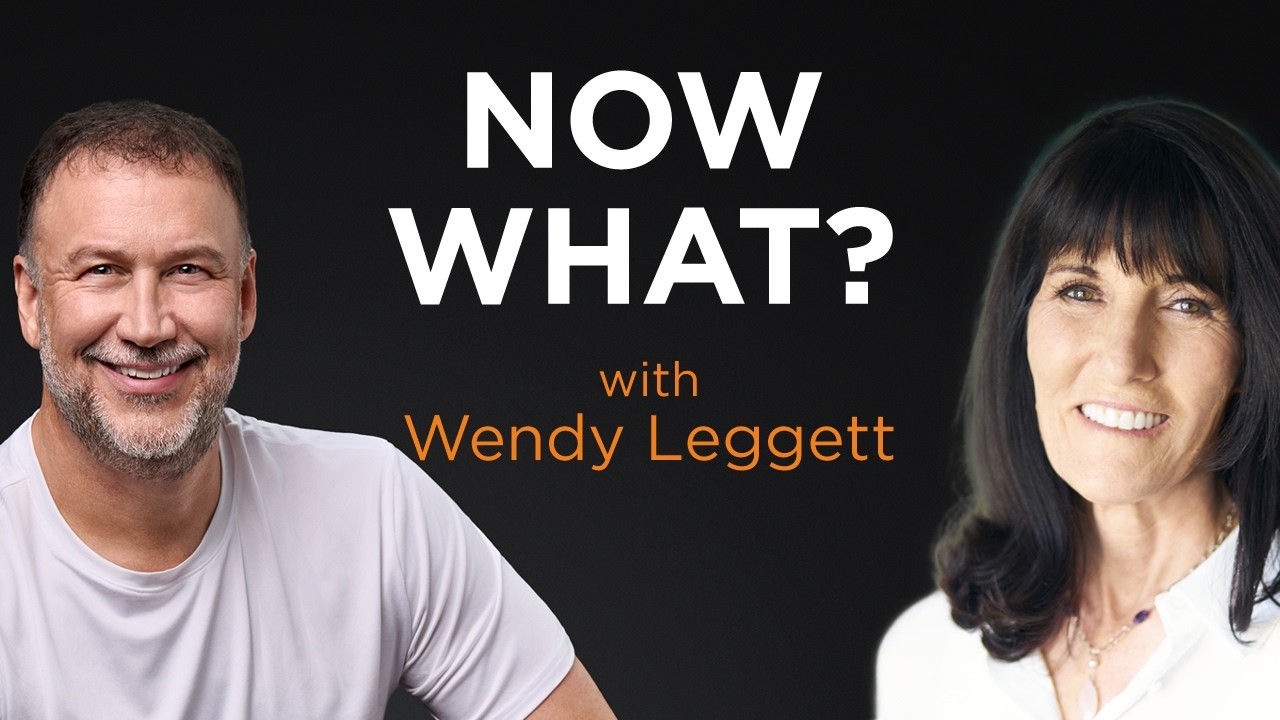
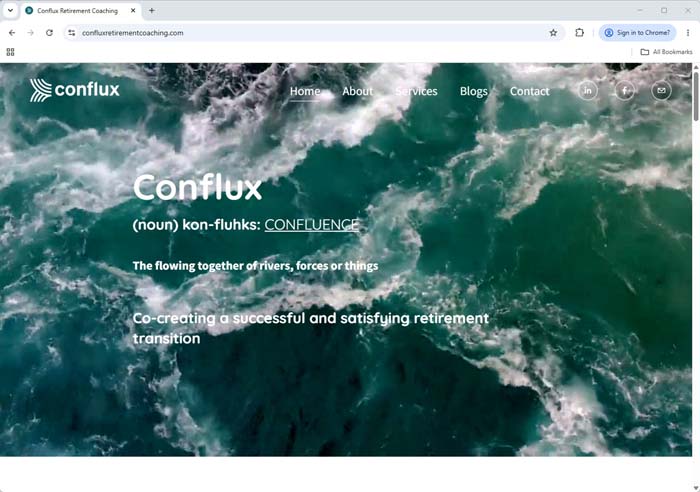
Wendy Leggett is a retirement life coach and the owner of Conflux Retirement Coaching.
She works with people who are preparing to leave their careers as well as those who have already made the transition. Her focus goes beyond financial readiness and addresses the personal side of this major life change.
Wendy helps people think through identity, purpose, relationships, structure, interests, and what they want their next chapter to become.
Her perspective is especially useful for men whose work has shaped how they see themselves and how others see them.
WHY THIS MATTERS RIGHT NOW:
Men over 50 may have another 20 or 30 productive years ahead of them.
That is too much life to leave unplanned.
You do not need every detail figured out today. But you should begin asking better questions about how you want to live, contribute, connect, and grow when work is no longer at the center of your days.
The goal is not simply to stop working.
The goal is to build a next chapter that keeps you engaged, capable, and moving forward.
WENDY LEGGETT'S WEBSITE
PLEASE SHARE WITH FRIENDS AND FAMILY:
If you found this episode helpful, it would mean the world to me if you shared it and this podcast with your friends and family. Thank you!
YOUR WEEKLY EDGE AFTER 50
Every Monday, I send one high-value Unstoppable After 50 Playbook for men over 50 which is built around the powerful conversation from that week's podcast (click here to see an example). Each Playbook includes key takeaways, a clear challenge, and practical ideas you can use immediately, or file away for future reference. No hype. No filler. Just useful ideas and tips for men who refuse to slow down.
No spam. No nonsense. Unsubscribe anytime
FULL EPISODE TRANSCRIPT:
Wendy Leggett [00:00:00]:
The word retirement is one that is in our environment for so, so many years. It's something that when people start career, they start thinking about retirement, sort of. And so it's understandable that if you're building up for that race, building up for that race, once you finally hit that finish line, you're holding up the trophy and you're thinking, I've made it. And so what happens though is that becomes then oftentimes the destination instead of an exploration, instead of a what's next for me. But yet those questions loom large. What is next for me? Who am I going to be now without career and all of that? So, so if we look at it as simply that finish line and we haven't thought beyond and had a vision, then without that direction and without that momentum and excitement, it's understandable that oftentimes we see people decline.
Mike Capuzzi [00:00:52]:
This is Unstoppable After 50, the podcast for men who refuse to slow down. Each week I share smart strategies and expert insights to help you stay strong, healthy, and unstoppable. Welcome back to Unstoppable After 50. This week I'm bringing on Wendy Leggett, who is a retirement life coach. And this is an important topic because a lot of guys after 50 are really starting to think about what's next. And Wendy has devoted her life to helping men and women prepare for what we typically call retirement. This is an eye-opening conversation because really retirement is not what we think it is.
Wendy Leggett [00:01:31]:
It's not.
Mike Capuzzi [00:01:32]:
So, stay tuned for an important conversation with Wendy Laggett. Wendy, welcome to the show.
Wendy Leggett [00:01:39]:
Thanks, Mike Capuzzi. Great to be here.
Mike Capuzzi [00:01:41]:
Yes, I was looking forward to speaking with you because I find myself in the phase of life where, you know, this goal, this destination, this step in my life of retirement is in front of me, and I'm contemplating how I can kind of redirect my efforts. And Wendy, as I was preparing for our interview, I thought about, and I don't know who shared it, But it was such a great quote. And they said that retirement, you shouldn't retire from something, you should retire to something. And when I heard that, I was like, wow, what a great sort of spin on what I'm sure we're gonna talk about today, which is it's not the end, right? It's the beginning. So when you hear that quote, what does that mean to you?
Wendy Leggett [00:02:27]:
I use it quite a bit myself. And I kind of add, I have an add-on to it as well. And it's also that you're not just retiring from something, Retiring to something and with something, because so often people think that they're starting from scratch, that they're starting all over. And I really speak to this, that we're starting from strength, and we can take all of the passions and interests and capabilities and everything that serves us to bring that into retirement with us, with us, and at the same time be very cognizant of the things that don't serve us that we want to leave behind. And so, when you pose that question, retiring to, it is having that vision, it is going beyond the destination or the finish line. Because just like in a race, if you then fall out afterwards, then you're going to be sitting on the couch, which a lot of retirees do because they haven't seen what's the next race, what's the next thing that they want to set their sights on or accomplish or go after.
Mike Capuzzi [00:03:28]:
Yeah. So, that opens up sort of another question then. What, in your experience, because you've been doing this for a while, Like, what has the picture of retirement— what is, you know, back in, let's say, in the '70s, because I can remember my family members retiring back then versus here in 2026. Has the definition or what retirement represents, has it changed much?
Wendy Leggett [00:03:55]:
You know, I think it's changed, but not formally. So, I think if many of us had our way, we would retire the word retired. But it's a shared vocabulary. And so, it's something that we all know what that means. But if we look back to the history of retirement, it really came about in the '30s when people were working in the fields, they were working in the factories, they got to probably the late '50s, early '60s, and they retired. And so, then Social Security came in in order to bridge them for those couple of years until they generally expired. And so, that was kind of the impetus of all of it. Then we moved forward and you're mentioning in the '70s, well, a lot of people had pensions.
Wendy Leggett [00:04:38]:
A lot of people had that safety net and had that gold watch at the end of a storied career. And so, we just have that built into the conversation and built into the way that we've navigated things. But now, here we are now, and we know that pensions are kind of, for most people, a thing of the past. But whether they are, whether they aren't, healthspan, lifespan has dramatically increased. So, if you retire at that typical age, and I don't advocate for it, but if that typical age of 62 or 65 because of Social Security or Medicare, then, you know, hopefully you'll have 20, 30 more years, maybe even more ahead of you. And yet, if we haven't really recognized that we will then possibly have another third of our life left to live and we don't have that vision, and you're talking about destination, then things won't be going in in a path that allows us to grow and thrive. So, that's where I believe that things have shifted is just that healthspan, that longevity, and just the mindset of we want more. I think we used to maybe buy into a narrative of what retirement meant, and now we're shifting it more and more.
Wendy Leggett [00:05:52]:
And there are more people of retirement age. You've probably read there's something called Peak 65 where there are more people in the US right now hitting the age of 65 than ever before. So from 2024 through 2027, 11,000 people every day in the US, or 0.2 million every year, are hitting 65. So there's a lot, and the, the movement will shift because that anti-aging message isn't going to fit as long, you know, because now there'll be more and more that are pro-aging because they're Of that age. Did that kind of track? Make sense?
Mike Capuzzi [00:06:28]:
Yeah, yeah, yeah, for sure. And I'd love to hear, when we talk about the word retirement, I mean, you're right, it has a lot of different— there's the technical definition, but how do you define retirement? Quick pause. If you're not getting my Unstoppable After 50 Playbook, you're missing out. Every week I send a one-page playbook with my key interview takeaways and simple actions to help you stay strong and in control. Get it free each week at unstoppableafter50.com. Now back to the show.
Wendy Leggett [00:06:56]:
I think it's a very personal thing. So for me personally, I don't really think of retiring, which might come, you know, as something funny from a retirement life coach. But I don't think that it is because as I shared really briefly, I don't advocate for someone to quote unquote retire. But I do not want them to abdicate the opportunity if they decide that they want something more beyond career, if they're ready now to leave career behind for any number of reasons, or if unfortunately they're severed and they don't have that opportunity to continue, I don't want them then to think that, oh, now I'm supposed to fit into a certain category now. And so, for me, that word, what I start off with clients is that conversation is, what does retirement mean to you? Because so often people say, I'm going to be retiring at this And it's like, I don't say why, but I open up the conversation to what is it about? What does that mean to you? What are you looking forward to? And that speaks to you mentioning, what are you retiring to? But oftentimes, people just think about what they're retiring from.
Mike Capuzzi [00:08:07]:
Yeah, for sure. And as I said, I'm at the point where I am starting to use the word retirement or semi-retirement in my language when I talk to people. But you're 100% right. I'm 100% in agreement. It is a personal thing. So you're right. My definition of what I'm referring to it is when I think about this, what I'm going to do for these next, whatever it is, 10, 15, 20, whatever it might be. I've lived the entrepreneurial life for over 30 years now, or almost 30 years.
Mike Capuzzi [00:08:37]:
I take that back. Almost 30 years. So I know what it's like to be out there hustling and doing the grind and doing everything to put food on my table for my family when years ago, and now, you know, working with clients, et cetera. And my definition of retirement is just, I don't have to do what I don't want to do anymore. So, you know, if I didn't enjoy working with clients or it just got old after a while, which, you know, in a lot of respects it has, I don't have to do that anymore. Uh, I'm redirecting my efforts. I'm not going to be sitting on a beach or playing golf or any, you know, anything like that on a daily basis, but I'm redirecting efforts into really this podcast and this movement of trying to help more guys over 50 navigate health, wellness, and retirement. So, any thoughts on that?
Wendy Leggett [00:09:23]:
Yeah. There's a word that's really used quite often now around work optional. And so, instead of thinking about retirement, yeah, that idea that if the financial house is in order, which is a piece of it, but it isn't everything, then what would we want to be doing? And so, I think you're speaking to that. Again, that word retirement is the one that we share. But so often people think because I made a big career change and because I'm of the age that I've retired, but I haven't. I haven't retired. I have a thriving business. I love what I do.
Wendy Leggett [00:09:57]:
I'm very energized about it. But some people could say, well, because you meet these certain criteria, then you must be retired. And so, it's like, okay. I don't view it that way. But so I think it can be something that can be very invigorating and very expansive, but it can also be very restrictive and can kind of put people in a box. And the thing I really want to raise up is that we want to erase the shoulds or the supposed tos. So you should be retiring at a certain age, or you're supposed to be doing these certain things when you've quote unquote retired. And let's like write the script ourselves and decide what that story looks like, what that chapter is about.
Mike Capuzzi [00:10:37]:
Right. I mean, and for some, you know, for some guys, it might be 50. They feel like they want to live a certain life and they're, quote, retiring at 50. I just interviewed a medical doctor, an MD, who's got a thriving practice and he's 75. Doesn't look it. And I was astounded when I heard all that he's doing and how, you know, I'm sitting here in my mind thinking, you know, why aren't you at the golf course or the beach or whatever? Right. And he's, he's—
Wendy Leggett [00:11:03]:
Wow.
Mike Capuzzi [00:11:04]:
Seeing patients and doing all kinds. So it is a personal and very subjective decision. When guys are entering this phase of life, Wendy, and all the experience that you've had, you know, what are some of the common thoughts going through their head that's causing consternation? Obviously, probably financial is one of them, but what, what are some of the common things guys are thinking about And what suggestions do you have about overcoming those?
Wendy Leggett [00:11:34]:
Yes. If you're speaking about— because I really do focus on those that want to start planning their retirement or people who have already retired. And so, for those that are planning retirement, it is one of the pieces of it, just like we're talking about, is what is it about retiring that feels compelling to you? How do you define it? What does that look like for you? And for so many, they can't see beyond the career because their identity and their work has become so intertwined. There's a saying, if you are what you do, who are you when you don't? And that can really weigh very heavy for people who, again, their work has become so intermeshed with how they see themselves and how the world has seen them. So that's one of the areas for exploration, not looking that we need to find now a new identity. I speak strongly about evolving the identity. So again, we're bringing with us all of those things that make us who we are, and then we're just moving it in another direction that maybe career didn't enable us to do. Maybe achieve more balance than we've had, or maybe pursue some interests.
Wendy Leggett [00:12:44]:
Or for a lot of my clients, they say, I don't have any interests. I don't have any hobbies. I had one who said, I don't even like people. And so I was like, okay, um, but But just kind of deconstructing that then and seeing, saying, okay, it's— that's okay though. But, but what lit you up when you were younger? Or if the money didn't matter, what would you be doing? Or if nobody was watching? And so those are the kinds of things that I would, would really want to offer up, is that if you're looking to leave work, leave career, before you do that, let's have a roadmap. Let's have a runway. And pepper in adding maybe a hobby or an interest or a new vocation or rebuilding some relationships or making fresh friends. Let's not go all the way up, all the way up to that finish line and then all in and then all out because that's where people then, that becomes so destabilizing.
Wendy Leggett [00:13:42]:
And it's not to say that we can't then still move forward, but let's take advantage before retiring. of starting to hand off the baton, develop the succession planning, have the knowledge transfer, and also start moving personally in a way that's going to then set us up for success after we've retired. Did that get to your question or what else?
Mike Capuzzi [00:14:04]:
Yes, yes, yes, yes. As a matter of fact, it kind of prompted me to remember one of my colleagues who's a very successful attorney here in the Philadelphia area. Uh, has pretty much retired. And because I know he's still going to be doing, working with clients, but you know what he's doing now? He's writing children's books. It was something he's always wanted to do. I mean, high-profile Philadelphia attorney now writing children's books.
Wendy Leggett [00:14:32]:
Wow.
Mike Capuzzi [00:14:32]:
And it's so cool. And he, when we talk about him, when I'm meeting with him and he's just, he lights up, he loves it. It's not about the money. As a matter of fact, he's trying to turn it into a, uh, a revenue for nonprofits. So it's, it's, you know, it's really neat to see that. And to the point of he's given himself, he's allowed himself to kind of remove himself from being that high-profile attorney and doing something that is completely different, which I just respect.
Wendy Leggett [00:15:02]:
I love, I love that story. And I think that really typifies what in the beautiful world, what everyone would do, right? Is that we just kind of unhook ourselves from the doing and we really tap into Hey, what's going to light us up? What's going to really allow us to feel like we're contributing to ourselves and to others and to a greater good? I want to speak back to something that you mentioned earlier because I think it's important that we do really think about this set point, that retirement is so age-related. And if we can really abolish that and let go of that and really key in on what we see for ourselves beyond career. So, I've had some clients very planful. I remember one couple in particular that when they first started career, they decided they wanted to retire early. So, they always mapped out so that they would be retiring in their mid-40s because there were a lot of things they wanted to do. And so, that's on one side, you know, that outlier. I did a presentation where a gentleman afterwards came up and said, I love what you're doing.
Wendy Leggett [00:16:08]:
And I want to work with you. I'm not yet ready to retire, but I'll be in touch. He was 92 with his CPA firm and just loving what he is doing and everything in between. So, yes, I work with a lot of people in their 50s and 60s, but I have a lot of clients that are in their 70s and some into their 80s as well.
Mike Capuzzi [00:16:28]:
And I think it's important, not maybe not so much for this particular podcast, but even just in conversations I've had with other folks, you know, and there's no stigma. If that guy's 92 and he wants to work and do it, like, it's, you know, people, oh, he's got to work or something like that. And that's not necessarily true. Or, you know, that's, that's his whole life. Maybe not necessarily true. I mean, some people are just designed, they know that's their life purpose and that's what they want to do. And regardless of their—
Wendy Leggett [00:16:56]:
Yeah. Yeah. As long as other things aren't in the balance, aren't suffering, because there are— when people stop and say, okay, about balance, and, and recognize that their relationships are really suffering because they're all in with work, or their health is really suffering and they're not giving it the attention because they're all in with work, then it's a matter of, can you step back and kind of redesign and, in the beautiful world, rebalance? Or is it a matter of you then have that time when you're going to then move out of career and be able to really give a lot more attention to the health or to the relationships. I had one client, because I go through one exercise where we look at the balance, you know, how you— if your life is a pie, how you cut it up and spend your time. And he was all in with his career and decided that when he was done, he was going to be all in with volunteering. And when we started stepping through that, He recognized that, gosh, his wife, who had always been saying, you're not spending enough time in these different areas in our personal life, that was still going to be the issue when he retired because he was going to be just as all in with volunteering. So we want to take a step back and look at all the piece parts and recognize, are there other areas? And maybe it's around rest and relaxation too, that maybe we've been grinding for years and years and not really gotten to get away. So maybe we need a season of rest.
Wendy Leggett [00:18:25]:
A season of adventure, a season of growth. So, this isn't a one-and-done. It's an opportunity to continue to bring in some of those things.
Mike Capuzzi [00:18:36]:
Well, it also sounds like, you know, this word retirement as it's defined now in 2026 is almost like it's not a singular event anymore. You know, it can be an evolution. Yes, maybe you're stepping out of the day-to-day work that you do, that you were doing, but you can, you know, whether it's volunteer, coach, whatever. I mean, there's so, I mean, that's the beauty. And it always makes me sad when I hear people saying, you know, they can't find a job. And I understand, you know, it's, it's, it's, it can be a challenge, but there's so many opportunities to add value in our world. It's a little more challenging when you try to get paid for for it, but it can still be done. And, you know, I just think there's so many opportunities because, like you said earlier, so much wisdom has been collected, so many experiences have been had.
Mike Capuzzi [00:19:30]:
What about the guy, Wendy? Let's say he's— again, I, I've, I've turned 60 this year, and that's not— that was not the button that, you know, the switch that all of a sudden had me thinking about it. What is happening in a guy's life To where he's starting to think, you know, and he's, he's got the ability to, you know, quote, retire whenever he wants, however he wants. What are some of the mental things going on? What are they typically thinking about? Um, you know, fortunately I'm, I'm healthy, you know, as far as I know, everything's good. So it's not like I have to focus and, and, you know, and take care of myself more than I already am. But what are, what are guys like myself, what are they thinking about? Like, You know, what's making them feel like it's okay to make this transition, if you will?
Wendy Leggett [00:20:17]:
I mean, that's such a great question and a difficult one.
Mike Capuzzi [00:20:20]:
It is. I apologize.
Wendy Leggett [00:20:21]:
Yes. Oh, no, no, I love it. Because it really is personal. And so, I think for many people, they are kind of of that mind of all in and all out that, you know, you just work, work, work, work, work. And then whenever you hit that point, whether it's a set point of an age or a set point what you have in your investments, in your, um, in your portfolio, that that will be the time. But I don't, I don't see that people look beyond that very often because how tough can retirement be? You know, it's going to be endless weekends, leisure travel, and the big thing that everybody looks forward to is freedom. But all of those things have a dark side to them, and retirement has a dark side. And that's what I Really, that's why my work is so important to me because that is so overlooked.
Wendy Leggett [00:21:11]:
The word out there is that if you have your financial house in order, everything will be in great shape. But if you don't have a strong foundation underneath it— and so as we talked about, we talked about identity. We haven't talked about meaning and purpose. When you think about purpose being baked into work, we have a sense of accomplishment. We have a goal. We're getting accolades. We're recognized. We feel contributory.
Wendy Leggett [00:21:34]:
When all of that goes away, then what do we have? And so then we're supposed to find that one purpose. You know, everybody knows, oh, I should find purpose. Well, how do you do that? And then you feel like, oh, I have to replace this robust career with something just as remarkable in retirement. That can be a showstopper. So it's no wonder that people say one more year or they stay overattached to their role. And yet, if we can deconstruct it and say instead of that one purpose, Let's feel purposeful. So, let's not look at that one thing, but instead, how can we, in a large way or a small way, feel purposeful? So, maybe it is volunteering on a part-time basis, taking care of grandkids on occasion. Maybe it's helping a neighbor, but maybe it's a big P purpose with starting a nonprofit, starting a business, being on several boards.
Wendy Leggett [00:22:28]:
But let's make those decisions. So, I talk about a retirement by design, not default. Let's step into it with the full picture of what will feel gratifying to us, because if it's gratifying to us, more than likely it's going to be serving others as well. And so that's the piece that I think is very overlooked, is we really skew to the financial piece and we figure the rest will all fall into place. And it does sometimes for a time. There's a honeymoon phase. For some people it lasts 2 months, for some people 2 years, some— for some people their lifetime. And awesome too.
Wendy Leggett [00:23:02]:
But for people who want more, oftentimes those— the golfing and the leisure and the traveling— it's, it's going to be Groundhog's Day soon. And I've had a number of clients say, I've traveled enough, you know, or I've fallen out enough. And so we want to make sure then that there is enough there for people to continue to feel like they're contributing, thriving, growing. So I mentioned around purpose, mentioned around identity. There's also around connection, and that's super important too because again, all of those one-on-ones and groups and chats and networking and meetings, all of those are part and parcel of work. If we think about it, when you leave all of that behind, who are you going to be connected with after you leave career? For a lot of men especially, they haven't fostered some of those relationships. There are some that have strong social circles, But many, many more do not. And I had one client say, well, you can't make new old friends.
Wendy Leggett [00:24:06]:
And so he wasn't wrong about that. But on the other hand, it was a really limiting belief that then he couldn't duplicate the relationships he had. So he wasn't stepping into them. So we really have to step back and say, what's it going to look like for me when I leave the career behind? The feelings around purpose, identity, connection. the structure. That's another big piece of it, is that we've worked to a rhythm and a routine. And if we don't put something in place that works for us— and some people are more planful than others, some are more flexible and spontaneous, and others want to be more predicted and more prepared— but all of us need some sense of structure. I call it structured freedom, that we really work toward looking what feels Like that next phase for us, but at the same time gives us that rhythm that we were so used to because we just operate better that way.
Wendy Leggett [00:25:03]:
So, I covered a whole lot there.
Mike Capuzzi [00:25:04]:
Yeah, you did. And I guess all of that is sort of to that— you said that dark side of retirement. Like, that is a really vivid picture in my mind when you— and it's so— is that so the connection, the purpose, the mission, that's Are you— you're saying that if those aren't in place or they haven't been thought through or worked on, that is the dark side. Is that correct?
Wendy Leggett [00:25:29]:
That is. And that's the work that I do with clients. And so, if we get to map it out in the perfect world before they've retired, then we have this runway and we walk through this process. If not, then it's never too late, of course. Then we look at, okay, where are the holes for you or where are things not going in the direction that you would have hoped? And so, we kind of reverse engineer and see where we're at.
Mike Capuzzi [00:25:53]:
So what does that runway look like, Wendy? Like, again, just, we'll use, let's just use numbers so we can kind of think about it in terms of a timeline. Let's just say 62. If, you know, if a guy's thinking about, I'm going to retire at 62, in your ideal scenario, how much further to the left of that is he starting to work on and do this stuff?
Wendy Leggett [00:26:18]:
Well, as soon as somebody even has a glimmer of it, then what I would really recommend is start to pepper in a little bit of the things we've talked about. So either, you know, focus on some of your connections and relationships outside of work, or start to explore. I talk a lot about a curiosity list. So that's different than a to-do list or a bucket list. It's where something might just be interesting to you. You're not sure yet. You're not making any commitments, but you start to develop this curiosity list. And so taking one little step into that curiosity list.
Wendy Leggett [00:26:53]:
So maybe it's that I'd like to learn a language. Okay, so what language is it? Why do you want to do that? And then research it a little and maybe, maybe watch a language show and see if it's of interest before you dig into signing up for the 12-week program or whatever. That's how curiosity works. Lists work is that there's kind of a red light, green light, and you just see, does it still interest me? I'll continue with it. If not, then I'm going to let it go. So that's one of the things that is helpful. When you talk about then what else can be done, it's really then looking also at building in, like, if that area of health, okay, then start slowly get back to the gym and build that in. So many people say, when I retire, then I'll get healthy.
Wendy Leggett [00:27:45]:
Well, instead, let's use that runway to take it step by step. So again, you're not in one day and out the next. Because that black or white proposition, when we're all in at work, running, running, running, and then all out of work and falling on the couch and watching TV, that's not a healthy proposition. And we can do something about it. We can be proactive. So the ideal time is As soon as this starts to be of interest, but for those that then really set their sights on preparing for retirement, generally anywhere from one to three years ahead gives us that ideal runway. That doesn't mean that I don't work with people that are much closer to retirement, and again, those that have already retired. For those that have high-powered positions, a lot of responsibility, they own their own business, then we ideally would want a little longer runway so that they can bring people on board if needed to be able to transition.
Wendy Leggett [00:28:42]:
Transition, knowledge transfer, succession planning, or if they're going to sell the business, then there needs to be, you know, the bandwidth for that. So they're not just focused on the financial piece, but again, preparing themselves from that identity-connected, purpose-filled self as well.
Mike Capuzzi [00:29:00]:
And I got to imagine, over the course of your career, you must have stories. I mean, unfortunate stories where, in this case, men have not prepared, have retired. And I hear those anecdotal stories and they're, unfortunately, they pass away a few months later or something like that. I know that paints a bleak picture, but I've got to believe it's a reality.
Wendy Leggett [00:29:26]:
It is a reality. And it's yet in many cases, not all, in many cases, we can be preventative. You know, in many cases, if we come in and we know the dark side, which is what you and I are bringing up as well, and we enter into retirement with what I call realistic optimism, so we don't have that idealistic view that it's going to just fall into place, and we don't have the pessimistic view that it's one foot in the grave, but instead realistic, you know, know what we're up against and what we need to do to move forward in a way that will continue to allow us to thrive, then, then your listeners aren't going to fall into that category. But it's for those that have this expectation that it is a destination and a finish line and nothing beyond, that then they can feel extremely destabilized or disconnected, and then, then health problems set in. Um, and so, and additionally, for those that don't have any kind of plan or roadmap at all, um, what studies show is that The average retiree watches 40 hours of TV a week. And so right there, then we see that, you know, that's replacing a quasi-full-time job with watching TV, someone else's life. We know how unhealthy that is. Also, having a mindset that is anti-aging rather than pro-aging, we've learned that that can shorten our life as well, because where the mind goes, the energy flows.
Wendy Leggett [00:30:52]:
And if we start to feel like that there's nothing for us, then there can be a decline there as well.
Mike Capuzzi [00:30:58]:
And I'm sure you didn't mention this, but I've had this conversation with my wife recently because all our parents are still alive, thankfully. And I always had this notion, oh, older folks, you know, 70, 80-year-olds, they're not on social media. They're not on their gadgets all the time. You know, the young kids are. That's not the truth anymore. I cannot believe how much I see when I'm out and about, or even our own family members are on their damn phones. So, I'm not even sure the TV is the issue anymore. It's that damn little screen.
Wendy Leggett [00:31:29]:
Just all of them.
Mike Capuzzi [00:31:30]:
Yeah.
Wendy Leggett [00:31:30]:
Well, we get that dopamine hit from all of them, right? You get the little ding of the alert. I think they've done research about our heart rate.
Mike Capuzzi [00:31:38]:
It's scary. Yeah, yeah.
Wendy Leggett [00:31:39]:
Yeah, yeah. And it's— and it is addictive, and it's built to be addictive. And so, if we don't have anything that's compelling, then it's understandable that people fall into that. But, but you do bring up the point of people that are in like their 70s and 80s. And, you know, positive psychology came about in the '90s. And so for those in those age groups, the idea of looking at things beyond the black and white and the tangible, the no pain, no gain, doesn't happen as often. And so it's like, okay, you're not You're feeling unmoored about retirement. Get over it.
Wendy Leggett [00:32:15]:
You know, just move past it. Push those negative emotions aside or down. And yet we know that this is a normal— the dark side is there. And so, it's normal. It's not— there's nothing that anybody's failed at. There's nothing that somebody needs to feel shameful about. It is important to then recognize, well, what are those emotions telling you? I had one client. That came to me that had been in very heart-centered work and was retiring because her husband had retired several years before.
Wendy Leggett [00:32:45]:
And every year she put it off, but finally made the decision. When she started working with me, she was beside herself. She said, I feel like there's something dying inside. And it's because she was so connected with that work. And I'm going to think that some of your listeners feel that same way, that that's what defines them. And so That's normal. So let's, let's not feel shame about that or feel like it has to stay underground. But bring those feelings up to the surface and say, okay, what, what, what needs more attention here? What else is possible here? Because those negative emotions are just signals.
Wendy Leggett [00:33:20]:
They're not good or bad. They're just telling us something needs more information or attention. So I hope that doesn't sound too woo-woo.
Mike Capuzzi [00:33:27]:
No, no.
Wendy Leggett [00:33:28]:
It really will go unaddressed then, right? And so No wonder then that some people decline because they feel like, well, there's something wrong with me, or I, I missed that day in school learning about what, what I should be feeling like. And so it can be a really downward spiral for people.
Mike Capuzzi [00:33:45]:
And Wendy, before I ask you to share your information and how my audience can learn more about the work you're doing, I just, I want you to kind of picture in your mind right now, just, I want you to talk to one guy. So you're just talking to one guy. Let's say he's in his 60s. And, you know, he thinks he's ready for retirement, you know, to this next phase of his life. He's not sure. He's concerned. What would you say to him today? Like, what would you say to him to encourage him to, you know, think a certain way based on all the work that you've done and the sort of that pathway, you know, is really the one he should be on?
Wendy Leggett [00:34:20]:
Yeah, it does start with that question of why retiring now? You know, what is it that you want for yourself? And if that individual knows that this is the right decision for them, then it's really a matter of what do you want to bring with you and to you into retirement so that we're not feeling as though, again, we're starting all over. But that's very important because so often men, their identity is woven into their work and we can have an identity crisis. And that terminology isn't used around retiring. It's used usually around midlife. But major life transitions where we're ending something and we're starting something anew crops up a whole lot of difficult emotions, a lot of stuckness, a lot of anxiousness, a lot of overwhelm. So, that's what I would say to them is really then step back and look at what's next for you. What do you want for yourself? Who do you want to be in this next chapter?
Mike Capuzzi [00:35:18]:
And Wendy, how can my audience learn more about you and the work you do?
Wendy Leggett [00:35:22]:
Thanks. Well, I'm the owner of Conflux Retirement Coaching. That's C-O-N-F-L-U-X, and they can go to my website, confluxretirementcoaching.com. I offer a really great Retirement Insights assessment session. That's a one-on-one that helps us get at all of the things we've talked about today and helps people really see what areas they would want to put more attention on, either on their own or with me. And I have a great newsletter as well that comes out every, every 2 weeks, and they can sign up for that on my website as well. Thank you.
Mike Capuzzi [00:35:56]:
Very good. Very good. And Wendy, before we leave, I have my Unstoppable After 50 trifecta. It's 3 quick questions, 3 quick answers, and I'm going to kind of refocus them on this topic of retirement. So, what's one hard truth men need to hear about their future?
Wendy Leggett [00:36:18]:
And it can create an identity crisis. I mentioned that, but it can because we oftentimes define ourselves by our work. We're very tied to that as the title, the role, the responsibilities. And so looking beyond it is critically important and shouldn't be overlooked.
Mike Capuzzi [00:36:36]:
What's something guys typically do to potentially wreck their retirement? the retirement they should have and could have, but they're doing something today that's potentially wrecking that.
Wendy Leggett [00:36:50]:
By having that total focus on the financial picture. Yeah. So, and really then outsourcing the rest of the decisions, maybe even to their financial advisor. And I work with a ton of financial advisors, but that behavioral piece, that personal readiness oftentimes is not going to be part of the conversation.
Mike Capuzzi [00:37:09]:
And finally, what's something, just one thing a guy can do this week in the, in the world that you live in with this, this next phase of life to be unstoppable?
Wendy Leggett [00:37:20]:
Having an honest conversation either with themselves or with their partner or a trusted friend to really start to talk about the concerns they might have or the aspirations they have or anything in between, because without that communication, then we don't make the connection of what could be in store for us and what we want and how we can continue to be our best selves.
Mike Capuzzi [00:37:44]:
Well, Wendy, thank you very much. I appreciate the wisdom. I appreciate the insights.
Wendy Leggett [00:37:49]:
Yeah, thank you as well. It was a great opportunity. I thank you for it.
Mike Capuzzi [00:37:53]:
I hope you enjoyed that conversation with Wendy Laggett. And if you find yourself in the phase of life where what we discussed today is looming large large, and you've been thinking more about what this next step in your life looks like, by all means, check out Wendy's website, check out her resources, and really just start that process of being prepared. And if you like what I'm doing here with Unstoppable After 50, please make sure you like and subscribe to the show. Go check out the YouTube channel. Appreciate you subscribing there. And also make sure you check out unstoppableafter50.com and sign Sign up for my weekly playbook. Every week I send a recap to my group of men who've asked for it, a PDF that's designed to be printed and saved, and it's a recap of that previous week's episode. So check out unstoppableafter50.com.