Dr. Deborah Westergaard [00:00:00]:
I think the biggest mistake that they make is ignoring joint pain. A lot of people over 50, they think that joint pain is something that happens naturally with age, but it's a signal. It's a signal that your body is giving you that, that something's wrong, and there are things we can do about it. So don't sit on joint pain.
Mike Capuzzi [00:00:23]:
This is Unstoppable After 50, the podcast for men who refuse to slow down. Each week I share smart strategies and expert insights to help you stay strong Welcome back to Unstoppable After 50. This week's guest is Dr. Deborah Westergaard, a double board-certified pain medicine physician and expert in regenerative medicine. This is an interesting conversation about the importance of staying mobile and the solution of regenerative medicine for those of us who are aging. Yeah, so I'm Dr. Deborah Westergaard. who have more serious mobility, pain, and joint issues.
Mike Capuzzi [00:01:01]:
So stay tuned for an important conversation with Dr. Westergaard. Dr. Debra Westergaard, welcome to the show.
Dr. Deborah Westergaard [00:01:09]:
Thank you, Mike Capuzzi. It's an honor to be here with you.
Mike Capuzzi [00:01:12]:
Well, I appreciate your time, Dr. Deb, and appreciate the conversation we're going to have because there's nobody watching or listening to this that there's not some relevancy to their life. So Dr. Deb, before we jump in and talk about your area of expertise, because of your background, it's so wide and so deep. Can you share a little bit of your background, what you do on a, really on a daily basis, how you help others?
Dr. Deborah Westergaard [00:01:37]:
Sure, sure. Well, I'm trained as an interventional pain physician. I'm double board certified. And really for decades, I spent my life and my career dampening the pain signal. And then as I got into middle age and I started dealing with personally joint issues, I started to look for ways of avoiding major surgery and avoiding losing my mobility. And what I found was regenerative medicine, specifically orthobiologics, which is the use of your body's own healing products to fix the problem, or at least repair the problem to the point that you're functional and your pain is either gone or better. And that usually includes the use of platelet-rich plasma or bone marrow stem cells.
Mike Capuzzi [00:02:35]:
Very interesting. So ironically, I just had another interview with a gentleman on this very topic of regenerative medicine. And it really, it's an eye-opening thing because I think a lot of, especially laypeople, right? If it's not something you're necessarily going through. He dealt with a lot of athletes, professional athletes, and, you know, stem cell therapy is very common. But for everyday guys like me, it's, you know, not something I'm thinking about. But it is an eye-opening conversation, and I'm sure we're going to, you know, open some more eyes today. Dr. Deb, one of the things that I really found interesting as I was kind of preparing for this interview is you've said, you know, a lot of guys, you know, if they're if they're kind of in tune with better health, they're getting their blood tests, you know, they're checking their cholesterol, they're working out.
Mike Capuzzi [00:03:22]:
But idea of focusing on mobility may not be at the top of that list. But yet you consider mobility a really important pillar for longevity. Can you go a little deeper on that?
Dr. Deborah Westergaard [00:03:34]:
Sure, sure. And I totally agree with supporting your general health. Um, I mean, your labs matter. But if you can't play golf, hike, or get on the floor with grandkids, the labs aren't quite as important. But these procedures work better if you're in good general health. They still work, but it's always better if you're eating right, if you're exercising, if you're doing the right things to support your body. What was the other part of that question?
Mike Capuzzi [00:04:05]:
Well, it's the concept of mobility really being a pillar of longevity, right? 'Cause God knows we hear those horror stories stories of, you know, men and women, but, you know, this focus— this podcast is for men. You know, a guy falling, for example, as he gets older, or, you know, having an injury and not recovering. I mean, we want to encourage the audience to think about mobility at a higher level, correct?
Dr. Deborah Westergaard [00:04:32]:
Mobility is so important. You have to be able to get out there and work out. You've got to keep your your muscles toned. All of this even supports cognitive function. And so in my practice over the decades, while I was dampening those signals, I saw a lot of post-knee replacements, a lot of post-hip replacements, post-shoulder replacements. And one of the things I noticed is that very often range of motion was not maintained, and God forbid if they got an infection. Those are really, really hard to handle, uh, post-surgery. And so the goal is to get the joint functional enough that you don't have to have the more invasive procedures.
Dr. Deborah Westergaard [00:05:17]:
For instance, I'm not a man, but I have a hip and I overtrained for many decades and I ended up tearing the labrum, had surgery, got it fixed, but years later it, I had a sort of an accelerated loss of cartilage and it was kind of before a lot of this stuff was a little more available and more mainstream and so I had a hip replacement but I understand what it feels like in middle age to be a leader but to be limping, I mean that really, really messes with your confidence and I can't even imagine how that would would mess with a CEO or a man that is, you know, trying to, you know, make his way in the world. I mean, we have people that do well in wheelchairs, but that would not be optimal.
Mike Capuzzi [00:06:12]:
Thank God, personally, I don't have— I haven't had any of those challenges yet. I have a family member, my dad, who did have a fall in his 80s, and he was, you know, walking 3 or 4 miles a day up to that point, and Got caught in a rainstorm and slipped and broke his hip, et cetera, et cetera. Fortunately, he's still kicking, but it's—
Dr. Deborah Westergaard [00:06:35]:
Yay!
Mike Capuzzi [00:06:35]:
But he can, he cannot, he does not have that mobility he used to have. And the bigger issue, Dr. Deb, which I know you can elaborate on even more, is the psychological effect. I just spoke with him this morning and he was lamenting and It's, that's the big thing. Um, in my opinion, he lives by himself. So like there's this snowball effect, you know, what's been your experience with that? You know, the psychological effects of being non-mobile. Quick pause. If you're not getting my Unstoppable After 50 Playbook, you're missing out.
Mike Capuzzi [00:07:11]:
Every week I send a one-page playbook with my key interview takeaways and simple actions to help you stay strong and in control. Get it free each week at unstoppableafter50.com. Now back to the show.
Dr. Deborah Westergaard [00:07:24]:
Oh, it's huge. It's absolutely huge. And I've seen this in many of my patients. I can think of one older gentleman that was super fit in his 70s, super fit. I mean, that man, he had, he had just the world. And he ended up with a hip replacement, he did okay after that and then he had that one last back surgery and after that, I mean, he's almost wheelchair combined, it's, he's up and down but it's sad and when I think about it, if he could have avoided the surgery, now there are situations where you have to have the surgery but sometimes you can be a candidate for surgery and you can also be a candidate for orthobiologic treatment. And so if you can avoid the surgery, you avoid the potential risks.
Mike Capuzzi [00:08:17]:
Right, right. Which obviously, I think, you know, in most situations is the preferred pathway if possible. So let's, let's kind of move away from an acute situation like a fall where surgery was sort of required right away, and let's talk about guys over 50 who are trying to live their best lives. Yes, there's some common aches and pains. Tell me more about this whole orthobiologic solution. What does that mean for an everyday guy who doesn't have an acute situation but wants to feel his best?
Dr. Deborah Westergaard [00:08:49]:
Well, typically you would need to have joint pain for me to consider an orthobiologic solution.
Mike Capuzzi [00:08:57]:
Now, real quick, is that joint any type of joint pain, doctor?
Dr. Deborah Westergaard [00:09:00]:
No.
Mike Capuzzi [00:09:01]:
Okay.
Dr. Deborah Westergaard [00:09:01]:
Joint, ankle, foot, Finger, toe, shoulder, elbow, you know, basically musculoskeletal joints. For instance, if someone has knee pain and they find that they're, they're having to cut back on their jogging, and so now they're not feeling as fit, they're gaining a little weight, but they just tell themselves, you know, my dad, he had knee pain at this age, you know, it's just part of getting older. Well, it's not necessarily part of getting older. It is maybe a problem. Your pain is telling you something's wrong. You need to have an evaluation and then decide if it needs to be repaired. And sometimes you can get away with not doing anything at all, but don't ignore the pain.
Mike Capuzzi [00:09:52]:
I would have to think, especially when we're talking guys, that there's probably a lot just— that a lot of guys just ignore it and sort of think, you know, This is just it. This is, this is 50, 60, whatever it is. Or, hey, I'm working out, therefore I should expect to always feel pain. Are there any sort of— I was gonna use the word biomarkers, but that's not the right word, but just sort of criteria that would signal to you that a, a guy should come in and see a specialist like yourself? You know, that's where it's more than just that nagging pain and it's something more serious.
Dr. Deborah Westergaard [00:10:23]:
Yes. If that pain is interfering with your daily activities, or worse, interfering with the things you like to do, come on in and let's take a look at it. That's when you know that it's important.
Mike Capuzzi [00:10:36]:
Just out of curiosity, because I shared this with the— my other inter— uh, on my other interview, because he mentioned the word, um, tennis elbow. Now, for the first time ever, I experienced tennis elbow. I was working in the yard using a chainsaw, and all of a sudden The next day I could barely move my arm. And for the next year, almost a year, I could not believe the pain I was experiencing. And I was reading and doing this and, you know, YouTubing and you name it. There was actually a guest on my podcast who suggested, because I had really dialed back my working out, my strength training, and he suggested, no, pick it back up and start, you know, going back at it. And for me, it fixed it like almost overnight. I don't know what happened.
Mike Capuzzi [00:11:17]:
But like a situation like that, Dr. Deb, tennis elbow, which— yeah, should I have gone to a doctor? Like, was there anything I could have done? Because I literally suffered for about a year of, you know, trying to get the milk out of the fridge and having to use 2 arms, you know, brace my arm.
Dr. Deborah Westergaard [00:11:33]:
I can tell you what happened. Your body repaired the problem. That's just lateral epicondylitis. Those tendons were either partially torn Relax and probably partially torn if they were, if you were in pain. And what I would have done is I would have seen you and then I would have sent you to physical therapy, which is what you did on your own. You did your own physical therapy. Yeah. Well, it worked out, right? And so, yes, if you'd have come see me, we have done that and you would have had the same outcome, plus the physical therapy bill.
Dr. Deborah Westergaard [00:12:08]:
So in your case, it worked out.
Mike Capuzzi [00:12:10]:
But these, like, so we're going to kind of segue to these orthobiologics. That would not— would that have been a solution or no?
Dr. Deborah Westergaard [00:12:18]:
Yes, absolutely. But with you personally, the physical therapy would have done what you needed, so I wouldn't have injected you. But let's say you came back again, you know, I did 6 weeks of physical therapy and still bothering me a lot. Well, that would have been a pretty easy fix. I would have gotten an MRI and I would have looked at it with an ultrasound If I could see the torn tendons on the ultrasound, I probably wouldn't need the MRI, but I would get the MRI just to make sure there wasn't something else in there that I needed to know about. And then I would bring you in, I would draw blood, I would process it, and I would inject PRP into the lateral epicondyle or the tendons attached to it.
Mike Capuzzi [00:12:57]:
And just out of curiosity, 'cause again, this is new to me, assuming everything went well with that therapy, how soon can you kind of, How soon could I have felt relief?
Dr. Deborah Westergaard [00:13:09]:
You know, it varies from person to person. You know, typically I tell my patients 6 weeks to 3 months for full healing, but I do typically see pain relief sooner than that. I actually saw a guy today who I'd done a bone augmentation on, which is a treatment for moderate to severe osteoarthritis of the knee. The newer studies are showing that if you inject the bone marrow directly into the bone, about 82% of the patients in the study, and it was like a 15-year study, 82% of them avoided knee replacement. These were patients that had really bad knee arthritis on both sides, and the orthopedic surgeon did a knee replacement on one side, and then he did the bone augmentation on the other. And so, you know, that's a huge amount of people and it's over a long period of time. So anyway, I did this guy, he was in his mid-50s and I drilled into his patella and into his femur and I'm seeing him 6 weeks later and I'm like, hey, what's your pain score? He goes, what do you mean? I said, well, what's your pain score? He says, zero, I don't hurt. And it always surprises me that they get better so fast and I said, well, When did you stop hurting? And he said, honestly, it was the day of the procedure, it kind of hurt, that night it hurt, but really the next day I just didn't have any pain after that.
Dr. Deborah Westergaard [00:14:35]:
Now, I mean, not all of them do that, that well. Some of them will have more pain, but I guess the answer to my— to your question is it's variable from person to person, but you will get back to your regular daily activities a lot faster typically than with surgery, and You didn't have any normal tissue cut into to get to the abnormal tissue.
Mike Capuzzi [00:14:57]:
Right, right, right. That makes sense. So let's go focus the conversation on orthobiologics and what that really means. 'Cause again, I'm assuming a lot of guys watching or listening, they may know bits and pieces. So can— let's start at a sort of a high 101 level and describe what that, you know, what those are. And, you know, what it looks like for a guy over 50.
Dr. Deborah Westergaard [00:15:23]:
Okay. Well, orthobiologics is a branch of regenerative medicine that concentrates on spine and joints. And if there are tears in ligaments, tendons, if there are lax ligaments, if there are muscle tears, we can treat muscle tears, and if the cartilage is dwindling away, we can apply these substances for the body to help repair those tissues. And so we use platelet-rich plasma, which is where we draw your blood and we take out most of the white cells and the red cells, and we're left with platelets. Platelets have cellular signaling and they help tell the body to repair. to make new blood vessels, to repair cells, to repair tendons, ligaments. So normally every day, say your face for instance, the cells in your skin, they renew each other, they renew. And so every day you're having cells die, cells renew.
Dr. Deborah Westergaard [00:16:33]:
And so that's what your body does to repair. And so we take that same principle and apply it to your joints and the components of your joints. Now bone marrow is a little bit more than PRP. You don't just have signaling, but you have more and different types of signaling to help repair. And you've got mesenchymal stem cells and hematopoietic stem cells. And so it's like an extra strong punch of repair compared to PRP, but with small tears, small to medium tears, and Moderate arthritis, the PRP is good enough for that. If it's like a full thickness tear, a really severe cartilage loss, that's when we go to the bone marrow.
Mike Capuzzi [00:17:17]:
What kind of specialist— obviously this is what you do, but if a guy's listening to this and this is intriguing him, what's that next step? Who— what is he searching for? Who is he searching for?
Dr. Deborah Westergaard [00:17:29]:
That is a really good question because There's so much out there. Oh yeah, I'm sure. Number one, let me just make this point. We use autologous, meaning your cells, and that's big. There's a lot of birth products out there, and I'm not saying that they're all bad, but the quality control for some of those products is not great. And that's why the FDA seems to come after the birth products, especially for musculoskeletal Not so much, I think, with cosmetic uses. But this is your cells. These are your cells that repair your body every day.
Dr. Deborah Westergaard [00:18:07]:
And so you're not going to have typically a bad reaction to your own cells. Personally, I don't want anybody else's cells. I don't know what they were up to. I kind of know what I've been up to. That's what I want. So there are different specialists that do this. There are orthopedic surgeons that do this. I think more commonly you're going to find interventional pain physicians that do this.
Dr. Deborah Westergaard [00:18:32]:
If you're going to have your back worked on or the, or your cervical spine, I do recommend that it is an interventional pain physician that is spine trained. The orthopedist, I know some orthopedic surgeons that are great that do this really well. There are others that just sort of dabble in it because surgery is their area and that's what they want to do. That's what they're trained to do. That's what they love doing. My goal is to keep you from having surgery if it's safely possible. Another good route is Regenexx, which is a national organization of orthobiologic doctors that have to get certain training. You have to have certain qualifications to be accepted, and they have very strict protocols.
Dr. Deborah Westergaard [00:19:24]:
So I do like Regenexx, and I am an associate of Regenexx. They did the original stem cell injections into the lumbar disc, and they have a database that's over 20 years old where we follow our patients about 6 years, and we find out exactly how they did, and we use that to construct our protocols.
Mike Capuzzi [00:19:50]:
The idea of orthobiologics, is that outside sort of mainstream medicine? So, okay. So you're shaking. So—
Dr. Deborah Westergaard [00:20:01]:
It absolutely is. But I will tell you that there is just prolific literature out there, randomized controlled studies. It's just a matter of whether doctors are looking at those studies specifically. And the other thing is, it's not covered by medical insurance. And so there's a lot of doctors that don't want to do things that aren't covered by medical insurance. But there's another way to look at that. There's— look, you need to look at your health as an investment. And if your deductible is $3,000, then if you go have the surgery, you're going to pay $3,000 or more.
Dr. Deborah Westergaard [00:20:38]:
Okay. But if you have an orthobiologic procedure, you basically paid your deductible or maybe a bit more than that. But you're, you're avoiding surgery and you're keeping your native joint. So it, it, it's, you look at it as an investment.
Mike Capuzzi [00:20:55]:
Yeah. And unfortunately, you know, I've heard that a lot because obviously I'm interviewing folks like yourself who see sort of the bigger picture. But I, you know, a lot of people, guys in particular, make decisions based on their copay or whatever their insurance has. And You know, I've— matter of fact, she was out of Dallas also, the CEO of a concierge medical practice. And it was a very interesting conversation about concierge medicine and how that can really afford you some opportunities that typical physicians won't be able to do. But regardless, I do appreciate that. Dr. Deb, is there anything when it comes to— so if we go kind of go back to just general health and well-being and trying to stay as mobile and not having necessarily to do these types of procedures.
Mike Capuzzi [00:21:48]:
Any tips or suggestions you're making in general to guys as they age?
Dr. Deborah Westergaard [00:21:56]:
Sure. Strength train, keep your weight down, get lots of sleep, and don't ignore your joint pain.
Mike Capuzzi [00:22:04]:
Typical ones that are fairly simple in concept, but in day-to-day living can be a challenge.
Dr. Deborah Westergaard [00:22:10]:
As we go on and we do the studies, we're finding out how important that is.
Mike Capuzzi [00:22:17]:
Yeah.
Dr. Deborah Westergaard [00:22:17]:
I also, I also recommend a concierge medical doctor. I think they're very, very helpful, and especially with hormones and supplements. As we age, of course, we're not making as much testosterone. That is so important for men and women. You need it to keep your muscles built. You need it for cognition. Men get depressed when their testosterone is low. And also, when you're— when you get your testosterone measured, you should get both the total and the free, because it's the free that is active and available to bind to the receptors.
Dr. Deborah Westergaard [00:22:59]:
So I think hormone management and supplement management is just really important.
Mike Capuzzi [00:23:04]:
For sure. And to your point, I mean, the good news is for the men or women, it doesn't matter, but for anyone who's truly interested, the information's out there. Yes, you have to wade through stuff, you have to have some discernment, but it's out there. And you're— to your point, it's growing. It's interesting, I just, you know, a lot of the topics we talk about are longevity-focused, and I just had a 76-year-old practicing physician out of New City on— our whole conversation was just on the importance of relationships and how relationships affect your life as you, you know, for, you know, optimal health as you get older. So there are these pillars. Mobility obviously is another one that, again, I think just for those of us who are really trying to stay in touch with this stuff, it's out there. Dr.
Mike Capuzzi [00:23:53]:
Deb, is there anything else that we didn't touch on that you, you know, whether it's your, your specialty or just things that you've seen over your decades in helping people that you want my audience to know about?
Dr. Deborah Westergaard [00:24:07]:
Go to your regular doctor, go to the orthopedic surgeon, go to the neurosurgeon, get their opinions. But just because somebody advises surgery doesn't mean that you're not a candidate for something in between to avoid that surgery.
Mike Capuzzi [00:24:24]:
Does that just mean then a second opinion? Like, what then? What? Okay, so what does that—
Dr. Deborah Westergaard [00:24:30]:
A qualified second opinion. You need to go to someone that really knows about this and that has the education, the credentials to be able to give you a good second opinion.
Mike Capuzzi [00:24:44]:
Just out of curiosity, I wasn't going to ask this, but I'm going to ask it anyway now. Well, it kind of lends itself to this To what we're talking about right now, what about AI? I mean, you have been in practice for a while, you know, you know, and I say that with, you know, admiration, and you're thinking outside the box, you know. What are your thoughts on AI and using AI as that, at least another form of opinion?
Dr. Deborah Westergaard [00:25:12]:
I love AI. I think it could change the world. I hope it changes the world. world for the better. But it takes one person and you just, you have the intelligence of the entire world in front of you. And many of the models have very good reasoning. It's a great way to get a second opinion. I mean, you have to know kind of what prompts to give it and what questions to ask.
Dr. Deborah Westergaard [00:25:37]:
But I think it can be very valuable. I do. Yes, I think you could go to the AI and say, I've got this and that. And this is what the surgeon wants to do. You can throw your MRI in there. You could take, you could take, if you knew how to do it, you could do like a little, a little movie of your MRI and ask the AI about it. Now, granted, you have to be careful because it doesn't always give you the right information, but in general it does. It'll give you a good, a good idea of what's going on.
Dr. Deborah Westergaard [00:26:09]:
So yeah, I think the AI is great.
Mike Capuzzi [00:26:12]:
Well, and hopefully, well, not even hopefully, it's going to get better, right? There's going to be more specific tools so that you don't have to know how to prompt it necessarily, because you're right, now it's, you know, you've got to prompt it correctly. I was just, um, I don't know if you follow Dr. Rhonda Patrick. She's a longevity expert. She's got an amazing podcast and, uh, she's all over YouTube. And she was just doing an interview with a longevity expert and an older gentleman, I believe. And, um, He was saying, if you— I was telling this to my 84-year-old dad this morning. He's saying if you can live for 10 more years, you're probably going to be able to live another 50 years past that.
Mike Capuzzi [00:26:46]:
Because he said these next 10 years, and it's all because of AI, is going to revolutionize medicine. Cancer, you know, uh, is going to be eradicated. Yeah. You know, now this is his opinion, obviously, but it's one of those things that sort of makes you go, hmm. You know, because that's where we're headed.
Dr. Deborah Westergaard [00:27:04]:
Totally agree. Totally agree. If you can stay alive long enough and if you can afford the treatments, there's just no telling how long you can live. So it's not about the number of years you live. It's about the life that you have in those years. So I think it's even more than life extension. I think it's about living capable longer. And I believe that AI will definitely just— oh my gosh, it's really pretty exciting when you think about it.
Mike Capuzzi [00:27:40]:
It is. It's, you know, for a lot of folks, they're not used to it. They don't know necessarily— and there's that fear factor, right? It's going to take over the world. But it's a tool. And yeah, and to hear— and by the way, I've asked that question of a couple of my guests, just because it's one of those topics I don't typically focus on. But I would say 100% of them, like yourself, medical doctors, you know, health professionals, were all supportive. I thought— I think it's very cool to hear that sort of openness and encouragement. So, Dr.
Mike Capuzzi [00:28:11]:
Deb, how can my audience learn more about your local practice in case they're in the Dallas area, Dallas, Texas area? area? Or, and also, how can they follow you from anywhere?
Dr. Deborah Westergaard [00:28:23]:
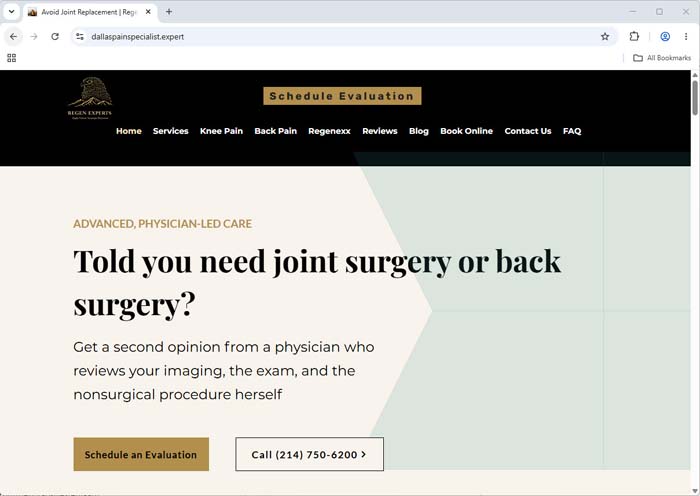
Well, you can just Google my name and it'll probably take you to my website, which is dallaspaintexperts.com. I'm on LinkedIn, Instagram, TikTok, Facebook, X, and I'm pretty active, so it's easy to find me.
Mike Capuzzi [00:28:40]:
Very good. Well, Dr. Deb, I appreciate this. And before we wrap up, I have my Unstoppable After 50 trifecta. 3 quick questions, 3 quick answers. I want to hear your thoughts on all of these because, uh, I think, you know, it's, it's, it's interesting to get your viewpoint. What is one hard truth guys over 50 need to hear from you?
Dr. Deborah Westergaard [00:29:01]:
Growing old is inevitable. Becoming disabled is not.
Mike Capuzzi [00:29:08]:
So don't confuse aging with something you should What's one thing you think guys are doing right now that's wrecking their future?
Dr. Deborah Westergaard [00:29:21]:
Well, they're ignoring joint pain. I see it all the time. I mean, joint pain, it never steals your life overnight, but it steals your activities one at a time.
Mike Capuzzi [00:29:32]:
Very good. And finally, what's one thing guys can go do this week to stay unstoppable?
Dr. Deborah Westergaard [00:29:38]:
Protect your mobility. Strength train, keep your weight down, get your sleep, and don't enjoy it— don't ignore your joint pain. Motion is medicine.
Mike Capuzzi [00:29:51]:
I love that. Well, Dr. Deb, thank you very much. I appreciate your time. I appreciate, you know, all that you've done and continue to do. So thank you very much for this conversation.
Dr. Deborah Westergaard [00:30:01]:
Well, thank you so much for having me.
Mike Capuzzi [00:30:03]:
Hey, I hope you enjoyed that conversation with Dr. Deborah I hope you found the conversation enlightening. And, you know, by all means, check out her website, check out her social media links. And if she could be of service to you, by all means, reach out to her. And if you like what I'm doing here with Unstoppable After 50, please make sure you like and subscribe to the show. Go check out the YouTube channel. Appreciate you subscribing there. And also make sure you check out unstoppableafter50.com and sign up for my weekly playbook.
Mike Capuzzi [00:30:33]:
Every week I send a recap to my group of men who've asked for it, a PDF that's designed to be printed and saved, and it's a recap of that previous week's episode. So check out unstoppableafter50.com.


 Apple Podcasts
 Spotify
 Amazon Music
 YouTube
 iHeartRadio
 CastBox
 PocketCasts
 Deezer
 Podcast Addict
 Listen Notes
 Podchaser
 Player.fm
 Castro
 Goodpods
 RSS