Brian Gryn [00:00:00]:
The biggest benefit that I have found is actually the cardiovascular protection. So when you're sitting in heat, this raises your heart rate and opens up your blood vessels as if you're almost going for a run, much like, you know, moderate cardio, I say. And you're not having any load on your joints. So it's— you might say it's a lazy way of doing things, but I think especially for men over 50, You know, we're all looking to protect our joints. And so instead of beating up our knees, and if you have a busy schedule and you want to get the heart rate up and some light cardio in, you can sit down in a red light— I mean, in a sauna and get some heat.
Mike Capuzzi [00:00:44]:
This is Unstoppable After 50, the podcast for men who refuse to slow down. Each week, I share smart strategies and expert insights to help you stay strong, healthy, and unstoppable in the second half of life. Welcome back to Unstoppable After 50. My guest this week is Brian Gryn. Brian is a health and fitness and nutrition coach for men over 40. I happened to be on his podcast recently. And we got talking about sauna use, infrared sauna use, found out he has one. He's had one for several years.
Mike Capuzzi [00:01:14]:
He's a fan of them. And I invited him on to be on Unstoppable After 50 to discuss the practical tips he has, his own insights of using infrared sauna as a health wellness and recovery tool. If you're not familiar with infrared saunas, it's something I highly recommend. I'm relatively new to it. And you're going to want to stay tuned to this interesting conversation with Brian Gryn. Hey, Brian, welcome to the show.
Brian Gryn [00:01:41]:
Thanks for having me on, Mike. Appreciate it.
Mike Capuzzi [00:01:43]:
Well, I appreciate you having me on your podcast. And I, you know, we had such a good conversation. And then it turns out we are both fans of infrared saunas. I And you have a lot more experience than I do. I'm fairly new to infrared saunas. I wanted to have you on just to discuss your practical use and enjoyment. I know you're not a doctor. It's not like we're gonna go deep into the scientific components of infrared sauna, but more about the practical, you know, aspects, benefits, etc., which I think a lot of guys over 50, if they're not familiar with, ought to be.
Mike Capuzzi [00:02:19]:
So, Brian, let's jump in and At a high level, I'm sure there's a lot of folks listening to this, watching this, who may have never heard of an infrared sauna. They think sauna, they think the traditional Finnish steam room, lava rocks. What is the difference between infrared sauna and a traditional sauna?
Brian Gryn [00:02:41]:
Yeah. So, simply put, traditional saunas heat the air. So, usually, you're in a traditional sauna, it's going to be between about 150 up to even 195 degrees Fahrenheit, and the air heats you. Now, infrared heats the body directly with light. So, the room does not need to be as hot. And usually, that's between about 120 and 150 degrees Fahrenheit. So, the infrared definitely feels like a gentler way of doing it. You could be in there longer.
Brian Gryn [00:03:12]:
You could read a book. You could watch a movie. You know, you're not getting sort of And sometimes traditional saunas, you sort of get smoke, you know, like, how can I say it? You just sort of get heated out of that thing and it's almost tough to breathe at some point. So traditional is definitely hotter and more intense. And a lot of times you can add steam by pouring like water on rocks. I mean, most of the research is on traditional, but infrared is starting to come up with some more research and, you know, some newer studies. You alluded
Mike Capuzzi [00:03:43]:
to it a little bit that most of the science— and there's a lot of scientific research about the benefits of heat therapy and sauna use, but you're right, most of it is on the traditional sauna. You know, from your own experience, Brian, have you seen a big difference or anything, any even anecdotal differences between infrared and Finnish, you know, the traditional sauna?
Brian Gryn [00:04:07]:
Well, I think I mean, in general, like heat itself is a benefit in the sense that, like I mentioned, like cardiovascular protection. So, there has been some studies done regarding, and you talk about Finnish studies where they've gone in the sauna like 4 to 7 times a week, which is a decent amount. And, in this Finnish study that looked at these individuals 4 to 7 times a week, And it lowered the risk of developing high blood pressure 47%. Also about 61% lower stroke risk as well for these weekly users. So the key is consistency. And, but even just like, they've seen even with just a single 30-minute session, this could actually cause some benefits regarding lowering blood pressure and arterial stiffness. Because when you're in this, it's almost like your heart opens your blood vessels, your heart will pump harder as if you're, You know, light cardio and the lining of your arteries is almost like getting a workout. So over time, the arteries can stay more flexible.
Brian Gryn [00:05:14]:
So I think that's, that's where sort of the mechanistic approach from the heat.
Mike Capuzzi [00:05:20]:
So heat therapy is kind of that umbrella when you're talking saunas and such. And there is— I would encourage anybody who's watching or listening to us who now maybe we're piquing their interest with this episode, do your research there. If you just go out There's a ton of research papers. There's a ton of very good videos from some very well-known medical doctors talking about heat therapy. I mean, it's the real deal. It's a— for people who are focused on trying to optimize their second half of life, longevity, health, et cetera, heat therapy, sauna use is really a game changer. Yeah. An important part.
Mike Capuzzi [00:06:04]:
So much so, I purchased my first infrared sauna. I know you've had one for a little while, but I purchased my first one. It took me a while to research it this past year, and I love it. I mean, I, I sweat. I still can't— at 130 degrees in my infrared, I'm like, I am really feeling it. So, I know people are like, oh, they can get up to 150. Now, how long have you been using a sauna, Brian?
Brian Gryn [00:06:27]:
I've had mine for probably about 5 years. Yeah. So I don't use it quite like 4 to 7 times a week like some of the studies are done, but I think any use is beneficial. I mean, you know, I find like even just helping with sleep and just relaxation, you know, you could be in there or just read. I mean, obviously, I would, you know, you could bring your phone in there. I would recommend, you know, if you're going there for 20 minutes, you probably shouldn't bring your phone in there. But the mechanistic approach is essentially if your body's heating up, then essentially you're then after that, your core temperature is going to drop, and that drop is a signal that your body sort of uses for sleep. And so, you know, people talk about taking warm baths before bed.
Brian Gryn [00:07:12]:
This is sort of like just another way of doing it, heating up in the evening, cooling down, and then, you know, helping you sleep. So, that's probably the biggest, I would say, benefit I've found using it towards the evening.
Mike Capuzzi [00:07:25]:
And now, just kind of get like into the weeds here. Do you have— because I want to share, again, someone might not be familiar with this, what they could kind of expect. So I have a 2-person infrared sauna. It's a FAR. So we're not going to get into the nitty-gritty here, but there's different types of infrared saunas, the different types of heaters and how they penetrate the human body. Mine's a FAR, F-A-R. What do you have now, Brian?
Brian Gryn [00:07:51]:
Yeah, so mine actually can, can do far, near. You sort of can set it to how you want it. Um, and, um, so It does all 3. I've also put in some red light in there as well. So, you can sit in front of it and then put the red light on as well. So, just getting sort of the benefits of red light therapy along with the infrared.
Mike Capuzzi [00:08:13]:
And, just to make sure people understand, when you say red light, we're not talking a red light bulb, you're talking about a very specialized type of lamp or bulb that emits red light, which is a whole other
Brian Gryn [00:08:26]:
Yeah, exactly. It is actually a panel. Nowadays, I mean, you could get masks and whole-body ones, and it's a pretty big market there right now. And so, yeah, for me, I just look at it as an added benefit. I mean, I think there's still studies being done on what red light therapy can do. I've seen anything from helping with hair loss and even wound healing. and even joint pain. So there's definitely some studies out there, but definitely do your research if this is something sort of you want as an adjunct to the sauna.
Mike Capuzzi [00:09:04]:
Yeah, yeah. I'm currently researching red light therapy as another thing to kind of add to my mix. And unfortunately, there's a lot of junk out there these days 'cause, you know, people are getting interested and people can just make a red light like what's behind me. That's a red light, but that's not what we're talking about here. This is like a medical-grade type device. And you're right, there are a lot of benefits, and it's impressive when you start reading and seeing what others are doing. So, back to infrared saunas. You know, I have mine.
Mike Capuzzi [00:09:33]:
I have an office building on my property. It's where I'm in right now. And I have a, you know, a basement which is above grade. So, it's not cold, which is good. So, it stays relatively warm, and I put it there. Mine's a 220, so it requires a different amperage. These are, you know, they're like wooden closets, right? If we were to describe one without— maybe I can share some graphics, you know, on the video version of this. Can you just describe to someone what we're talking about here, an infrared sauna?
Brian Gryn [00:10:01]:
Yeah, I mean, they're good looking. If you get a good one, they're good looking. And if you can find a space for them, mine's in my basement and it sort of has wooden panels surrounding it. The whole thing's wood and then sort of a glass front door. And then you got sort of the heaters on the bottom side of the doors coming in. Yeah, if you find a good spot, it can be— it could sort of not be— Furniture. Yeah, exactly, piece of furniture.
Mike Capuzzi [00:10:29]:
I tried to talk my wife into it. We have a really nice sunroom in our house. I'm like, oh, this would be like a sauna room. She's like, no, I don't think so. So you mentioned, and this is a key differentiation with the way infrared works, and you're right, it's a lower temperature. So, you know, if you start getting into this, you'll see what, you know, different sort of rituals and how people use it. The one that I use, and I learned it from the guy that I bought it from, I bought it from a manufacturer, well, a sauna company here in the States. Obviously most of them are overseas, but he's here based in the States.
Mike Capuzzi [00:11:03]:
And, you know, he suggested, and I like this idea, I don't know how you do it, so that's what I'm gonna ask you, but like, I will, I'll lift weights. So I'm gonna actually, as soon as we're done our conversation today, I'm gonna go do this. I'm gonna go lift for a half hour. Then I'm gonna do a quick, Rehit routine. So reduced exertion HIIT routine, which is about 10 to 15 minutes. That gets me sweating. And then while that's— while I'm doing the rehit on the air bike, I turn on my sauna. So I don't turn it on like 30 or 40 minutes ahead of time.
Mike Capuzzi [00:11:35]:
I get into it when it's probably 90 degrees and I kind of heat up with it. I stay in for about 40 minutes. And I'll tell you what, at 40 minutes, I'm not maybe at 125, 130, and I am just profusely sweating in a good— it's, it's like, it's like a— I enjoy it. I don't know about you, but I enjoy it. What is— and then I'll stay in for 40 minutes, turn it off. I don't typically shower right away cuz I've read that you shouldn't shower right away, but you know, so there's different things. But what does your sauna routine look like?
Brian Gryn [00:12:08]:
I should— I sort of do it as a one-off. But yeah, but like you said, it's not a bad adjunct to a workout. So, you know, you work out for a bit and then, you know, obviously it doesn't replace lifting, but it can support your muscles and perhaps help protect it and help you recover faster. There was one study I found heating the legs during 2 weeks of immobilization preserved mitochondrial function. So there's some potential some, some ways that this heat stimulates new mitochondria, the energy, which is like the energy factories in your muscle cells. And there's some animal studies showing like they've had less muscle loss with heat because of the blood flow and the relaxation helps with soreness and stiffness as well. So I would say I like to use it almost as that, like a recovery mechanism. But it can also, like we talked about earlier, you know, let's say you don't feel like doing cardio or, you know, Maybe you have sore knees and you're just like, I don't feel like running or even walking per se.
Brian Gryn [00:13:15]:
This could really be sort of a tool to use when maybe injury comes and/or just real soreness comes and you want a way to sort of heal.
Mike Capuzzi [00:13:27]:
Yeah, that heat therapy. I mean, the whole, the very layman's version is that it's stressing the body, right? Your blood pressure's going up, your heart rate's going up. And mankind has sweated in steam rooms, steam baths, you know, for millennia. It's— this is not something new. It's actually something old that, you know, we're just tapping into today and with this technology. But there's, again, the relaxation benefits that you mentioned, the recovery benefits, cardiovascular benefits. Brian, have you come across any other benefits to infrared sauna use for guys over 50? I mean, relaxation, cardiovascular recovery. Has there been anything else that you've found?
Brian Gryn [00:14:14]:
Yeah. I mean, I think those are the main ones. We talked a little bit about perhaps helping with sleep, which is obviously a number one pillar in general if you can just prioritize getting good sleep. So, that could be reason alone to get one. Other than that, like, not, you know, we talked a little bit about joint pain and stiffness. Those are the big ones. I think there's, there's some myths out there, like, you know, it's gonna sort of help increase testosterone. I don't really see much good evidence for that.
Brian Gryn [00:14:42]:
Even weight loss. I mean, most of the loss, you know, is, is, is water. So, you know, I don't think like a sauna's— it's a tool, right? Like anything, it won't replace training, sleep, or even good food. But you know, it could be a nice little add-on to help with heart health and cardiovascular and potentially, um, uh, you know, recovery, especially after 50. So, um, if that— if you find that, that could be reason enough.
Mike Capuzzi [00:15:09]:
Are you familiar with Dr. Rhonda Patrick? Mm-hmm. Yeah, she's got an excellent podcast. She's, she, she's one of these longevity health influencers I really— I just, I like her. I think she's highly respectable. And she's— she was just doing— I just was on the treadmill the other day watching her on YouTube. And she was talking about the benefits of infrared sauna post-cardiovascular workout and post-strength training workout, and how you get sort of a compound effect. Again, I will never be able to recite all the scientific stuff that she described.
Brian Gryn [00:15:46]:
Sure.
Mike Capuzzi [00:15:47]:
But it was encouraging, right? So adding sauna after cardiovascular, adding sauna after strength training, Supposedly, according to her, gives you some additional benefit.
Brian Gryn [00:15:57]:
Yeah, yeah. Like we mentioned, I think it's a great tool. And, you know, I think, like we said, nothing will replace the actual training. But, you know, there's definitely some evidence showing that it's just a great adjunct to whatever else you're doing. And it could be a worthy investment, you know.
Mike Capuzzi [00:16:16]:
How does Brian Gryn use it? You're going in for how long? Are you drinking any? Like, just if you don't mind, Brian, just kind of describe your ritual. Because I wanna hear how it compares to mine.
Brian Gryn [00:16:27]:
Yeah, no, I mean, I would say I'm in there between 20 and 30 minutes and usually keep it probably around 120 degrees. So nothing too crazy, but, you know, a lot of times I'll, I might watch something, but sometimes I will read. And I usually put the red light, infrared light on as well. I'll get some red light therapy and usually towards the evening, I would say, you know, But, today, actually, I went in the middle of the day, but most of the time, it's in the evening and it's a great way sort of to wind down, maybe do it an hour—
Mike Capuzzi [00:17:04]:
Post-dinner?
Brian Gryn [00:17:05]:
Yeah, exactly.
Mike Capuzzi [00:17:06]:
Post-dinner, but about an hour?
Brian Gryn [00:17:08]:
Yeah, maybe an hour before bed. And, yeah, because I find for me, the biggest thing is helping with sleep. And so, I just try to focus on On doing it, um, you know, 1 to 2 hours before bed.
Mike Capuzzi [00:17:22]:
Yeah. I don't know if it was you. I don't know if this is the conversation you and I had when I was on your podcast or if it was someone else. I've interviewed a couple of sleep experts, but somebody encouraged me to put it just like you're saying. I don't know if it was you or not, but to, to add it like an hour or so before bedtime, which I have not done yet. Mine's in a separate building on my property. So I got to walk over and do all that. But, um, it's not a big deal, but I just haven't done it yet.
Mike Capuzzi [00:17:48]:
And I need to because my sleep right now is the one thing that I do not have dialed in good.
Brian Gryn [00:17:54]:
Oh, yeah. That'd be perfect. And the only thing I'll say is like, you know, if you're going in it a lot, like let's just say 4 times a week and sweating quite a bit, just wanna make sure you're hydrating and getting in enough sodium and things like that. I don't think you need to buy like necessarily an electrolyte. You can just put salt in water and be fine. But either way, you know, just wanna make sure you couple it with that.
Mike Capuzzi [00:18:17]:
Yeah, that's exactly what I do. I have salt in my water and I have it in a stainless steel insulated— because it heats up. Anything that you have in there is going to heat up, and the insulated cup works well.
Brian Gryn [00:18:29]:
You know, I think you sort of want to use it when you— like, what you're trying to optimize, I guess. Like, if you're trying to optimize your workout, perhaps you do it after the workout. Or if you're trying to optimize sleep, maybe you do it around sleep or recovery, you know, then You maybe do it at a different time, but either way, I would say it's not about being perfect or, you know, this is just a tool like anything else. And if it fits wherever it fits, I think that's good enough.
Mike Capuzzi [00:18:56]:
Would you say you enjoy it? Like when you're in there and you're profusely sweating at minute 30 or whatever, you know, as you're getting towards the end, like when you get out of it, do you feel— I know how I feel when I get out. I'm interested in hearing, how do you feel like it?
Brian Gryn [00:19:11]:
Are you— No, I enjoy it. I mean, I try to do things in there, so I'm like maybe a little bit productive while I'm in there. Maybe I'm not just sitting there, but like you can do that as well if you want to sort of disconnect. Usually I try to read a little bit. Mine sort of has, I mean, it's in the basement. There's actually a TV like 30 feet away, so I could put on a game or something like that, you know, and do it that way. So I, yeah, I enjoy it. I don't, I actually wish, honestly wish I used it more.
Brian Gryn [00:19:41]:
I, but now that we're coming into the winter months, I'll probably definitely use it more, you know, up here in Chicago. So.
Mike Capuzzi [00:19:48]:
So I've had mine now for like 3 months and I try to use it 3 to 4 times a week. And this, I, again, I enjoy it. Like I find it when I get out, I feel good. I'm drenched. I mean, I'm literally just like, it looks like I got out of a shower, but it's interesting. I think in this day and age, like, something that's enjoyable, it's like you've gotta actually go schedule and go do or something like that. I mean, do you, you know, what, what, what's the reality? 'Cause I'm sure a lot of people who do have an infrared sauna, they find it, you know, it's something you gotta go do.
Brian Gryn [00:20:23]:
Oh, for sure. I mean, I think like anything else, it's like a workout, right? So there it is, a stressor, like you said. So maybe it's not something everyone always looks forward to, but I think just you have to plan it like you plan a workout or anything else that you would do during the day.
Mike Capuzzi [00:20:39]:
Any practical tips when it comes to either researching infrared saunas, buying, mistakes made either during use or buying, anything that you've come across, Brian?
Brian Gryn [00:20:52]:
I mean, no, I would just say that for something like this, I don't think it's a bad idea to pay up a little bit. I mean, if you're putting it in your house, it's an investment. I mean, like you said, On a budget, you could spend less, but, you know, what's the quality and how long is it gonna last? You know, so you probably gotta spend a few thousand to put this, to find something decent. You don't need to spend $10,000, but, and then like delivery and assembly, you know, you might wanna just consider that before, you know, you're putting something in like this, maybe get some help with that.
Mike Capuzzi [00:21:24]:
Yes.
Brian Gryn [00:21:25]:
Yeah, yeah, for sure. I got help with that 'cause I was—
Mike Capuzzi [00:21:27]:
It's a huge, Yes. Because I— was yours delivered? Like, mine was delivered in this huge— couple of huge boxes on a pallet.
Brian Gryn [00:21:34]:
Right.
Mike Capuzzi [00:21:35]:
Yeah. And it could be at the end of your driveway, so you gotta be— I mean, there's a lot of— there are some things to consider, um, just getting it delivered. Yeah.
Brian Gryn [00:21:42]:
Yeah. So, I mean, uh, that's a big one. And then even looking into, like, making sure that there's a warranty on it, um, if you have some issues with it. Um, and just, yeah, I would just try to, try to go for as best quality in your price zone as possible with some— with a warranty. And, and yeah, and just use it as a tool just like anything else, you know, that we're doing through workouts and, and, and anything else you're trying to sort of biohack or just improve your, your longevity with. It's just— it's, it's not a replacement for training or, or things like that, but I, you know, it could be a good recovery tool and just something that you know, as sort of an adjunct to what you're already doing.
Mike Capuzzi [00:22:23]:
I will say there are a couple of good, really good YouTube channels and Facebook groups out there with a lot of good, you know, just consumers who chime in. From my own experience and from what I've read from others, a lot of people can analyze this to death. I mean, there's a lot of choices, there's a lot of, you know, marketing hype. You gotta cut through that. There's, you know, the lower-end brands, mid-brands, And then the high-end brands. I didn't want to go crazy with my first sauna. I think what I have, I'm happy with. I have a Vital Health sauna, and, um, you know, it, it does what I— I'm happy with it.
Mike Capuzzi [00:23:00]:
So it's, it's the kind of purchase that, uh, I hope I can use it for years. Anything else that you just want to share regarding infrared sauna?
Brian Gryn [00:23:08]:
No, I mean, I think we've hit a lot, right? We've hit the benefits. Um, you know, I think it's, it's a tool. It's not like necessary thing. You know, I think if you want to mainly focus on the main principles, but like for— like we talked about, if you're struggling with sleep and you've tried everything, maybe this is a worthy investment and it could really help you for something like that. So I would just say that it's an investment, but if you're willing to sort of put the time in, it could sort of, you know, help optimize certain other areas like we talked about with recovery and sleep.
Mike Capuzzi [00:23:42]:
Right. I was on your podcast, um, recently. Can you share with my audience a little bit about what you do? Because you're also— the reason I was on your podcast is because your podcast is targeted for guys over 40. And, uh, you know, just describe that and where my audience can learn more about you.
Brian Gryn [00:23:59]:
Yeah, so I, I mean, I've been in the health and wellness field for over like close to, close to 20 years now. I used to train in, in like a studio, small studio, and then just decided to take it from there and, and add on a lot of other sort of avenues with nutrition. I also have the, the podcast, uh, the Get Lean Eat Clean podcast. And so, um, my niche is 40+, like you mentioned, um, and I work people through like a 6-month program. And, um, not for everybody, you got to sort of want to buckle down and make a change. Um, I've written a few books. One of them was a kid book, which is just more of a passion project of mine. And then I also also have something called the Stepladder System, which is a— it's just for busy dads over 40 that are sick of sort of starting over.
Brian Gryn [00:24:49]:
I think people get on and off diets and on and off eating plans, and I just wanted to create a system for individuals to follow that they can do it once and just sort of that's it. And so, yeah, that's the main thing that I do throughout the day is work with men over 40. who have families and are busy and just want to make a change. So, yeah. And, the podcast is a combination of sort of solo podcasting and then I bring guests on like yourself, Mike, just to help people with optimizing their health.
Mike Capuzzi [00:25:28]:
Now, the program you have, Brian, just to clarify, is it a nutritional— I mean, is it workout program or is it nutritional-based? What is when you
Brian Gryn [00:25:36]:
Yeah, I would say it's, it, yeah, it's, it's everything. It, I, I almost like to call it a system. And so, you know, building muscle, you know, creating habits that'll last. And we focus on sleep, stress, nutrition, meal timing. So it's sort of everything packed into one. And, you know, I used to have shorter programs, but I, I felt like it was sort of not enough for individuals. You know, we've, we've put on these habits for years. And it's like, okay, now we expect to be done with them in a month.
Brian Gryn [00:26:07]:
It's very unrealistic. So, yeah. So, my main program, my flagship is 6 months. And a lot of times people sort of add on after that if they need more help. But, yeah. So, to answer your question, we focus on the main principles. And, because they all sort of, they all need each other, right? If you're not optimizing your sleep, Then does it really matter? You know, like, does anything else really matter? I mean, yeah, maybe a little bit, but like, your workouts are going to struggle with— you're going to probably struggle with food, um, and stress as well. So we got to make sure that we have that balance.
Mike Capuzzi [00:26:46]:
Very good. So where can my audience learn more about your podcast and your programs?
Brian Gryn [00:26:53]:
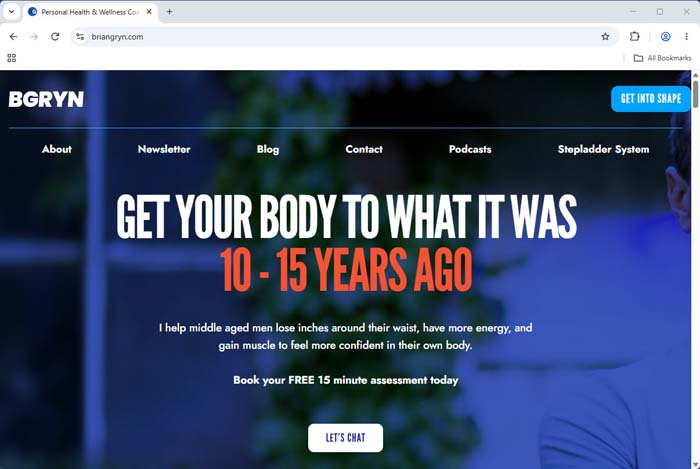
Yeah, I mean, the podcast, we're on all platforms, the Get Lean Eat Clean podcast. But briangryn.com has everything. So, anything from my newsletter to the podcast to the book, you can get sort of everywhere. It's the one place to go. So, I would just say that's probably the easiest place to find everything that I do.
Mike Capuzzi [00:27:15]:
Awesome. Very good. And before we wrap up, Brian, I have my Unstoppable After 50 trifecta. So, it's 3 quick questions, 3 quick answers. And, this could be either focused on heat therapy, sauna, red light if you want, or just in general. You've got a ton of experience. So, what do you think is one hard truth guys over 50 need to hear from you?
Brian Gryn [00:27:39]:
Well, I think one hard truth would be you need to start focusing on your health and you. I think a lot of times when you get to 40, 50, and above, you have maybe a family, you have a career, and it's all been about everyone else. And I think you have to just start focusing on you. And probably the biggest thing is like maintaining muscle, I would say, after 50, because, you know, muscle is sort of your sort of best way to create some type of longevity, make sure that you could do the things that you want. And, you know, it keeps the metabolism running. It's, you know, helps, you know, with glucose. Metabolically. And, you know, it's just about a decision and just small daily habits.
Brian Gryn [00:28:24]:
But I would say is preserving muscle, I would say would be, you know, one thing that they should really focus on.
Mike Capuzzi [00:28:31]:
Yeah, that's a big one. It's one that I kind of ignored and I saw the difference because they say what, after 30 is when you start losing muscle mass and I'm 60 now. So I, yeah, you, it's true. What do you think is something guys are doing right now that's quietly wrecking their future?
Brian Gryn [00:28:50]:
I would say probably sitting too much. Yeah. So, you know, let's just say you're sitting 8 hours at a desk, right? Like couple that with hours, perhaps if you come home and watching TV or things like that. You know, I think that it's about trying to just get up and move even if it's in the middle, you know, for 20 minutes or 10 minutes during the day. So I would say Sitting, you know, you, you've heard maybe sitting is the new smoking, but I think if you can, um, just try to limit that and just get up and move, maybe walking after dinner or whatever it is, or walking after lunch, I think that, you know, and you start compounding that, I think that can really, really make a difference.
Mike Capuzzi [00:29:33]:
Yeah, it's a huge one. Ironically, you got to typically sit while you're in a sauna, so do your sitting in a sauna and then move before and afterwards.
Brian Gryn [00:29:42]:
Right, yeah. Although you're sitting in a sauna and it's getting your heart rate up and improving arterial health. So I guess, you know, that's like a bonus. But yes, getting up and moving, nothing will really replace that.
Mike Capuzzi [00:29:53]:
Though I have seen people, or I've heard people talk about, they actually do like, they'll bring in like a little dumbbell or something into a sauna and work out. Like, I don't know. No, no, no. Anyway, and finally, Brian, what's one thing every guy watching or listening to this right now can do this week to be unstoppable?
Brian Gryn [00:30:13]:
Well, I would say is what I find is that make sure that you just pick one thing because I think sometimes people wanna make change and they wanna get— do 5 things. So I would just pick one. This could be a 10-minute walk after dinner. You know, this could be protein with every meal. This could be 2 strength training sessions per week. Put that on the calendar. And then, when it feels like it's automatic, then you can sort of add that next step. So, I think focusing on one thing, whatever that one thing is, if you want to pick one of those, those are all great things, the ones I just mentioned.
Brian Gryn [00:30:51]:
And then, do that until it starts feeling like it's a habit and it's automatic. And then, just add something from there because small wins, they'll start sort of stacking. And then, before you know it, you're doing 4 or 5 different So, I just say start with one until you get really good at it.
Mike Capuzzi [00:31:09]:
Well, Brian, listen, thank you. I got to get ready to work out and get in my sauna. There you go. So, I appreciate your time and thanks for the insights and wisdom you shared.
Brian Gryn [00:31:19]:
No, Mike, thank you. I appreciate coming on your podcast and hopefully, they've got at least one tip to take with them. And yeah, thanks again. Appreciate it.
Mike Capuzzi [00:31:28]:
Hey, I hope you enjoyed that conversation with Brian. I hope we've, you know, if you've never heard of infrared sauna, I hope we've piqued your interest. By all means, do your research. Contact me. I'll be happy to, you know, answer any questions that I can answer, or at least tell you about the process I went through when I made that investment. But I truly, truly enjoy the use and benefits of my infrared sauna. So by all means, check it out.


 Apple Podcasts
 Spotify
 Amazon Music
 YouTube
 iHeartRadio
 CastBox
 PocketCasts
 Deezer
 Podcast Addict
 Listen Notes
 Podchaser
 Player.fm
 Castro
 Goodpods
 RSS