
 Apple Podcasts
 Spotify
 Amazon Music
 YouTube
 iHeartRadio
 CastBox
 PocketCasts
 Deezer
 Podcast Addict
 Listen Notes
 Podchaser
 Player.fm
 Castro
 Goodpods
 RSS
WHY THIS CONVERSATION MATTERS TO MEN OVER 50:
Most men over 50 assume they're doing enough for their heart health if their cholesterol and blood pressure look reasonable. The problem is that heart disease can develop silently for decades before it causes symptoms. By then, the damage may already be significant.
That is what makes this conversation so important. Dr. Jeffrey Boone challenges the idea that we should wait until something goes wrong before taking action. Instead, he explains why knowing whether you actually have heart disease is one of the smartest investments you can make in your future.
If your goal is to stay active, protect your independence, and enjoy life for decades to come, this conversation offers a different way to think about heart health.
THE BIG IDEA BEHIND THIS CONVERSATION:
When it comes to heart health, most men are measuring the wrong things.
Dr. Jeffrey Boone believes the biggest mistake in modern medicine is focusing on risk factors instead of looking directly for the disease itself. Cholesterol, blood pressure, and other blood markers are valuable, but they do not tell you whether plaque is already building inside your arteries.
His message is simple. Find out if you have heart disease before it causes a heart attack or stroke.
Throughout our conversation, we discuss why imaging tests such as a Coronary Calcium Score can identify problems years before symptoms appear, why many active and healthy-looking men are still at risk, and why combining smart lifestyle choices with evidence-based medicine may offer the best opportunity to stay healthy well into your later years.
KEY MOMENTS YOU’LL WANT TO HEAR:
[00:00] - Most Men Over 50 Have Unmeasured Heart Disease
[00:08] - Imaging Tests Trump Cholesterol Numbers
[04:52] - Never Too Late to Reverse Heart Disease
[08:02] - Coronary Calcium Scan as Baseline Test
[09:42] - Five Core Genetics to Know
[12:26] - Clot Risk Calls for Baby Aspirin Discussion
[17:11] - Daily Lifestyle Still Matters, But Meds Are Essential
[20:59] - Family Doctor as Prevention Partner
[38:07] - Embrace Disease and Treat Early
[39:49] - Alcohol as Hidden Performance Saboteur
[40:16] - Treat Even a Little Plaque Aggressively
THIS IS FOR YOU IF:
- You are over 50 and want to take a more proactive approach to your heart health.
- You have a family history of heart disease or heart attacks.
- Your annual physical says everything looks "normal," but you want a deeper understanding of your cardiovascular health.
- You exercise regularly and wonder whether fitness alone is enough to protect you.
- You want to learn practical ways to prevent heart attack before symptoms ever appear.
- You are curious about whether a Coronary Calcium Score is appropriate for you.
- You want to make informed decisions about medications instead of automatically avoiding them.
KEY TAKEAWAYS FOR MEN OVER 50:
Know whether you have heart disease: Dr. Boone argues that every man over 50 should know whether plaque is already present in his arteries. Waiting for symptoms often means waiting too long.
Risk factors are not the same as disease: Good cholesterol numbers do not necessarily mean your arteries are healthy. Imaging can provide information that blood tests alone cannot.
Lifestyle is essential, but it may not be enough: Nutrition, exercise, maintaining a healthy weight, and avoiding smoking remain critical. However, many men also have genetic risks that lifestyle alone cannot fully overcome.
Don't fear appropriate medication: Dr. Boone explains why evidence-based medications should be viewed as tools that support an already healthy lifestyle rather than replace it.
Invest in prevention before you need treatment: Spending time and resources finding heart disease early may help you avoid far more serious health problems later.
UNSTOPPABLE STRENGTH FOCUS:
Body: This conversation is fundamentally about protecting your physical health before problems become emergencies. By identifying heart disease early and taking preventive action, you improve your chances of maintaining strength, energy, mobility, and independence throughout the second half of life.
Purpose: Taking responsibility for your long-term health is an investment in your future. Staying healthy allows you to continue leading your family, serving others, pursuing meaningful work, and enjoying the experiences that matter most.
WHY THIS GUEST IS WORTH YOUR TIME:
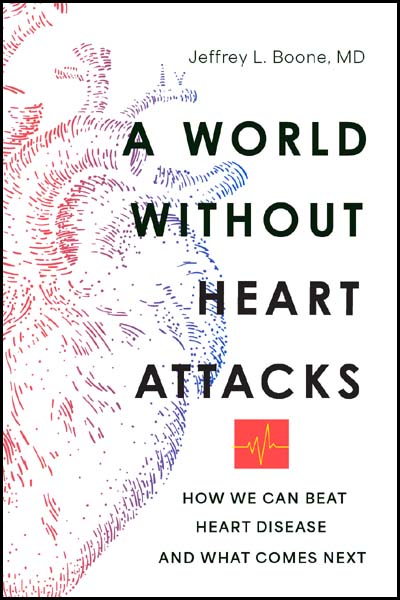
Dr. Jeffrey Boone is the founder of the Boone Heart Institute and has spent decades helping patients improve their cardiovascular health through early detection and prevention. He also consults with several professional sports organizations and is the author of A World Without Heart Attacks.
His work focuses on identifying heart disease long before symptoms appear and helping people reduce their long-term cardiovascular risk through a combination of advanced testing, lifestyle, and evidence-based treatment.
WHY THIS MATTERS RIGHT NOW:
Heart disease remains one of the biggest threats facing men over 50, yet much of it develops silently over many years. The good news is that we have more tools than ever to detect problems early and take action before they become life changing.
Your future health is not determined only by what happened in your 30s or 40s. The choices you make now, the questions you ask, and the information you gather can help shape the decades ahead. The goal is not simply to live longer. It is to stay healthy enough to fully enjoy the life you've worked hard to build.
DR. JEFFREY BOONE'S WEBSITE
DR. JEFFREY BOONE'S BOOK
PLEASE SHARE WITH FRIENDS AND FAMILY:
If you found this episode helpful, it would mean the world to me if you shared it and this podcast with your friends and family. Thank you!
YOUR WEEKLY EDGE AFTER 50
Every Monday, I send one high-value Unstoppable After 50 Playbook for men over 50 which is built around the powerful conversation from that week's podcast (click here to see an example). Each Playbook includes key takeaways, a clear challenge, and practical ideas you can use immediately, or file away for future reference. No hype. No filler. Just useful ideas and tips for men who refuse to slow down.
No spam. No nonsense. Unsubscribe anytime
FULL EPISODE TRANSCRIPT:
Dr. Jeffrey Boone [00:00:00]:
Men over 50, most of them don't know if they've got heart disease or not, because you've got it, but nobody measures it. And that's the biggest fault in all of America, all of American medicine, and all of American men over 50. You have to measure the disease, and you're not often told to do that. We measure cholesterol, blood pressure. Those are just numbers. The real disease requires imaging with ultrasound or CAT scan, and every man in America over 50 ought to know whether they've got heart disease or not. And it's a yes/no question. It can be done in 5 minutes with testing, but you often have to seek it out.
Dr. Jeffrey Boone [00:00:35]:
The system isn't going to tell you to do that because in medicine, all the money and the effort is in once you've had the heart attack, stroke, death. That's when they get started. And that's absolutely backwards and shouldn't be that way. You need to find the disease.
Mike Capuzzi [00:00:49]:
This is Unstoppable After 50, the podcast for men who refuse to slow down. Each week, I share smart strategies and expert insights to help you stay strong, healthy, and unstoppable in the second half of life. Welcome back to Unstoppable After 50. Today I'm having a conversation with Dr. Jeffrey Boone, who's the founder of the Boone Heart Institute in Colorado. Dr. Boone has decades of experience helping men and women around the world improve their cardiovascular health. He consults with a number of professional sports teams here in the States, and he recently published his book, A World Without Heart Attacks, which we focus on today.
Mike Capuzzi [00:01:26]:
So stay tuned for an eye-opening conversation with Dr. Boone. Dr. Boone, welcome to the show.
Dr. Jeffrey Boone [00:01:34]:
Thank you. Great to be here.
Mike Capuzzi [00:01:35]:
I appreciate your time. I appreciate the fact that you were able to squeeze me in because this has been a long time coming. I was really looking forward— when I heard about your, your new book, which we're going to talk about here in a second, I wanted to have you on because your decades of experience helping People, but we're going to talk about men obviously today, really rally against heart disease and it's just monumental. So I was really looking forward to this. So, Doctor, you wrote a book titled A World Without Heart Attacks. Why did you decide— it's your first book. I know you've done professional-level papers and stuff, but this is your first sort of public-facing book. Why did you decide to write it and who'd you write it for?
Dr. Jeffrey Boone [00:02:20]:
Yes, good point. I've always thought about writing a book, but it's mainly for the public, because I think the only way we will stop heart disease is if you and all of your listeners demand that we do it, because we can easily stop heart disease. All the drugs are in place, the tests are in place, but nobody does it. Nobody does it. Insurance is not interested in this, because to save you from heart disease and heart attacks requires aggressive effort starting probably in your 20s and 30s and 40s, and it's a lifetime of effort, and most insurance is kind of in the game for 2 or 3 years, and then you switch to another one. So, there's not a big payoff there unless the whole system was trying to prevent heart attack and stroke. So, the patient has to be very aggressive and intent on doing that. And so, that was our target.
Dr. Jeffrey Boone [00:03:08]:
And I went to med school for that reason. I was one of the few guys that knew exactly what I wanted to do. Now, 40, 50 years ago, everybody thought I was crazy because we were just learning how to fix it. And fixing it is good, but way too much, way too late. And that's where all the money is, all the effort is, all the insurance coverage is, but the disease has been there 30, 40 years before it shows up and kills you or makes you disabled or whatever it does. So, that was my passion. I hadn't had any real family members that had trouble. It's just I was first educated as an exercise physiologist, got a master's in exercise physiology, and was working with a lot of people in the 1970s.
Dr. Jeffrey Boone [00:03:43]:
And I realized how very little people knew about fitness, exercise, their health. So, most of my early career was lifestyle. approaches. But then the generation of lifestyle, it's always so hard to do in America. So then the medicines, the testing that have developed over the last 50, 60 years are just amazing with no side effects. And I view that as kind of a trapeze act is your life. And the medicines are the safety net under the trapeze act, because we fail every day with nutrition, exercise, and to really marginalize your risks with appropriate medicines and supplements is really the key to— we call it a healthy 100.
Mike Capuzzi [00:04:19]:
So let me ask you this. You know, it's a great title for a book, and, you know, at first pause I'm like, okay, is that even possible? But for the guys over 50 that are watching or listening to this, and I'm guessing most, if, you know, a good majority of them probably have some level of heart disease, I mean, are we pretty much screwed because we weren't doing stuff when we were in our 20s and 30s? And if we're in our 50s, 60s, and beyond, is there, you know, real hope to fight that?
Dr. Jeffrey Boone [00:04:47]:
Yes, I totally believe that. And you— it's never too late. Never too late. Now, the earlier we start, the better. But it's hard to get excited about it when you're 30 and 40 and things like that. I think as a youngster, doing things that are just generally healthy— don't smoke, don't drink too much, be lean, eat a lot of vegetables— you know, those advices are all pretty good. But yeah, if we can find the disease— and I think the biggest assumption is if you're 50 and you're male, you've got the disease. It's just nobody's measured it yet.
Dr. Jeffrey Boone [00:05:17]:
And then they may measure how much of it is there. Often cardiologists and other doctors will find that if it's not obstructive and causing symptoms, they'll say, oh, you're fine with a little bit of coronary calcium or a little bit of plaque. But that's not true either. The paradigm of waiting for symptoms is totally wrong, and most cardiologists on the cutting edge would agree with that. You shouldn't wait for symptoms. But it's never too late, even if you've already had bypass stent and others. We love the to get people earlier. And I'm even almost too late.
Dr. Jeffrey Boone [00:05:50]:
You know, a lot of the drugs that the testing that is available to me now is just, I just got them when I was 50 or 60. You know, if I'd have got them when I was 30 and 40, I'd have even less disease. But I still don't think I'll ever die of a heart attack and stroke. Now, it's bad for business if I did, you know, it's kind of good if I don't die young. It looks like I know what I'm doing. But I'm 75. And I think it'll be pretty easy for me to get to 100 if we watch the disease. And then you, you've got to turn the blood into healing waters rather than oil slick.
Dr. Jeffrey Boone [00:06:22]:
Most blood of most American males is like an oil slick if you really measured it. And, you can change the inflammation, oxidation, cholesterol, the effect on the organs and measure those. So, I think the possibilities are there. So, my answer, simple answer, yes, never too late. And, I think if I get someone and they do everything I tell them to do, which now I I would love every doctor to do exactly what I do. The end is a long time coming, and hopefully we'll be so old we don't care about it at that point when we pass away. It's a good way to pass away, just not young.
Mike Capuzzi [00:06:58]:
You know, it's— this podcast is all about giving men some, maybe, you know, a piece of advice, an idea, a strategy, a resource that they may just not have heard of, right? So, I know that's going to happen today. For the context of this conversation, Doctor, a lot of guys watching this, listening to this, they are trying to be proactive. They are trying to be unstoppable. They're trying to do the right things. What are some of those fundamental things every guy over 50 should be measuring? What are some tests? I get very extensive blood work done twice a year that I just pay for myself. I don't wait for my doctor to prescribe it.
Dr. Jeffrey Boone [00:07:38]:
Yeah.
Mike Capuzzi [00:07:38]:
What are some things we could be doing proactively?
Dr. Jeffrey Boone [00:07:41]:
Quick pause.
Mike Capuzzi [00:07:41]:
If you're not getting my Unstoppable After 50 Playbook, you're missing out. Every week I send a one-page playbook with my key interview takeaways and simple actions to help you stay strong and in control. Get it free each week at unstoppableafter50.com. Now back to the show.
Dr. Jeffrey Boone [00:07:59]:
Yes, I think number one is find your level of disease. So coronary calcium score, usually you can get a CAT scan self-referred. for sometimes $100 is about all it is, carotid artery ultrasound imaging, and a lot of opportunistic imaging. Like, if you've ever had abdominal pain and they did an X-ray and they see a little calcium in your aorta, you've got the disease of atherosclerosis. So, find atherosclerosis with testing that you may have to seek out yourself. And then, the disease, we got to find the disease. Then, you've got to determine why is it there. Now, in your case, with your family history and people getting stents and having heart attacks, there's something in your genetics that's making it happen earlier, and we often don't measure those.
Dr. Jeffrey Boone [00:08:42]:
We've got 5 core genetics I'd want to know about: your lipoprotein, a genetically sticky cholesterol that 20% of the population has and causes early heart attack, dementia, other things like that; ApoE genotype, I'd want to know your ApoE genotype; Factor V Leiden; prothrombin mutation; and then general cholesterol, blood pressure. Like, someone with your family history, You know, I'd want to know more what was going on. Why did these people have trouble? And then I'd want to know the vulnerability. So I'd want to go beyond cholesterol to tests like C-reactive protein, Lp-PLA2, that look at vulnerability. And then you want to stabilize and eradicate it. So find the disease. Why is it there? Is it vulnerable? Eradicate it. Now, eradicate it generally means you need a medicine.
Dr. Jeffrey Boone [00:09:31]:
You need a real live medicine that's been studied. Hard to get to 100 with just your lifestyle. We think at the Boone Heart Institute, we create our own Blue Zone. You don't have to move to Sardinia or Okinawa or, you know, Loma Linda. You need your blood to be perfect like it would be if you ate nothing but vegetables and exercised every day and had no stress and all of that. And there are medicines that will create that. And there's now 12 of them, way beyond a statin, that do that. And they don't have any side effects, and they'll all be— literally no side effects, and they'll all be generic by 2030.
Dr. Jeffrey Boone [00:10:08]:
And so, I think the opportunity there to enhance the lifestyle, but also look and embrace the abnormality. You know, I was 52 when I first found that I had plaque, and I had an artery age of 81. And I was playing basketball, running marathons, eating anything I wanted, but not overweight. And I, you know, you go through the grieving process. It took me about a week first. Ah, I couldn't believe that. Well, no, this is my test. And, you know, why is it? Oh gosh, I do have kind of crummy cholesterol.
Mike Capuzzi [00:10:38]:
Yeah.
Dr. Jeffrey Boone [00:10:39]:
But then you got to take an aspirin, a statin. Statins are probably the greatest medicine right up there with penicillin in the world, but they have some side effects. Statins, if you were on a statin, you had somewhere between 35% and 50% less death during COVID because they stabilize the lining of the artery. They're associated with lower dementia.
Mike Capuzzi [00:10:55]:
But if you—
Dr. Jeffrey Boone [00:10:56]:
some of the non-medical books that talk about them, they act like they're bad medicine. Now, I don't like a high-dose statin. And now embrace the abnormality, embrace medication. Um, and that's a tough thing for us men to do. We don't like that. And I, I'm right there with you.
Mike Capuzzi [00:11:11]:
Go down a little deeper on that because first of all, you're talking to me, right? I, I fight that tremendously. I know a lot of my audience does too, right? They just automatically think, you know, I'm gonna, I'm gonna do this on my own. I'm gonna do this naturally. I'm gonna out-exercise it, whatever it might be. Help a guy like myself sort of understand where the technology is, if you will, with medicines and Kind of break through that mental resistance.
Dr. Jeffrey Boone [00:11:39]:
Yeah, every one of your listeners, and sometimes you still have to push your doctors because insurance isn't going to like this, and your doctors get stuck in just doing cheap, very little medicine, you know, unless you're complaining of something, because they're stuck in some insurance system that won't let them do anything. You want to tell your doctor, I'm looking for the best, how can we do it? And oftentimes, I look at it a good opportunity to spend more than your insurance covers. If I'm running your insurance, I'm not interested in your health. I'm interested in the cost of your health. And that's why the things get done like they get done. So then once you got plaque, the thing that's going to kill you is a clot. So the debate about taking a baby aspirin a day, if you got coronary calcium, carotid plaque, calcium in abdominal aorta, history of stents or bypass, you know, you should be on an aspirin a day, at least with the discussion of your doctor. Because what happens is the plaque grows in the wall of the blood vessel, it ruptures, a clot forms, and you drop dead.
Dr. Jeffrey Boone [00:12:32]:
Now, I worry about a lot of times the most fit guy. You know, the most fit guy, like with your family history, you want to be fit, lean, exercising. So I sometimes worry more about the guy who looks great. And we're in Colorado right now, healthiest state in the union, but we have a high sudden death rate because all the guys aren't getting tested and they think they're fine, they look fine, but they're dropping dead in the health club or climbing Pikes Peak or, you know, it just shouldn't happen, but they don't know what's inside of them. So then embrace the medicine. Statin is a cornerstone drug. There's a drug called ezetimibe if you have any statin side effects, and 80-90% of people have no side effects. The only side effect is usually muscle pain, and it goes away.
Dr. Jeffrey Boone [00:13:12]:
It's not a permanent thing. But if you can't tolerate a statin, then the drug PCSK9 inhibitor— all of your listeners ought to be on an injection every 2 weeks with a PCSK9 inhibitor that will lower your cholesterol 70% and will reverse plaque. And that's already been proven. But your doctors probably won't tell you about it because it's a little more expensive. Now, it just— with the American Heart meetings, the American College of Cardiology are now proving that these drugs, I mean, almost everybody even qualifies. So that's the drug of the future. New York Times and others have been talking about a gene-editing CRISPR technology to get rid of PCSK9. 10 years from now, you may get a vaccination for eliminating cholesterol.
Dr. Jeffrey Boone [00:13:56]:
So that's the core drug there. There are 5 ways the heart can die young. So the blood vessels and the clogged arteries, the most dangerous, and that's what we're mostly talking about, but also the muscle, the valves, the electricity, and then the blood itself. All need to be evaluated deeply and aggressively. So then, so I take, let me tell you what I take. Baby aspirin. I got enough plaque that I might have a clot. I've done calcium score.
Dr. Jeffrey Boone [00:14:21]:
Don't have much calcium, but on CT angiogram, I got 300 maybe cubic millimeters of plaque. Got about a 20% blockage here. My artery age used to be 81, now it's 49, because you can measure the plaque regressing. I'm on colchicine, an old gout drug that has been shown to reduce heart attack and strokes by 30% because it reduces inflammation. not just cholesterol. And then ezetimibe, another companion to rosuvastatin. All those just fabulous drugs. Then, in the world of prediabetes, blood pressure, a little bit of telmisartan, a little bit of GLP, microdose GLP-1, tirzepatide.
Dr. Jeffrey Boone [00:15:01]:
All the way that now we're about— and then omega-3 fish oil, Vascepa, omega-3 fish oil, vitamins. We've got our own special heart vitamin with everything from CoQ10 to selenium, and all the homocysteine controllers of B vitamins. So I'm on about 12 things and my plaque is reversing and I don't have any side effects of anything and all my numbers are good and that should be cleaning out my heart but also my brain. There's 30,000 miles of blood vessels in the brain and most of my patients can understand if I'm reducing arterial damage below the neck, even if I can't measure very well in the brain, that same blood is healing the brain as well. So, I think most of dementia is vascular. Oh, and then the other thing is prediabetes. So, you know, when I was fat and out of shape a little more like that, I would be prediabetic. Now, my diabetic numbers are probably like they were 100 years ago, hemoglobin A1c, insulin resistance, and all of that is associated with dementia as well as heart disease.
Dr. Jeffrey Boone [00:16:07]:
Now, I can't get there on my own. It's too many weddings, too much good food, too much— my legs won't work fast enough. So, I need to support my lifestyle. But now, I'm playing tennis and doing other things. And if I'm going to enjoy being 100, I'm going to need to work on my skeleton. Now, my muscles, bones, attention to that come back into focus, not so much to save my life, although they help. So, sorry, I'm rambling on and on here, but hopefully, you got a good idea of the— Yeah.
Mike Capuzzi [00:16:37]:
Yeah, I mean, before we leave this, I want to just kind of go a little bit deeper because it fascinates me. I mean, you are a consultant to a number of professional sports teams, your credentials are impeccable, you live in Colorado, you're still out there playing sports. Were you always this open, doctor, to this sort of medical approach to, you know, fighting heart disease? I always read that you can't reverse plaque, right? It's impossible.
Dr. Jeffrey Boone [00:17:06]:
I know, it's amazing. And we do it every day, but we've got very sophisticated technologies. And, you know, even in the lectures you hear, you know, they're, well, we might be able to reverse plaque. That's been proven for a long time, but it doesn't get out to the media much in that regard. But yeah, we can do that. So, yeah, when I first started, I'd rather die than take most of the medicines that were available 50 years ago. But then, as my career developed in the preventive world of cardiology with mostly lifestyle, you know, lose weight, quit smoking, exercise, That's all as true as it ever was, but it doesn't take an MD to know that you need to do that. You know, drinking less, smoke, all that stuff.
Dr. Jeffrey Boone [00:17:46]:
Everybody kind of knows that probably a bunch of fruits and vegetables is better than potato chips and, you know, that sort of thing. It doesn't take a genius to figure that out. It takes— I think I wanted to use my medical degree to motivate people that, yeah, you need to do that. But then the drugs started to develop. Now, there's a man that just passed away, Eugene Braunwald. The most famous cardiologist in the world, and a lot of these guys are in their 90s now, and they're still going full speed. And he, you know, he was in Europe during the Holocaust, all kinds of things, and he still lived to late 90s at Harvard, and he just passed away. And I know people that know him, and he started taking a statin the day they were invented, so 50 years ago.
Dr. Jeffrey Boone [00:18:28]:
And that— but, but it was hard because he's a policy setter.
Mike Capuzzi [00:18:31]:
Yeah.
Dr. Jeffrey Boone [00:18:32]:
And Harvard sets policy for Medicare. Well, you couldn't 50 years ago say everyone ought to go on a statin. Here's the most brilliant cardiologist in America doing it for himself. So, I always kind of like to say I'm a patient in this game. I'm definitely over 50. I don't want to die young. I don't, you know, we're all going to die someday, but I got 13 grandchildren now. I want to see, I might be able to live 2 more generations and be at some of their weddings when I'm 100 if I do the right thing.
Dr. Jeffrey Boone [00:19:03]:
And so, So, then you start looking, gosh, this statin looks like a good drug. When I was in medical school, they said, oh, don't even check cholesterol of anybody over 60 because they've lived long enough. And that was 40, 50 years ago. And then, the cholesterol guidelines got more and more, and then blood pressure, blood sugar, clotting, all of the things that work together. So, I think the most important doctor in heart disease is maybe a family doctor or an internist who embraces all these.
Mike Capuzzi [00:19:31]:
Yeah.
Dr. Jeffrey Boone [00:19:31]:
These things, because it's a little bit of psychology, rheumatology, inflammation, cholesterol, blood pressure. But we've— the system has made a lot of primary doctors kind of impotent. You know, they can't do much. Patient doesn't want much. Nobody will pay for much. The hospital bought your practice, and all the hospital wants is more surgeries. You know, so there's a lot. So, again, your answer— to answer the question, yeah, I started early, and then I began embracing these medicines.
Mike Capuzzi [00:19:57]:
Wow.
Dr. Jeffrey Boone [00:19:57]:
I thought I was the best motivator in the world, but the patient is still fat a year later even though I told them how to eat. So then I thought I better give them a safety net of cholesterol medicine, of blood pressure medicine that really don't just lower those numbers but save the heart and the brain and the kidneys.
Mike Capuzzi [00:20:12]:
You mentioned, you know, and I was surprised to hear you say that a general physician is sort of your best person in your corner. I was thinking you were going to think more of like a preventive cardiologist. So if a guy's, you know, listening to us right now, either they know they have heart disease, family heart disease, whatever it might be, who should— what team should they be looking for?
Dr. Jeffrey Boone [00:20:31]:
Yeah, great question. I think there's a sleeping giant among family physicians and internists and nurse practitioners and physician assistants. And if you go to that doctor and you say, you know, I've heard there's a lot that can be done, will you help me navigate not just what insurance wants to cover, what's an inexpensive way you can help me be on the cutting edge of making sure I never have a heart attack and stroke. And I heard about this book, you know, You Should Never Have a Heart Attack, or A World Without Heart Attacks. I've heard that we can reverse plaque. I know that's true. Can you help me? And I think that's the first place to start. Often I think of cardiologists like John Elway, Peyton Manning, or Tom Brady.
Dr. Jeffrey Boone [00:21:15]:
You know, they're throwing 4th-quarter Hail Marys. You don't want me around if you need a 4th-quarter Hail Mary. You need somebody that can fix So I don't think cardiologists are actually even close to the best in this. If anyway, I want them to get out of our way to help us stop heart disease because I tell them, you know, these football players, they're on their helmet in the preseason. We're in the preseason here. You know, so I don't want my most talented— I don't want Peyton Manning playing in my preseason game. I don't want the cardiologist worried too much about this, but I want him to empower the patient and the primary doc to be the leader in this area. Don't wait for the cardiologist to tell you to do this.
Mike Capuzzi [00:21:51]:
Yeah.
Dr. Jeffrey Boone [00:21:52]:
And by the time the cardiologist gets there, it should be only our failures that, well, you've been on this stuff and it wasn't enough. But even then, I find that we can always find the weakness genetically or in lifestyle and stop the disease and then reverse it. Several trials, they have all kinds of fancy names, but they've shown reversal of plaque. But usually you've got to redefine significant and aggressive. Now, in the medical world, significant disease in the heart was one where you're having chest pain and you're in an ambulance going to the hospital. And aggressive care is cutting you open, blood on the floor, catheters, emergency rooms. Well, to me, significant disease is finding a coronary calcium of 10, and aggressive care is those 12 medicines to look at which ones not do you need, which ones don't you need. Meaning, meaning sort of you definitely need medicine to help.
Dr. Jeffrey Boone [00:22:45]:
Most of the time, lifestyle isn't enough. Now, if somebody's a diabetic smoker, overweight, out of shape, Yeah. there's things they can do, but someone like you is already probably doing most things, and to tell you to eat 5 more salads a day isn't going to be the answer. You know, it's good, but it's not enough to reverse it if you've got some genetic background. So I sort of— and I went through the same grieving process that your patients go through— is embrace the medicines. Dang, you know, we do it with a lot of professional football, basketball, baseball, Before we leave this, is there any other practical tips?
Mike Capuzzi [00:23:22]:
Because you're saying, you know, your general physician— mine just retired a few years ago, so I had to go through the process. And I loved him. I was there since I was in high school up into my 50s. And it was funny, over the course of years, every time he'd write on my paperwork at the end, cut the breads, cut the carbs.
Dr. Jeffrey Boone [00:23:42]:
Yeah.
Mike Capuzzi [00:23:43]:
And I was like, okay, whatever, you know, again, that young stupidness. But, um, Is there any, any, any, just any practical advice, doctor, on how to find that? Because I don't think all general physicians, I mean, are the same. Is there a certain, you know, accreditation or something that just says this, this person? Or is it just asking the right questions?
Dr. Jeffrey Boone [00:24:08]:
Yeah, I think it's asking the questions because most of them— now, now you'll find out if they're interested or not. And if they're not interested, then fire them and go to a different one. You know, they're out there. And I'm lecturing a lot around the world to doctors, like, this is empowering. You went to med school to wipe out disease. And I hardly ever hear anyone in the medical community say, we're going to wipe out heart disease. You know? And the Rotary Club said, we're going to wipe out polio. You know, it almost takes— took somebody outside of— Bill Gates trying to wipe out, you know, disease.
Mike Capuzzi [00:24:44]:
Yeah.
Dr. Jeffrey Boone [00:24:44]:
The doctor ought to be focused on that. So, you want someone that is really eradicating the disease. And it's pretty much— it doesn't take the high skill of a cardiologist. You know, it doesn't take knowing how to put in a pacemaker or— now, eventually it might. And even if we prevent everything, you know, your valves may break down. And, you know, I want great interventional cardiologists and they're going to be a specialty. But the preventive cardiology is really the family physician empowered. And then he also might be empowered by your economics.
Dr. Jeffrey Boone [00:25:15]:
You may need to find— a lot of people are getting sick of the way medicine is controlling their practice, insurance, every— and so a lot of them are doing a little bit of a concierge deal where— and I think those are good. Most of those guys are just smart, nice guys and nice men and women with, you know, more access. But that's worthwhile investment. And I'm noticing since COVID more and more people realize as they have some level of success, one of the most important things they can do after 50 is invest in their health. Look for ways to spend trusted, good money outside of it. Another Tesla, another vacation, another car, another home, another golf trip isn't as valuable as maybe investing a few thousand dollars a year in a doctor that really cares about you and is really going to be listening to your cutting-edge efforts. So, I think that is a good investment, and we're kind of a high end of that here in Denver. And, you know, yesterday we had patients here from from, you know, Vietnam, Washington, D.C., New Mexico, Seattle, you know, coming all the way to here because they can't find this.
Dr. Jeffrey Boone [00:26:22]:
But it's out there. And I think the patient demanding it will empower even more of that. So, you might possibly look for a, you know, you need to even interview these guys because one thing I like about a concierge practice, they've got to earn your money. You know, typical practice, they can be good or bad, they're going to get paid by the insurance and it's just a deal. But if you look for it, interview them, say, now I'm really interested in not having a heart attack and stroke. Can you help me? And if they say there's no way to reverse plaque, then they're not smart enough. They haven't looked at the literature. There's no way I can get this drug for you.
Dr. Jeffrey Boone [00:26:56]:
No, there is. If you try, you find plaque, you can get this PCSK9 inhibitor, you know, that sort of thing. So I think that would be good. And then oftentimes a nurse practitioner or physician assistant is who cardiology practices will hire to run their preventive program. So even though it's a cardiology practice, they may have a prevention clinic or a lipid clinic or a rehab clinic, but it's run by nurse practitioners and primary docs with cardiology over you, but the cardiologist really doesn't do anything. It's just— so, that's another place you might find some. And then, even, you know, you read some of these books and in there, it'll, you know, I have people all the time either reading my book or Peter Attia's book or some of those. And those guys who used to be just muscleheads, you know, looking at big muscles and, you know, fitness and protein diets and weightlifting, they're now saying, like, Attia, I lectured with him years ago, And I remember he was the first really kind of fitness guru kind of a guy that basically said, you know, if I want to play with my grandkids when I'm 80, I got to quit trying to be a super athlete and crash through walls of endurance and climb Mount Everest.
Dr. Jeffrey Boone [00:28:04]:
And those are nice things, but they don't enhance my health as much as backing off a little and then taking these medicines, get these tests, take these drugs that will be that safety net through your life.
Mike Capuzzi [00:28:16]:
Yeah. Yeah, I'm going to ask you here in a little bit to talk more about the Boone Heart Institute. I was going through your book, and I know there's, you know, again, we're going to recommend, you know, every guy pick up a copy of it. But you mentioned in there your— the Boone Heart Protocol. Can you, at a very high level, just describe what that is?
Dr. Jeffrey Boone [00:28:34]:
Yeah, though, at the highest level, the Boone Heart Protocol is who's got the disease, why is it there, is it vulnerable, and can we make it go away? Now, there are 4 ways, and then redefining significant and aggressive. So the whole philosophy All the doctors, we're now up to about nine providers here of doctors that you know ten years ago thought I was crazy, capital C crazy. Now again, everything I've been doing is coming into focus medically. Oh, this is the way it ought to be done. So now I'm lowercase c crazy good. But my job is not to rest on these laurels. What's the next thing out there ten years from now? There are new drugs, new tests coming down the pipe. type.
Dr. Jeffrey Boone [00:29:16]:
So, that's the Boone Heart Protocol would be basically that. So, it's imaging head to toe looking for plaque, head to toe anatomically looking from calcium score, CT angiogram, imaging all the way down the legs, head to toe looking at physiology, blood vessel constrictions, and heart performance, and electrical activity of the heart head to toe. And then, the muscle of the heart, the heart failure. And, there's a lot of spinoffs other than just atherosclerosis that are dangerous.
Mike Capuzzi [00:29:45]:
Yeah.
Dr. Jeffrey Boone [00:29:46]:
So, I often call them the sort of the 4 Horsemen of the heart, you know, the valves, the muscle, the electricity, and the blood vessels. We want to optimize the look at there. So, the best patient we get is one who has no records and has never had trouble, because about age 40, and certainly by 50, you need a deep dive by someone who's going to look aggressively at those issues and then treat them preventively. And most of the time, cardiology practice, why are you here? You know? Well, to me, I tell my cardiologists that, That's our best patient. Now, we're still never too late. We're getting all kinds of people that have already had bypasses and stents and need more, and it's too far. But even then, these same strategies are often not even employed in the sick care world. So that it's a day-long protocol with CAT scans, imaging, ultrasound.
Dr. Jeffrey Boone [00:30:33]:
We've got a fabulous kind of staff that believes in all this, you know, from the front desk to the, the imagers. They're all part of the healing team. And then you usually have a doctor that supervises that. And then we have Zooms all over the world with patients. that come through here. So it's a day-long processing looking for early heart disease. And then what we found is there's 60,000 miles of blood vessels in the body. Those blood vessels affect everything.
Dr. Jeffrey Boone [00:31:01]:
So through the back door, we're sort of the Boone Brain Institute and the Boone Kidney Institute and the Boone Liver Institute, you know, because what we found is, number one, patients like what we do and they want us to continue to work with them. Number two is, though, the blood vessels do affect everything. So we said, you know, I'll bet you we can prevent dementia. I've never had a patient get dementia in our practice because their blood is perfect. So it becomes 30,000 miles of blood vessels in your brain, 100 billion brain cells. So I grew up in western Kansas. There's, you know, rivers that if they dry up, the city dies. So most dementia is those rivers of blood have died up and the cities along that river have— are ghost towns.
Dr. Jeffrey Boone [00:31:45]:
but they're not dead yet. There's still somebody there tending bar or doing something. If you increase blood flow and optimize nutrition, revitalize those cities, those 100 billion cities, 100 billion brain cells, a lot of them come back to life and a lot of them perform better. And all of a sudden, we've never been able to reverse dementia, although I've gotten calls from Mayo Clinic, Cleveland Clinic with patients that are visiting there and they go, now, what's going on with this guy? He was demented 10 years ago, but he's the same as he was. So we found that even dementia, we've been able to kind of keep people where they're at for a lot of, you know, we can't seem to bring old dead cells back to life, but keeping them where they're at is interesting. And it, it makes me think that in the neurology world, nobody does this vascular stuff. You know, it's more diagnosing it. And most people can't get out of their own way.
Dr. Jeffrey Boone [00:32:40]:
Like, like to me, evidence-based medicine is lazy.
Mike Capuzzi [00:32:42]:
Yeah.
Dr. Jeffrey Boone [00:32:43]:
Like, I cannot do anything if I wait for the evidence. Well, it'll be 10 years. Now, you want to be a slave to the evidence, but you don't need $10 billion studies that prove what you think is true. So, I had a bunch of learned doctors like that head of Harvard that just passed away that knew that his brain on top of the evidence. Now, over the decades, his evidence proved that pretty much everybody needs a statin, but he took it 20 years before, but he knew that was true. And then you watch it, and there was no negatives. You know, there weren't any bad negatives. And that— now, if you're doing something on the cutting edge, and then half the studies go one way and half the studies go the other way, that's why I kind of call it humble confidence.
Dr. Jeffrey Boone [00:33:29]:
You know, you shouldn't pursue that if not every study is lined up. But even if they're lined up, it takes them a decade to change the direction of the system, but I can change my patients tomorrow. And that's what I like about this. If some university bought our program, they'd ruin it in about a week, 'cause they'd say, you can't do this and you can't do that. And, you know, but it's the right thing to do and they know it is, but the system hasn't adopted it yet. So, a lot of big famous programs are, you know, just trying to influence Medicare insurance companies or things like that, which is still good. I'm glad they're doing that, but I don't have to wait for their data if I can use my brain on top of their literature. Yeah.
Mike Capuzzi [00:34:07]:
Just out of curiosity, what roughly— just what percentage of the guys that are men over 50 that are coming to the Boone Heart Institute are coming in a proactive way that maybe aren't necessarily reacting to, I've got heart disease, but are actually being proactive?
Dr. Jeffrey Boone [00:34:25]:
I'd say most of the people that come here who've heard me lecture or have read a book are kind of inspired to do that. I would say then there's a huge crowd of word of mouth out of that. But it still took an educational format like what you're doing here. You know, what you're doing here is gonna— oh, people, as I told you earlier, my daughter filmed me for like 1 minute and put me on TikTok, and we got 1.5 million views. So people are hungry for this. And all I said was basically what I've said to you. You gotta find the disease. Why is it there? Is it vulnerable? Make it go away, and nobody has heart attack and stroke.
Dr. Jeffrey Boone [00:35:00]:
You know, that got 1.5 million views on— I don't even know what TikTok actually is. is. So anyway, it, you know, I can hardly turn on a computer, yet I'm advising AI companies and all that. So I think the idea is one that, you know, your people could embrace aggressively and find doctors to help them do it. But yeah, the finding the disease, those 4 entities, and then treated it aggressively, redefining significant and aggressive. aggressive will get them to that endgame.
Mike Capuzzi [00:35:32]:
And, Doctor, can you share more information about your institute? Where can my listeners, my audience, you know, find out more information? Where's the best place to get your book?
Dr. Jeffrey Boone [00:35:42]:
Yeah, it's great. We got an Amazon Bestseller Award, but I think they're having some technical troubles on Amazon. Barnes Noble, you can get the book, A World Without Heart Attacks. boonheart.com. I've been blessed with a great family, and so my 3 sons and daughter run the program. Older sons are CEO, president, they're all— they've all heard me lecture for years, you know. So, they kind of— I'd almost go to them more than most doctors because they know what to do. But, they're business people and have really fostered our work and created a great company.
Dr. Jeffrey Boone [00:36:14]:
Um, so, they've made a good website, uh, boonheart.com, will give you a kind of an overview of all the things we're doing. I mean, just yesterday, the Chicago Cubs were in here looking at our program. And next week, we fly to Tennessee to work with the Tennessee Titans. So, a lot of people with important employees are interested. But that doesn't mean you have to be a, you know, it's for everyone. It's an everybody medicine. But those are kind of wow clients that get people's attention. And they're, we don't market for that.
Dr. Jeffrey Boone [00:36:42]:
It's just word of mouth that they hear there's some things going on. So, boonheart.com, and it's got all of our information. And then, you know, jboonmd@boonheart.com is my email. You can get all that.
Mike Capuzzi [00:36:56]:
Yeah.
Dr. Jeffrey Boone [00:36:59]:
But, you know, finding out about that. And then we have this elaborate, you know, day-and-a-half, day-long executive— we call it an Executive Preventive Cardiology Program. But you can dabble in pieces of that. You know, we do Zoom consultations all over the country, and these kind of events will spread the word. I have done 2 podcasts in Africa recently. Somebody was looking at BUNHART Rwanda, starting that up. So there's interest around the world. I can't treat everybody.
Dr. Jeffrey Boone [00:37:27]:
But this philosophy can treat everybody, uh, if, uh, that can be enhanced.
Mike Capuzzi [00:37:34]:
Very good, very good. Well, Doctor, we definitely appreciate the work you're doing. I think it's awesome. 75, you look great. I, I'm in awe and inspired. So, uh, I appreciate that. Before we go, I have my Unstoppable After 50 trifecta. It's 3 quick questions, 3 quick answers.
Mike Capuzzi [00:37:50]:
So, what is one, uh, hard What's the hardest truth men over 50 need to hear about their cardiovascular health?
Dr. Jeffrey Boone [00:37:57]:
I think the hardest truth is to embrace the fact that you've got the disease and embrace the fact that you will die of this disease someday unless something else gets you first. So if you, if you live long enough, almost everybody will die of clogged arteries. And embracing that and treating it early and then be empowered by that— most of my people are empowered by the fact they're never going to have a heart attack and And then it's fun to hear them planning their next vacation in 85, and they're, they're going to run another marathon. I just had somebody that went to Antarctica, and now they've run a marathon on every continent. But the marathon isn't necessarily the key. It's finding the disease and treating it so they're safe during those elaborate pursuits.
Mike Capuzzi [00:38:41]:
What is something guys over 50, most guys over 50 are doing that's Quietly wrecking their future?
Dr. Jeffrey Boone [00:38:49]:
Probably drinking alcohol. You know, I think across the board, any alcohol is a cellular toxin. So it's part— I'm not much into that in our practice. But I think it's becoming more widely known that it's just not good for you. And I notice now, I always joke with my, my staff that I'm functioning at such a high level at my age that even one beer and I feel dumb the next day. You know, so I'm always, you know, using— but I actually do I don't— I've never drank much and don't really drink, but if I ever even have one drink, I'll actually— actually, I can feel I'm duller the next day. I'm just not quite as good. So, I think that's such a socially accepted thing that you really need to look at it.
Dr. Jeffrey Boone [00:39:32]:
Oh, and then occasionally I'll go somewhere and I'll have a little something to drink because it's free. Well, how stupid is that? Why would I do it? You know, and I go, okay, just because it's free, I shouldn't drink it. You know, so I'm kind of doing that just because it's going to hurt.
Mike Capuzzi [00:39:46]:
Yeah.
Dr. Jeffrey Boone [00:39:47]:
my longevity. And I, you know, I don't know where that came from. And there's so many other things that I've already talked about that a man needs to look at, but I wouldn't drink unless you really need it.
Mike Capuzzi [00:39:57]:
And finally, what's something a guy who's watching or listening to us right now can do within the next week to be unstoppable?
Dr. Jeffrey Boone [00:40:06]:
I would probably, even though coronary calcium scoring is not our cutting-edge test, it's fraught with abnormalities of even a zero score can be deceiving. But get a coronary calcium score, and anything over 0, don't let anybody tell you, oh, that's a low or okay. A little bit of plaque is like a little bit of cancer, and nobody tells you to wait until the cancer grows bigger. But the cardiology world will tell you to wait until it gets bigger, and then we'll treat you. Well, go after even a little bit of plaque, and that's usually about a $100, $150 test you can get almost any hospital. Again, it's not my favorite test, But I think it has the ability to treat, to evaluate 150 million men pretty well to get them started. And then don't let anybody stop your quest of treating it. Now, it's not a good test to do again, because if you treat it well, the calcium will actually go up, because plaque healing is like disorganized bone healing.
Dr. Jeffrey Boone [00:41:05]:
It actually— the calcified part is the healed plaque, but it's a signal of a lot of other plaque that may be in there. Yeah.
Mike Capuzzi [00:41:11]:
Well, Dr. Boone, I appreciate your time today. I appreciate your book and all that you're doing here. Thank you very much.
Dr. Jeffrey Boone [00:41:16]:
Well, I'm very impressed with your work, and keep it up. Thanks.
Mike Capuzzi [00:41:20]:
Hey, I hope you enjoyed that conversation with Dr. Boone. By all means, check out his website, check out his book, and take another step in the direction of improving your own cardiovascular health. And if you like what I'm doing here with Unstoppable After 50, please make sure You like and subscribe to the show. Go check out the YouTube channel. Appreciate you subscribing there. And also make sure you check out unstoppableafter50.com and sign up for my weekly playbook. Every week I send a recap to my group of men who've asked for it, a PDF that's designed to be printed and saved, and it's a recap of that previous week's episode.
Mike Capuzzi [00:42:00]:
So check out unstoppableafter50.com.