Alon Laniado [00:00:00]:
Basically, men are grown to watch out for their health, and they think that eating healthy fats— avocado, nuts, olive oil, etc.— is good for their health. But what they don't realize is that quietly this adds up so many calories and basically negates all the results when they try to save some milk on their lattes.
Mike Capuzzi [00:00:21]:
This is Unstoppable After 50, the podcast for men who refuse to slow down. Each week I share smart strategies and expert insights to help you stay strong, healthy, and unstoppable Welcome back to Unstoppable After 50. This week's guest is Alon Laniado. He's the creator of a brand-new AI-based coaching service called Fitmate Coach, and he's also the author of the book Focus on Fullness. Today's conversation is an interesting one because it's focused on nutrition and eating right. And this is a topic you, me, every guy over 50 needs to hear because Ilan shares many, many practical tips and strategies on how to eat right. and advice for eating right and getting better nutrition. So stay tuned for an important conversation from Alon.
Mike Capuzzi [00:01:12]:
Alon, welcome to the show.
Alon Laniado [00:01:14]:
Thanks for having me, Mike Capuzzi.
Mike Capuzzi [00:01:16]:
Hey, Alon, I appreciate today's conversation because it's focused on a very practical aspect of health for guys over 50, and that's our, our nutrition and our diets. Before we get started, I'd love you to share a little bit— I'm going to ask you a little later on about FitMate and what you're doing today. But can you kind of give me a little background of how you arrived to where you are today in helping people with their nutrition?
Alon Laniado [00:01:41]:
This is my second startup. On my first one, I had a burnout. And I had a burnout because I was just saying nutrition comes last, sleep comes last, I'll eat what I can whenever, et cetera. And I literally had a burnout. And then after I sort of sold my company and I decided to do a second one, I said, hold on here, can I do this better? Because what I'm doing is not sustainable. Sustainable, you know, and also frankly not enjoyable as much as it could be. And as a result of that, I decided to invest in a number of areas— sleep, stress, etc.— but nutrition was a core pillar of it. But also nutrition was special for me because I'm a huge foodie.
Alon Laniado [00:02:18]:
I don't want to give up on life. And I said, there must be a way to enjoy the foods and still invest in nutrition. So I ended up on a personal journey, lost 15 pounds started improving my health, and then that improved also kind of my— led me to realize, hold on here, there's so many people around me that are kind of doing these kind of what I call mistakes now, which we're going to talk about today, that can be fixed. And as a result of that, I decided to set up a company that kind of does that at scale for many people. But that was my personal journey. And yeah, that's kind of how I came about it.
Mike Capuzzi [00:02:56]:
Yeah, it's interesting. I mean, it's kind of similar to how I started this podcast. I got serious about my health after, you know, 4, 6 or 7, well, 5 or 6 years ago. And it's interesting how your own personal journey can lead you to being able to serve others like you are doing today. So thank you for that. And Ilan, before we get into some of the mistakes, and I want to talk about, I know you've analyzed, you know, tens of thousands of food logs, but at a very, very high level, if you could just share one bit of wisdom for guys over 50 when it comes to nutrition, what would you say to them?
Alon Laniado [00:03:30]:
If you do your nutrition right, you can start less worrying about trying to find fixes elsewhere, whether it's medication, supplements, etc. And many of the things most guys worry about, which is not just weight, it's mood, energy, etc., can be massively resolved with nutrition, not with a shrink necessarily, although of course it depends on your edge case. But nutrition can solve so many things, not just a narrow set of things. That is my big takeaway.
Mike Capuzzi [00:04:04]:
Yeah, yeah. And I'm 100% agreement with you. I mean, you know, it— there's just so much we can do by determining what we're putting in our mouth. So let's, let's dive in and let's use your basis of all these meal logs And again, we're going to keep the context of the conversation for guys over 50. Alon, what do you think are 3 of the top mistakes you see guys making that's killing their energy and keeping weight on?
Alon Laniado [00:04:32]:
Like I said, most people have the same sort of goals, but they're doing 3 big things that are definitely not helping their goals. Number one, they are not— they are undereating the right things. Protein and fiber, and we can talk about that. Protein and fiber are at the core of what keeps you full, what gives you energy and avoids spikes. For example, fiber is the thing that avoids in the afternoon— if you have a pasta, for example, fiber is that thing that avoids a sugar spike and gives you energy down, um, feeds your guts, and as a result improves your mood. Anyways, all the key objectives, protein and fiber are responsible for most of them. People are undereating. But everybody says, no, I'm, I'm having my protein.
Alon Laniado [00:05:18]:
But in fact, when I look at the logs, yes, technically you have a protein, but when you have a sandwich with a slice of pastrami, that is nowhere near hitting the target you need to eat. So I'm not saying they don't eat enough, they don't eat protein, they don't eat nowhere near enough their target. Mistake number 1. Mistake number 2, they eat way too much of the stuff they shouldn't be eating and they think they should be eating. So we were talking about healthy fats. I don't want to go back to that, but basically it's like, oh great, this is olive oil, this is avocado, this is all healthy. It's blowing up their calorie. The other one that they're doing too much is eating carbs that are actually low in fiber, you know, pasta, bread, etc.
Alon Laniado [00:06:01]:
So basically eating too much of the right things, including those that they think they should be eating, you know, like healthy fats. And the third mistake that I see— so, so far we spoke about the what to do and what not to do, but the third one is more about the method. Guys don't have a method. Guys at 50 have so many methods on so many areas of their life, and it's surprising that they don't have one for nutrition. So what I mean by that is this, you know, you go, you book a flight for the airport, you know exactly when your cab is going to pick you up, you, you book the flight at the right moment to to not miss, say, a connecting flight. And yet you don't have your protein-rich snack in your backpack and instead hope that this time in the airport it's going to be different. Guess what? It's not. And you're going for the same snack that is really unhealthy.
Alon Laniado [00:06:51]:
So planning is an example of lacking of a method. And I can come up, Mike Capuzzi, with tons of examples of the method mistake I'll see. I'll give you one more example. Guys are planning their office day perfectly. They know what they're going to do in the morning, when they're going to check their email. and ask them, have you planned your launch? You know, to avoid going for one more of the wrong launches. No, they haven't. So method is the third one.
Alon Laniado [00:07:14]:
Once you know what to do, the method is missing. And of course, we can talk about how to improve all of that. But these are the 3 mistakes I see.
Mike Capuzzi [00:07:20]:
Quick pause. If you're a man over 50 who wants to stay strong, healthy, and independent, I wrote Resilience Rituals for you. It shares 50 simple rituals I personally use to be resilient, and unstoppable. Get your copy at 50rituals.com. Now back to the show. I, I could not agree with you more, Alon. It's funny, you'll appreciate this story. A good friend of mine, uh, our age, you know, he's in his mid-50s, he's lost, you know, 50, 60 pounds, and now he's actually competing in a bodybuilding contest.
Mike Capuzzi [00:07:53]:
He's, he's gone from one extreme to the other. And I just helped him write a book, and I was just talking to him This morning I was reviewing his book because that's what we do for a business. He was telling me, and he's a corporate executive, so he's a C-level executive, he's always traveling. He literally, Ilan, takes a cooler on the plane with him with his ground turkey, his, you know, his all his stuff, all his protein, all his little meals that he makes for himself. He carries a cooler on the plane. And I was laughing. He's like, this is the only way I can do it. To your point of method, right? I love it.
Alon Laniado [00:08:27]:
I love it. He's got, he's got it nailed down. And I'd love to know more of his hacks because it sounds like he's got a lot of hacks sorted.
Mike Capuzzi [00:08:33]:
He does. As a matter of fact, the whole book is 50 of his hacks. That's, that's the book that we're sharing. It's called Built by Rituals. And he's got these extreme— not, no, I take that back. Not extreme. They work for him. And at first blush, you know, if you're not used to doing things like this, you'd be like, what are you? You're nuts.
Mike Capuzzi [00:08:51]:
but it's worked for him, and he's gone from being overweight to, I don't know, 10-12% body fat, and, and now doing this bodybuilding contest. So my point is, you're right, method is so critical. Let's go back to protein for a second, because you're right, I'm, I'm probably in the same— you know, I do think I take— I don't measure my protein probably like I should. I eat a lot of lean. I do eat a lot of lean, you know, meats Fishes, chicken. I supplement with whey protein. In your experience, Alon, I mean, do you— do guys have to supplement? Can they get enough of the protein just from plant-based stuff and, you know, meats?
Alon Laniado [00:09:32]:
Just not, I would say, you know. But the— so take me as an example. I need to get to 180 grams of protein, roughly 1 gram of protein per pound of weight. And by the way, the reason you need it is to be full and also to protect your lean mass and grow it, et cetera. You can get away with a little bit less, but say an average guy, 160 grams. I get without whey protein to 150 grams intentionally, though. You need to be very intentional about it. So, for example, it's not 2 eggs, it's 4 egg whites.
Alon Laniado [00:10:08]:
You add the egg wrap around it that is made out of eggs. So you need to be kind of intentional about it. But you can get there just with extra whey powder. You can get to 1 gram per 1 pound, which is really where people need to be.
Mike Capuzzi [00:10:22]:
Any other quick hacks? I mean, there's a lot of little things I take. I eat sardines a lot. I eat, you know, hard-boiled eggs a lot. You know, are there any other, you know, recommended foods that guys should be thinking about that you recommend that are high protein?
Alon Laniado [00:10:40]:
I mean, at very high level, fix your lunch, fix your dinner. 50 grams, 50 grams. And that's quite easy because it's basically, you know, 150 grams to 200 grams of meat, you know. And just make sure you got them. Okay, so that's one, but that's not a hack. That's kind of the core. But just make sure you have them, not just a slice of it. Like I said before, when you have tuna salad, go for the tuna.
Alon Laniado [00:11:01]:
Don't be— don't just take like a mini can of tuna. Take a bigger can of tuna. That's fine. But the real hacks are all about the snacks. I would say that is where people are missing. And there's so many yummy protein-rich snacks. So I'll give you examples. First, if you don't have time, just go for— and I'm not advertising, of course, but go for a Fairlife protein shake.
Alon Laniado [00:11:24]:
Super yummy. It's basically reduced filtered milk, dried meat, biltong, basically awesome cottage cheese, yogurt, et cetera, et cetera. So there's a whole world out there of snacks that work for you. The other hack that works really well in snacks or in breakfast is to supplement whatever you're eating with whey powder. So for example, 11 o'clock before my workout, I need to eat overnight oats. How do I hack that overnight oats? The oats has a little bit of protein, but I buy high-filtered, high-protein milk, not just the regular milk, so I get more proteins for my calorie. And then I add a whey powder scoop in that you don't even feel. So basically I'm having overnight oats, but that is superpowered with protein.
Mike Capuzzi [00:12:13]:
I love it. First of all, I've been doing over— I used— I was doing overnight oats. I've been doing this for years now. Now I use over— I do chia seed pudding. So I got away from the oats and now do chia seeds. I do the same thing. I do whey protein powder. I don't do the high protein milk.
Mike Capuzzi [00:12:28]:
I don't know if I've even heard of that. But I do whey protein, put some blueberries on it, and I love that. I just, every, I eat it every, you know, weekends I tend to splurge and go for eggs and meat and stuff like that. Yeah, that's a good one. That's a real good hack. If you don't mind, because I can tell you've got this real practical experience. There's so many, you can't go to any store and not, like, I'm a big fan of Costco, right? There's a lot of good quality stuff at Costco. There's a lot of junk, right? There's a lot of junk at Costco.
Mike Capuzzi [00:12:57]:
Those protein bars, those premade protein bars, are you a fan of any of those?
Alon Laniado [00:13:03]:
Short, no, because 95% of them— I've tried them all— 95% of them have added sugar and/or nuts and oats. So basically too little protein for the calories you get. So say somebody like you, Mike Capuzzi, yeah, I would say that your snack needs to be minimum 20 grams of calories to hit that 150 I told you. You know, if you do the rough math, 50 grams of lunch, grams of dinner, your protein— your snack needs to count. Most bars, 6 grams of protein, so they don't even get there. And even those who have 20 grams usually have added sugar and all that stuff I said to you about. There is very few bars, like one that I really like called Barbell, but it has, um, it on— it has, um, sort of an alcohol sugar. It is okay, but it triggers a desire for sugar later in the day.
Alon Laniado [00:13:58]:
So I usually have a few— it's my last resort one— protein bars, um, in case there's nothing else. I've got a couple of barbells always in my backpack. It's always better than having no protein, but it's not my go-to snack.
Mike Capuzzi [00:14:13]:
Interesting. What is your go-to snack?
Alon Laniado [00:14:17]:
Whey with water is one. A nice sort of toast with cottage cheese. Oh, my wife does— and Mike Capuzzi, my wife does an amazing bread made out of cottage cheese and oats. Honestly, you don't feel the difference with normal bread, and it has superpowered protein. And on top of that, you can add a few things. That's another one that I really like. So it's kind of feeling like I'm not giving anything away. And then Fairlife protein shakes, they are awesome.
Alon Laniado [00:14:45]:
It's 30 grams of protein, and it's just very easy. And I bought them at Costco, just a big pack.
Mike Capuzzi [00:14:51]:
That's also thing.
Alon Laniado [00:14:52]:
You don't buy one, you buy 30. And you've got them stored somewhere in your house and in your car.
Mike Capuzzi [00:14:57]:
Yeah. When we're done this interview, I'll have to share some stuff with you offline. Because it's you and I, I could tell, it's like 2 foodies talking about, you know, each other, because there's so many little things. Another thing I've gotten into personally, I don't want to go too far down this rabbit hole. But I've started making my own yogurt, Greek-style yogurt.
Alon Laniado [00:15:14]:
Nice.
Mike Capuzzi [00:15:15]:
Oh my, I don't know if you ever had made your own yogurt, Alon. It's first of all, it's very simple to do, which surprised me. But And it's very high protein, it's very clean, and, uh, oh my gosh, I just— and I just had some cottage cheese before this interview, so I didn't even realize it. But, uh, you know, but, but to your point, it's about these intentions. I call them rituals. These have become rituals in my life, and because they're rituals, I want to do them.
Alon Laniado [00:15:40]:
I don't—
Mike Capuzzi [00:15:40]:
they're— I'm not forced. It's not like, you know, I'm not gagging to do cottage cheese or sardines. I like, I like them. So you gotta find out what works for you. What was the second mistake?
Alon Laniado [00:15:51]:
So there was protein, uh, not enough protein and not enough fiber. And fiber, really, people usually under-eat them. But the second mistake is too much fats.
Mike Capuzzi [00:16:00]:
Okay. That, yeah, cuz that one, that, that one you are getting me.
Alon Laniado [00:16:03]:
Yeah.
Mike Capuzzi [00:16:04]:
Yep. So let's break that down again in practical sense, because I've gotta say, and you're gonna like tell me, Mike Capuzzi, that's bad. One of my things that's right over here, one of my snacks is organic almond butter. I'll take a spoonful of that. It's high protein. But I was just reading an article the other day about— and I know it's high calorie, but that's your point, right?
Alon Laniado [00:16:26]:
Yeah. So think about it like that. Say you get to a point, Mike Capuzzi, where you want to kind of lose a little bit of weight. Not that I think you should, by the way, you look great. But say you wanted to lose a little bit of weight, and losing a bit of weight kind of means losing 500 calories roughly, versus your— the rate at which you don't lose weight. So eating less 500 calories less than you should, so to speak. So where is this 500 calories? So you start cutting on this, you're making your life really hard, you're thinking, oh, I'm gonna have a soup or whatever, and then suddenly comes the salad and you start pouring olive oil like there's no tomorrow, and that's worth like 600 calories. The nuts that you just said now, uh, here's the thing.
Alon Laniado [00:17:05]:
If you're gonna have a spread of this almond butter, it's neither here nor there, it's fine. It's like, you know, life's too short to worry about a spread of butter. But that's not what most people do when they have spread of butter, right? They start having and going with the big spoon, and that's like 200-300 calories right there. And then it destroys all the effort. Like, you know, the example I gave earlier, it's like, should I put half a teaspoon of milk in my latte or a full spoon? So they're having these mega battles over 10 calories and then blowing them on the healthy fats. Avocado is the other one, the culprit. Everybody loves avocado. So don't get me wrong, then the next question, you know, you may ask is like, okay, but you need healthy fats.
Alon Laniado [00:17:44]:
Yes, you do, but you'll get them anyways. You know, in the morning you probably cook your eggs with olive oil. That's it. You know, you got it. And in many other areas that you naturally, without thinking, you're gonna hit your target healthy fats. So you don't need to add healthy fats to your life because of course healthy fats are important for omega-3, but you're gonna get them anyway. That's my point. You don't need to add to them.
Mike Capuzzi [00:18:06]:
Interesting. Very, very interesting. Hmm. All right. So let's, before we leave the 3 mistakes, because I think they're all very important, method. Now we kind of touched upon it a bit, a little bit. Um, just out of curiosity, can you give me some of like, what's something you, you are doing that you can share with my audience that really signifies that method mistake or, you know, preventing that method mistake?
Alon Laniado [00:18:29]:
Yeah, I can, I can, I can give you kind of a bit of a framework that I've used and that obviously we use, you know, with many of our clients and that I'm using literally every day. Yeah, first, structure your day. Don't go about, oh, I may eat 5 meals, etc., you know, because people go like, oh, I'm gonna eat this tiny lunch and then I'm gonna have a tiny something and a tiny something, and then they lose count a bit. Like, it's a bit like you're going to, you know, to the, to the shopping mall and you don't have a budget. So I'm saying structure your day: 3 main meals and 2 snacks. That's it, you know. And make them count, so to speak. Okay, make them count by way of, you know, eating protein and fiber, because if you do that you will not be hungry to have a 5th snack that day.
Alon Laniado [00:19:10]:
Of course, life comes in and sometimes you'll have a 3rd snack. This is variation around the theme, but structure your day: 3 meals, 1 or 2 snacks, and make them count. The second thing is I know my targets per meal, not just per day. I know that a typical lunch for me is about 600 calories, and I need my 50 grams of protein. I've got a structure. I don't leave it to chance. Most people do not know their targets at the meal level. They sometimes know it at the day level.
Alon Laniado [00:19:41]:
You know, I know I need to eat 1,900 calories. They do not know their protein targets. But I'm saying know it at the meal level. And it's very easy to calculate with AI today, right? You say, I'm a guy that is, you know, that high, that weight, you know, the body composition, and it can give you broadly a view. I would say for a few weeks you want to track your meals because you'll be surprised how low you are. Most people that start our program only eat 45% of their protein target and 35% of their fiber target, you know. So if you don't have the shock moment, a bit like when you're weighing yourself, you just stay in denial and you go like, yeah, it's fine. So, so track your meals to know where your gaps are, okay? Then always try one change at a time.
Alon Laniado [00:20:30]:
Don't try everything at once because it's very hard. You want to nail your breakfast and you want to then nail your lunch. It could take a few weeks to nail your lunch and then nail your dinner and then nail your snack. Then start with focusing not on the calories, but focused on staying full with protein and fiber. And it brings all these other benefits in life, like I said. only then start cutting down your calories. Okay, now applied to me, what does that mean? I have a very regimented routine, a bit like your friend, you know. So I'm sure I'm gonna get on really well with your friend.
Alon Laniado [00:21:06]:
I wake up in the morning, I know I'm gonna have my X eggs, you know, with this veggie salad at that time of the day. I leave very little, uh, to chance and decision-making. I don't want to think about it. Uh, so if it's always more or less at the same time, your brain adapts and makes it happen, if you see what I mean. If you have a choice every time, oh, should I eat then, should I eat then, you tend— you, you take more chance that you're gonna take the wrong choice. So my eggs in the morning, my oats, uh, at 11 roughly before my workout. My workouts are always at the same time around midday, etc., etc. So I've got my day planned.
Alon Laniado [00:21:42]:
The other thing that I do is there's 2 situations in life: the ideal situation, which is my Monday to Friday in my hometown, everything is well, and then there is 50% of the situation is when you're not in your home turf, right? When here I'm traveling and my hack is I do not leave things to chance. I always have— like the other day I was going to friends to eat and I knew that there's not going to be any fiber there. So I literally bought my cans of beans in my backpack and I chucked it in the salad. Didn't care if I'm seen as being popular or not. They like me anyway, so it's okay. I plan my situations 1 or 2 steps in advance. When I travel, I've got my protein pack. When I go to the office, I bring my own salad, et cetera, et cetera.
Alon Laniado [00:22:31]:
So this is kind of the structure and the methods, I think. One more thing I'd say about method that I do, and I'm going to give you a shocking example. Even after doing it so many years, I'm a human like everybody else. I've got my stresses and my difficult moment was at 10 PM. I had a cue. I was going down to the pantry where all the chocolates and the biscuits of my kids are, right? And even though I know all the theory, of course I make the mistake and I start eating them. You know what I told my wife, Mike Capuzzi? I said, let's put a lock on the pantry. Only my wife knows the code, and we close it down, and then I can't access it.
Alon Laniado [00:23:11]:
And you know what? If I can't access it, I'm not stressed about wanting it because it's no longer available. So yes, we've got a lock in my pantry now, which is a bit weird, but you know, there you go.
Mike Capuzzi [00:23:22]:
That's, that's a bit extreme, um, and you know, but I could, I could see, hey, you got to do what works. Um, and you were saying you're from Belgium, so you're used to good chocolate. So, you know, I could see where that would—
Alon Laniado [00:23:32]:
that's a problem.
Mike Capuzzi [00:23:34]:
Yes, yes, I'm quite aware of those Belgian chocolates. Um, gosh, Alain, there's so much to unpack there. I want I want to just go a little bit deeper on a couple things. One, food logs— as eccentric as that may seem for a lot of guys, I will tell you, and I will reinforce what you said, I have kept a food log. I'm not doing it right now, but I've kept it throughout different journeys, right? Different points. I used to handwrite it on— I used to print up these little logs, handwrite. Now then, now you get the smartphone, you could do it on your smartphone. I don't think that— it's probably one of the top 5 most eye-opening things you can do for your health is a food log.
Mike Capuzzi [00:24:12]:
Because you're right, you're not— if you're not, you know, we all think, oh, we ate good, or I didn't eat good, whatever. Until you write down in the quantity, right, it's, it's shocking in my opinion. So I think, you know, food logging is really a smart— especially if you're on a weight loss, or if you're like trying to get lean for a bodybuilding contest or something like that. Any just real quick practical tips? I mean, the most recent one I was using was a phone app. Is that what you do? Or is that what you recommend?
Alon Laniado [00:24:41]:
Yeah. I think there are 2 good news, Mike Capuzzi, about being practical about it. The first is to use an app that does AI photos. Because the reality is, honestly, like, I hate logging literally everything. And you know what, Mike Capuzzi? The trick is it's not necessary. Meaning, who cares if you got it right by 100 calories or not? What you want to do is basically cut the big losses, get the wins in, up your protein to more or less your target. That's kind of it. And AI is roughly good enough at that.
Alon Laniado [00:25:16]:
There's tons of apps out there that will do that for you. That's number one. And the second tip is if you have a method and you start knowing what you start eating, and at the end of the day, we are predictable. a gazillion different types of lunches. You know, my protein may be different, but at the end it's a protein. I know roughly what these calories are. My point is you don't need to meal log necessarily for life. You, you do need to meal log for life if you think, oh, like, oh, I need to do my calories and not care about protein or fiber, meaning you stay in hunger mode and you need to count your calories.
Alon Laniado [00:25:49]:
But if you start investing in not being hungry, your body will learn. And over time, you will— I don't meal log anymore. And I always, at the end of the day, because I eat stuff that keeps me full, I stay in my calorie range.
Mike Capuzzi [00:26:03]:
Well, there's so many things I want to ask you, and I know I'm going to forget. One thing that you said, which I think is another smart strategy, and I don't know if you do this in FitMate or not, but there are apps now when you're food shopping, so even before you put it in your cart or bring it home, you can scan the barcodes Yeah, we do that.
Alon Laniado [00:26:24]:
So basically, I mean, FitMate, the core is you working with a coach to make sure that you stay accountable because, you know, it's not— for most people, it's not that easy to do it. But yes, in our app, uh, you are able to scan something in and preventatively already tell you, is it actually going to hit your protein, fiber target, and calories, etc.? By the way, this is, uh, this is a really cool thing that we're doing. With AI today, it's relatively— I think we are doing it and probably some other people, you know, that like our part is the human part. But yes, Mike Capuzzi, it's a very good example. Today you can not just learn, oh, have I done the mistake or not? But you can anticipate it in advance for sure.
Mike Capuzzi [00:27:02]:
Yeah, it's something I'm trying to personally do better. I don't do the food shopping in our house. My wife does. But when we go to Costco, there's times I just have to go to Costco. I try to, you know, and I'm still not 100%, and I'm kind of smart with this stuff, and I'm still not 100%. But having that app check stuff is, is definitely a plus. Alon, another thing you— I want to ask you before we, uh, segue to Fitmate, you know, you and I could be sounding like we're pretty extreme right here with, you know, food logging and this and that. But at a practical sense, if a guy's hearing this for the first time, or maybe, you know, he's at a point in his life where he's like, you know what, I gotta make some changes.
Mike Capuzzi [00:27:40]:
I would say to him, listen, it might sound this way, but trust me, I can do it now. I didn't think I could do it a couple years ago and now I'm doing it. It's not that hard. What is your belief or what do you tell others? You know, is this that hard to live a lifestyle like you're suggesting?
Alon Laniado [00:27:56]:
I wanna unpack it to demonstrate how it can be done for people to get into it. It cannot be done if suddenly you need to change things at once. First of all, you've got your other problems in life. You know, getting healthy is high but usually not the highest, right? There's other big things in life. And so many guys go like, I'll postpone that problem or whatever, this is who I am. What I'm saying is break down the problem, okay? Don't try to change everything at once. I think I've mentioned it a bit earlier. Start just with the protein for a while.
Alon Laniado [00:28:30]:
Then start with the fiber, then add this. The way I look at it is a bit like learning Italian, you know, or, or more like Chinese, a useful language. It's like you're not gonna learn it at once, and it's okay, you know. Like, we don't need to— there's that urgency sometimes of, oh, if I'm doing it, it's either everything now or nothing. And I'm like, no, I don't think it's that area. That area is where am I now and where realistically 6 months from now I will be. And I think that most guys that do get in they will start, um, gradually and suddenly see exponential results. A bit like everything, you know, it's like when you start cooking, like, I'm not a cook, and then when you start cooking, it's like, oh my God, I can do all of this thing, I want to do more.
Alon Laniado [00:29:08]:
Or gardening or whatever the thing is, you know, like, it's those— this cold mountain problem which is anywhere in life. Just do it one step in and then you'll see. Uh, so yes, I, I— and I've seen, Mike Capuzzi, thousands of guys doing it But start gradually.
Mike Capuzzi [00:29:27]:
Again, excellent advice. It sounds sort of obvious, but until you actually experience, like you're saying, Alain, and until you start seeing either the scale move or your blood biomarkers decrease or increase depending on what you're measuring, or people say, hey, you look great, like, then it becomes, it becomes a ritual or it becomes something you want to do. So Yeah, yeah.
Alon Laniado [00:29:49]:
Excellent. One thing is, uh, in case, you know, one thing that also helps is go and do a DEXA scan. Because when you go and do a DEXA scan, there's probably 2 numbers that will shock you. Forget the weight for a second— your fat percent level, and worse, your visceral fat. Because, you know, the real problem is the visceral fat, as we know. When you go to do the DEXA scan, you realize, oh my God, I am actually increasing my chance of cardiovascular risk by I know it sounds boring to say this, but this is a real thing when you're 60. I'm increasing my chance by 30%. Suddenly, you're like, wait, I'm doing all these other things in my life for my health.
Alon Laniado [00:30:25]:
And, I'm like, there's a blind spot here. And, I saw many guys have a wake-up call after their DEXA scan.
Mike Capuzzi [00:30:32]:
So, Alain, we've mentioned FitMate a couple times and AI. I find it very interesting. So, I'm anxious to hear you describe this. FitMate is your second startup. Tell me more about Fitmate. Who's it for and what makes it special?
Alon Laniado [00:30:48]:
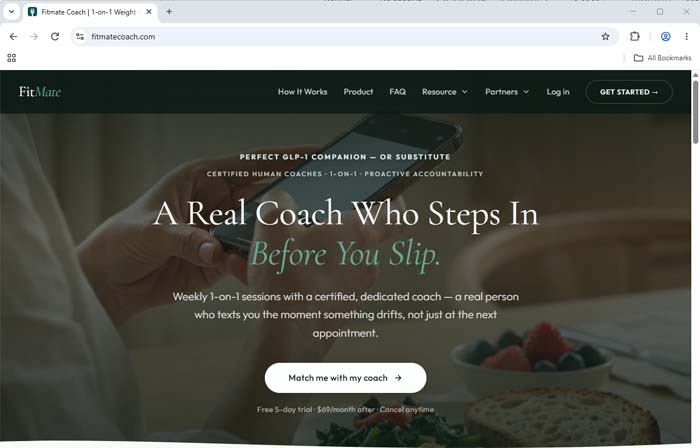
So, it's basically for anyone who wants to both lose weight but also invest in their long-term health as well as other benefits like energy, et cetera, everything we've been talking about. Usually, it's for people above their 30s, but most of our kind of customers are 40s and 50s actually, which is why it's relevant for today. And the reason it's there is because before your 30s, it's like you can get by with so many things, right? You can eat really bad food and just get by by doing tons of sport or whatever. But when life kicks in, metabolism goes down, those choices are less available to you. You've got kids, et cetera. And then specifically with this 4 is that our value add is that we provide you a human coach for support and accountability. But make it affordable via AI. Because not having a human, chances are after 2 or 3 times, like 2 or 3 weeks, you'll stop.
Alon Laniado [00:31:45]:
Having a human is great but expensive. And we wanted to make human coaching more accessible to people. So how do we make that happen? If you only had a human, you'll have a weekly call with someone, will cost you like $300 to $500 a month. which is very expensive. And it's kind of boring to be on an hour on a call with someone telling you about the food. And you miss the call and then you don't do what they said, and then you don't want to show up on the next call to be battered around. So then you cancel the call and then you're like, oh, this is not for me. Right.
Alon Laniado [00:32:17]:
And by the way, it's super expensive. So the way we broke it down is to say, hold on here, what do we really need? So basically what you do is you assign a coach, a certified nutritionist, and then you just take pictures of your meal. know, we've been speaking about that. That's all you need to do, not worry about anything else, and show up for a 15-minute call. Our coach has already, through AI— it's AI who provides to the coach an analysis of what happened in the week so that in 2 minutes the coach can basically figure out what you ate and what one recommendation to do. You remember we spoke about doing one thing at a time. So for example, the AI will spot, listen, Mike Capuzzi, only ate salad— uh, sorry, soup at lunch, and that's why he's overeating at 4 o'clock, right? What we want to do in the 15-minute call is to fix your lunch. One target.
Alon Laniado [00:33:06]:
And next week we'll do something else, right? So the AI allows the call to be very short, okay? And if it's short, more chances you'll show up, and way more affordable. And then in between the weekly session, the AI continuous track whether you've done what you've agreed with your coach, and flags to the coach in case you don't. So if you haven't started increasing your protein at lunch, it will flag to the coach, and the coach would send you a text message saying, hey Mike Capuzzi, what happens? But that again spends— the coach spends less time doing it because AI does the heavy lifting. And as a result, for like less than $100 a month, like something like $80 a month, you can get unlimited coach support with weekly support. So AI gave us a chance to make coaching accessible.
Mike Capuzzi [00:33:56]:
Good for you. I just was interviewing a medical doctor prior to this interview, Alon, and she was— she's older, she's in her 60s, but she was, you know, very, very positive about AI because I wasn't even going to ask that question, but she opened the door. And like many people that I finally— I will ask on this podcast, They're all very positive about AI. Yes, there's we all hear in the news, but just like what you're practically doing, there's a lot of good that can come from it. So that's very cool. How can my audience learn about Fitmate, Alain?
Alon Laniado [00:34:32]:
Just fitmatecoach.com, fitmatecoach.com. Yeah, they go there; they can learn more about it. We provide a lot of resources for free, Mike Capuzzi. So I've published a book pretty much explaining. What you said, and I've open-sourced it all. You know, you can read about it, you can learn many things. We provide a free service for logging your app for a long time. So it's only really if you— so I'm a kind of a bit of a passion founder, so I, you know, I first want to make sure that it's kind of accessible.
Alon Laniado [00:35:02]:
It's only once you need a human coach that you can start using our paid service, but you can get tons, you know, just like that by going on the website, complimentary.
Mike Capuzzi [00:35:11]:
Very good. Is your book on your website, Alain, or is that on Amazon?
Alon Laniado [00:35:14]:
Yeah, I mean, you can order the full book on Amazon. It's called Focus on Fullness, you know, instead of focusing on restriction. Yeah, yeah, focus on fullness. But the summary of my book is also on my website for free. So yeah, very good.
Mike Capuzzi [00:35:29]:
Well, Alain, this is— you and I could talk for quite a while. There's probably a lot more to unpack here. So I might have to bring you back on in the future here. But before we wrap up for today, Alon, I have my Unstoppable After 50 trifecta. It's 3 quick questions, 3 quick answers. So what is one hard truth you think guys over 50 need to hear from you?
Alon Laniado [00:35:51]:
If you don't proactively invest in your nutrition, your health will decline. And you will feel it at some point. over the next 10 years. And, but you can stop that from happening if you actually invest for your future.
Mike Capuzzi [00:36:08]:
What's something you think guys over 50 are doing right now that's quietly wrecking their future?
Alon Laniado [00:36:15]:
Not eating enough fiber kills your guts. You know, many people know about protein, but I really want to emphasize fiber. Fiber is at the core of what your gut needs. Boosts your mood, regulates your blood sugar. So fiber, fiber, fiber. It's a boring word, but it's an important one.
Mike Capuzzi [00:36:35]:
And finally, Alain, what's one thing a guy can do this week to be unstoppable?
Alon Laniado [00:36:42]:
Fix your protein in one meal. Start with breakfast, then go to lunch, then go to dinner. Have a target of protein in one meal. If you achieve that, you'll feel more confident about achieving more later. Don't try to do it all at once.
Mike Capuzzi [00:37:00]:
Well, Alain, thank you very much. I know you're traveling, so I do appreciate your time joining me today and really sharing a lot of very practical insights. Thank you very much.
Alon Laniado [00:37:09]:
Awesome. Lovely having you. And yeah, I'd love to continue this discussion.
Mike Capuzzi [00:37:12]:
Hey, I hope you enjoyed that conversation with Alain. I know I took several, you know, practical ideas away, some things I'm going to need to check for myself. And hopefully you did too. By all means, check out Fit Mate Coach, check out his book Focus on Fullness. And if it's the right thing, you know, reach out to him and see if he can help you. And if you like what I'm doing here with Unstoppable After 50, please make sure you like and subscribe to the show. Go check out the YouTube channel. Appreciate you subscribing there.
Mike Capuzzi [00:37:43]:
And also make sure you check out unstoppable unstoppableafter50.com and sign up for my weekly playbook. Every week I send a recap to my group of men who've asked for it, a PDF that's designed to be printed and saved, and it's a recap of that previous week's episode. So check out unstoppableafter50.com.

 Apple Podcasts
 Spotify
 Amazon Music
 YouTube
 iHeartRadio
 CastBox
 PocketCasts
 Deezer
 Podcast Addict
 Listen Notes
 Podchaser
 Player.fm
 Castro
 Goodpods
 RSS