Mike Capuzzi [00:01:20]:
Deanna, welcome to the show.
Deanna Hansen [00:01:34]:
Thanks, Mike. I'm so excited to be here.
Mike Capuzzi [00:01:36]:
I was looking forward to this because your expertise is about something that I think is— well, I know is relevant to my entire audience, myself included. I really want to unpack what it is and how you serve others with what you do. But before we get started, Deanna, you know, a lot of guys probably have heard of the word fascia, but they really don't know what that means. What is our fascia and why should guys over 50 care about that?
Deanna Hansen [00:02:06]:
Uh, great question. And so I think I have a pretty unique view of the fascia. As much as the world is really waking up to it and research is improving day by day. I've spent over 60,000 hours working in patients with my hands as well as my own body, really tapping into this system and getting a deep feel for what's going on. And so literally, the fascia is the cell membrane of every single cell connected to every other cell. So it's the communication system in your body, and it's comprised of a number of things, but 2 primary proteins: collagen and elastin. The collagen gives you the structural piece so that we don't just turn into a puddle. The elastin allows us mobility, that fluidity that we want.
Deanna Hansen [00:02:48]:
So, when they're in balance, what happens is each and every cell is properly positioned. And, if that's the case, there's optimal space in and around the cell. That allows for ease of flow of nutrients into the cell as well as the removal of debris and waste away from the cell. So, your cells essentially become clean, fed, healthy. And as long as there's flow in the body, we don't really struggle with anything. Unfortunately though, that's nobody's reality, especially as we age and get over a certain point in time, because gravity is constantly pulling us down toward the earth. And trauma— and I don't mean just catastrophic events in your life. Listening to the news is traumatic.
Deanna Hansen [00:03:31]:
Being born is a trauma. Little hits from that sibling that might be trying to tear you down. Those are traumas. What trauma does is it causes us to reactively hold the breath. The deer who survives the attack will shake, releasing that energy to reset their nervous system back to neutral. We as humans though, we go into that hold mode and then we age from that perspective. So as soon as that happens and we're holding the breath, now what's going on in the core of the body, it becomes asymmetrical. If we also don't release it in that moment, it patterns our mind and programs us into believing that's our situation and that's our life.
Deanna Hansen [00:04:11]:
So as an example, I'm just about to finish my new book coming out called TIP, Trauma Induces Programming and Patterning. And I talk about an incident where when I was 2 years old, shame became the lens that I saw my life through. And then your behaviors encompass that and the way you perceive everything encompasses that. So I, I go through the story about how my life was really shaped through that lens of shame. So on top of the programming now, because we're literally off balance in our alignment, the limbs will pattern to keep you upright, to stop you from tipping over. And the extremities, the feet, the hands, and the top of the head, they are the furthest from the diaphragm, that muscle that goes into the reactive freeze response, keeping us locked into the negative pattern. So day after day, as we are being impacted by gravity and unconscious living, we start to spiral down over time. We essentially get shorter and wider.
Deanna Hansen [00:05:08]:
And it's those collagen proteins that will migrate as we're tipping off balance to areas where there's need to create almost like a scaffolding effect in the body so that we don't tip. But the accumulation of those proteins adding up and even adhering to bone will lock you into how you age and how you see life. And so, that's really what's going on with the fascia system. And, my work is all about releasing those areas of adhesion at that bone level that grip and adhere to bone with a force of up to 2,000 pounds per square inch so we can release those proteins, allow them to migrate back to find the balance in the body to support proper cell alignment.
Mike Capuzzi [00:05:51]:
So, you alluded to the fact that this has been your life work. I want you to, at a very high level, Deanna, describe Fluid Isometrics and Block Therapy, because I want the rest of our conversation to kind of overlay the work you do and how it's relevant, in this case, for guys over 50. So if you could, just, can you give a high-level overview of both of those? I don't know what you— is it— I don't know how you service— I don't know, you know, how you refer to it, but I know it's your proprietary system.
Deanna Hansen [00:06:21]:
Yes. So as we age, we compress. That's fascia compression that causes pain, aging, dis-ease, and ultimately death. My work is actually fascia decompression, putting the space back into the body that time has taken away. Fluid Isometrics is the work that I teach other therapists to do for, for the body worker to apply Fluid Isometrics to create fascia decompression with their hands. Block Therapy is the self-care version of fluid isometrics with that same intention of creating fascia decompression.
Mike Capuzzi [00:06:56]:
So probably for today's conversation, block therapy is the more relevant procedures and processes guys could potentially take. And we'll talk more about that. So one of the things, as I was reading through your content, that struck me is that you say that the pain that we often feel— our neck, our hips, our back— the real root is not necessarily where we feel it. Am I, am I getting that right? Quick pause. If you're not getting my Unstoppable After 50 Playbook, you're missing out. Every week I send a 1-page playbook with my key interview takeaways and simple actions to help you stay strong and in control. Get it free each week at unstoppableafter50.com. Now back to the show.
Deanna Hansen [00:07:39]:
Yes. And that was what I was just explaining where the patterning. So the diaphragm, I'm just going to actually bring my camera down so I can just show people the diaphragm and why it's so relevant to health, lifelong breathing properly. So, the diaphragm is a plate of muscle that rests at the base of the rib cage. When it's working properly, when we inhale, it moves down in the body. When we exhale, it lifts. If we're breathing consciously, we are giving this area a continual massage, creating energy for your organs, for your heart and lungs. Now, again, when we have any hit of stress or trauma, we reactively hold the breath.
Deanna Hansen [00:08:18]:
And this becomes the alignment. So now, because we are designed to survive, if I'm not breathing diaphragmatically, I'm going to start using those secondary muscles for respiration, the muscles of the upper chest. This comes with a lot of issues because first of all, when we have that proper alignment in our core for the breath to work, what we're doing is we're pulling the air to the base of the lungs, which is where the majority of the oxygen receptor sites reside. We can feed the body up to 6 times the oxygen when breathing diaphragmatically. So, people that are caught in that upper chest breath, they're basically starving their body. And, we're built to thrive. And, for a body that's thriving, your toe cell is as important as your heart or your brain cell or anything else. But, from a perspective of survival, the body is intelligent.
Deanna Hansen [00:09:07]:
It's going to direct that energy to where we need to survive. So, That's what ultimately aging is looking like. It's, it's seeing how the body over time is losing the oxygen. And like a balloon that's fully blown up that defies gravity, that glows— take half the air out of that balloon, it wrinkles. You get dirt and debris caught in the creases, and it becomes heavy. So if we're not diaphragmatic breathers lifelong, our cells start to lose that integrity. They start to deflate. They start to accumulate dirt and debris.
Deanna Hansen [00:09:38]:
And now that surface membrane doesn't have as much surface area for the absorption of nutrients into the cell, as well as the removal of waste and debris away from the cell. So, then we end up having what we see as normal aspects of aging, aches coming in, maybe we start getting disease in the body, maybe we are becoming shorter and wider, and it's harder to maintain the size and shape that we once had. Our face is going to start to undergo— I mean, when we see a wrinkled face, it's kind of like that same example of the wrinkly balloon. So, getting back to proper diaphragmatic breathing helps to restore sending oxygen to all of the cells. And, the cell, like us, if we're starved for oxygen within 5 minutes, we die. If your cells aren't getting proper amounts of oxygen, they start shutting off. So, we want the body to be appropriately fed so that those cells that are working so hard on our behalf don't struggle. And, the first thing they're going to say is, okay, here's a pain signal.
Deanna Hansen [00:10:33]:
Mom or dad, you're not giving me the space or what I need to thrive for you. So we look at these signals, whether it's pain or whether we feel we have anxiety or whatever negative thing that we're feeling, it's really coming from the cell communicating. So the body will lock in that negative alignment again at the limbs, because as those collagen proteins are migrating to keep us upright, the limbs, the feet, the hands, the top of the head, they're the furthest from the diaphragm, from the engine. So they start shutting down and we pattern. So now your feet, they've actually shown that longevity and toe strength are directly connected. So if you don't have feet that are awake and alive and part of the equation of how you're conscious in your balance and your movement, then they start moving away from balance. And I always say there's one side that acts like a flat tire. And for most people it's that right side.
Deanna Hansen [00:11:29]:
So think of driving your car, that right front tire getting flat. You're going to have to fight the steering wheel to not get pulled over to that system. Same with the body, but this is an unconscious response. So we start, we're right-handed or left-handed, we're dominant on one side. So right off the hop, we're asymmetrical, plus we have the patterning from trauma. Now it gets locked into the feet. One side pulls away, the other side anchors to stop you from tipping over. So now we have feet that aren't properly aligned and it's creating twisting and torsion and chaos up the chain.
Deanna Hansen [00:12:00]:
And wherever those collagen proteins had to migrate to create stability to stop us from tipping over, now we have a slower system, a system that has less flow. So that's part of the reason why it's so important to regain proper diaphragmatic breathing so we can feed the body appropriately. But also in 2014, they proved that 84% of weight loss comes through proper exhalation. I'm 56 now, actually I'm 57 in a week and a half. But in my 20s, when I was going through my athletic therapy training, I was doing all the work. I was dieting like crazy. I was working out like a fiend. And the harder I was working, the more compressed, the more ballooned, and the more toxic I became.
Deanna Hansen [00:12:41]:
I was 50 pounds overweight. I started doing yoga around the time that this whole thing started for me, and I had this wonderful teacher. And every 30, 45 seconds, she would remind us to breathe. Every time she did, I was like, wow, I'm holding my breath. So, I recognized very strongly that having that lack of breath is such a key for what is going on in my body. And, I was so excited when James Nestor brought out The Breath book because he goes into such a deep dive into all the things I'd been sharing for years and most importantly that we need to increase the carbon dioxide in the body through proper exhalation and making that the more predominant phase of the breath than the inhalation. Because the carbon dioxide is the currency for the oxygen to leave the hemoglobin and get into the cell, which is where we want it to be to allow our cells to thrive. So, when we get locked at the extremities, we need to understand how to release those adhesions there to bring your body back into balance to regain the core alignment to really support that diaphragmatic breath.
Mike Capuzzi [00:13:43]:
Well, first of all, that was a great book, by the way. That book had an effect on me. and how I exercise and really consciously try to breathe better. Here's what's really crazy, Deanna. I was just having a conversation with my 84-year-old dad yesterday. He lives by himself and he really, I mean, he's had some health issues. He fell a couple of years ago. So he's had some challenges, but he's, you know, mentally he's there and he, he still tries to work out and walk every day.
Mike Capuzzi [00:14:10]:
And he has been practicing for the last couple of weeks. Diaphragmatic breathing because he saw a YouTube video and he said it would help with his blood pressure. And we had this long conversation just 24 hours ago about this, and it was funny because I have practiced it off and on. He was really trying to encourage me to be more consistent with it. But I said to him, "Isn't it crazy how something as simple as breathing and sitting still for five, ten, fifteen minutes and just." focusing on breathing, which is what he's trying to do, is so difficult. So I want to ask you about why that is, because, you know, you can work out, you can run, you could be whatever, bike, whatever it is, lift weights, and that's, that's work, right? That's stress. But sitting for some reason is such— for, you know, a few minutes and just practicing breathing. Let's step back, describe, and maybe another demonstration might help.
Mike Capuzzi [00:15:09]:
He's doing a 4-2-6 Diaphragmatic breathing. I don't know if that's something you recognize or not, but regardless, can you describe in higher detail what that means and maybe give an example of a simple practice that guys could do?
Deanna Hansen [00:15:26]:
So, first of all, if you have a frozen shoulder, like some people have a frozen shoulder and they can't move the shoulder at all. Other people, they might have like 90 degrees range. But either way, if you have a frozen shoulder, you can't access all ranges of that movement because it's locked with scar tissue and adhesion. So again, when trauma hits us— I'm going to pull my screen down again just to show— when trauma hits us and we go through that reaction, if we don't let that go, the collagen, those proteins, will also form around the rib cage, locking you in with a 2,000-pound per square inch force. So to start from here and attempt to bring this muscle online requires the release of those adhesions, which is what my work is about— fascia decompression. So for so many people, they're trying to get this muscle to work, but like that frozen shoulder, you can't force it because forcing it is only going to create more issue, more pain. So there's a lot of frustration around breathing techniques because the diaphragm is locked. So for example, if you have Hamstring that's tight and you try stretching.
Deanna Hansen [00:16:36]:
What you're going to be doing with stretching is keeping available the length that you have. With the work that I teach, we release the adhesions from the bone to create more tissue to lengthen. So similarly, we always start core and rib cage with my work, with all of my programs, because most importantly, we want to get people breathing differently than they were prior to that one moment. And every single thing that we do, whatever focus of the body that we're dealing with, we always start in the belly position. So, I'm just going to again bring the screen down just to show people. So, this is the tool and we lie on it. This is made of wood and I'll explain that in a moment. But when you lie on this and then you focus on inhaling into the tool, we spend a minimum of 3 minutes in each position because Pressure in an area over time creates heat.
Deanna Hansen [00:17:29]:
When you turn on your diaphragm, it's like your body's furnace. If you're breathing through the muscles of the upper chest, it's like a space heater. I live here in Winnipeg. It can be sometimes -35, -40. If I have a space heater in my apartment, I can heat one room. If you turn on the building's furnace, you can heat the entire building. And we need to keep flow, and for flow, we need a certain temperature. So your diaphragm, when it's working properly, it optimizes flow— blood flow, lymph flow, nerve flow, energy flow.
Deanna Hansen [00:18:01]:
If our diaphragm is compromised, we are lacking inflow. It's like trying to start the car in Winnipeg when it's -30. It might not even start, where if you just try to start it in the summer, it starts with ease and you keep going. So that's the importance of really understanding this muscle and how to keep it activated. So that's the reason why so many people trying to do breathwork are struggling, because also when that muscle contracts, it pulls us in a forward rotation. Energy moves in waves and spirals. There's no straight lines in nature. So we don't just compress linearly, we spiral down over time, and then we get locked in that forward alignment.
Deanna Hansen [00:18:38]:
So for people, most people can sit up straight for a minute, but as soon as they're not conscious of holding that, they fall right back into those negative patterns because That is what that alignment has done. And the heaviness of that grip onto bone pulls you forward. It literally tips you off balance. And that's why it's so important to understand from that full body perspective, where are those roots gripping to, manipulating our alignment, impacting flow to and from cells?
Mike Capuzzi [00:19:06]:
So how does that, how does diaphragmatic breathing, is the exercise with the wooden block, is that just because I want to make sure my audience connects the dots. With block therapy, now that's where the block comes from.
Deanna Hansen [00:19:19]:
Yep.
Mike Capuzzi [00:19:20]:
What does that look like? Can you kind of describe— let's talk about block therapy. So let's— what does that look like? Maybe not— if you can demonstrate, great, or describe however, but what does that, you know, what does that entail?
Deanna Hansen [00:19:32]:
So first of all, our tools. I've got the Block Buddy and the Block Baby. Uh, the big one is for people over 5 feet. The little one is for people under 5 feet. But having both is beautiful because everybody is different size and shape. So, the reason that we make the tools shaped the way that they are is because we are moving deeply through the layers of fascia to get to the bone at the root, which is why the tools are made of wood. Bone and wood are similar in density. If you have like a fascia roller, for example, and you're rolling, you're going to be stimulating surface layers to improve blood flow.
Deanna Hansen [00:20:09]:
But those collagen proteins grip to bone with that 2,000-pound per square inch seal. So when we're working with the block and we work head to toe and everywhere in between, we are positioned in whatever posture we're doing for, again, a minimum of 3 minutes. So pressure over time creates heat. So when I was back in my 20s and I was working out like crazy, what would happen is I would come home from a 5-mile run dripping wet with sweat. but my belly would still feel cold. And that was where I stored most of my size and shape. So I hated that area. I never touched it.
Deanna Hansen [00:20:47]:
So I'm having this panic attack in my 20s, and this was really the seed of my whole understanding to come. In the moment, I thought I was going to die because I was so frozen in fear. I couldn't find my breath. For some reason, I intuitively dove my hand into my belly, and the first thing I encountered was pain. But it brought me out of my anxiety and it brought me back into my body, and I recognized, no, you're breathing, you're safe. Then I started intuitively exploring with my hands in the tissue. Now, prior to that, as an athletic therapist, I always focused on deep tissue work. So I was very aware of what scar tissue felt like in people's bodies.
Deanna Hansen [00:21:18]:
Now I'm working in the space of my own body that I never touched because I hated it. And I'm feeling it's marbled with scar tissue, even though I hadn't had any injury or surgery in that space. And suddenly I recognized, well, no wonder when I'm working out, no, none of this tissue is being mobilized. There's no blood or energy getting into that tissue. So after the first evening of me working intuitively for 30, 45 minutes, I felt calm, which was not my normal. Woke up the next day, still felt a little tender, but was in my body. I was excited to go home and do the work again that next evening. And after the second time, when I stood up, I felt taller.
Deanna Hansen [00:21:55]:
And I went and I looked at myself in the mirror and my belly was flatter than it had looked in years. Now I was doing 400 sit-ups a day, Tae Bo, aerobics, running, weights, like all of it. I was doing whatever I could to try to force my body to look the way I wanted it to look. And the harder that I worked, the more compressed, the more ballooned, the more toxic I became. So for— in just 2 days to see such a remarkable change in the size, that excited me immensely. So now every time I would come home from work, I would work on my own body. And within 2 weeks, my chronic low back pain was going away, my neck pain was improving, but But most importantly, I felt like I had finally some control over my body, which gave me a huge sense of hope. Then I started working on my patients on their back, and that became Fluid Isometrics.
Deanna Hansen [00:22:40]:
But long after that, I was like, I really want to teach self-care. So that's how Block Therapy came into being. So the combination of pressure over time on the surface combined with turning on your body's furnace, we become incredibly efficient at heating on the outside as well as the inside to melt through the adhesions so that we can get to the root at the bone.
Mike Capuzzi [00:23:03]:
I've done some fascia release with some injured joints. So I know the rollers and all that. I'm familiar with that. This is new to me. If a guy is listening to this, are there certain criteria he's got to meet, or are there certain things going on in his life to make him want to explore this further? Deanna, like, who, who should be looking into this further as a potential solution?
Deanna Hansen [00:23:33]:
If you had a Ferrari on your driveway, would you hand the keys over to a 10-year-old?
Mike Capuzzi [00:23:39]:
No.
Deanna Hansen [00:23:40]:
Okay, so we were gifted this container for our soul to reside in for this life, yet nobody gave us instructions on how to drive it the best way we possibly can. And everybody, if they want to live a long, healthy life, needs to be diving in and understanding fascia. Because yes, the breath, the most basic function, has been impaired because of trauma. Being born is traumatic. If your mother, while you're developing in the womb, had a really healthy, wonderful, supported, relaxed life, that baby's going to come out very differently than the mother who's stressed, not looking after herself, not supported, like all of those things. So trauma even happens before we're born depending on this, the environment that we're developing in. So we all have trauma, and this world is just highly traumatic anyways. I mean, like, the stuff that's going on is crazy.
Deanna Hansen [00:24:35]:
So we're all dealing with this breath that is compromised. So now our cells aren't getting properly fed and clean, and that adds up over time. So We have the ability to adapt when we're younger. And as we age, there's less and less and less space to adapt. And then we break, or we suddenly have that chronic pain that seemed to come out of nowhere, but it was because now the body doesn't have any more space to adapt. Like, think if you're going to go and play a game of golf and your shoulder's a little bit sore, but not sore enough that it doesn't let you play, you're going to unconsciously create compensation so you can play the sport. And then that will add up to a point where suddenly it's like, oh, now my shoulder's a mess and now I can't play the sport. So it's, it's like that.
Deanna Hansen [00:25:21]:
We, we are so adaptable, which is a wonderful blessing, but it's also a curse because we don't— we ignore the pain. Plus we're also taught to mask pain, whether taking meds to mask it or again posturally avoiding it, where if we actually understand pain is the baby crying, you don't ignore the baby crying. You deal with the baby when it's crying. Your cells are giving you a signal. It's like your cell is saying, hey, mom or dad, please pay attention to me. You're asking me to run a marathon, but yet you're starving me, you're crushing me, you're dehydrating me, and yet you expect me to perform for you. So when we don't understand how to look after our cell, we can't look after this container. So everybody, if they wanna live their best life possible, really should look into fascia and what we need to drive this container the best way we can.
Mike Capuzzi [00:26:12]:
So, can you give me a clearer picture? Because I'm still not clear on what a block therapy— again, I know what it's like to do a strength training routine. I know what it's like to do a cardio routine. Can you just—
Deanna Hansen [00:26:21]:
I can show you one. I can show you a position. So, I'll preface this by saying because of that trauma and us collapsing, what happens as an example is the shoulder blades start to migrate. So, if my shoulders are properly aligned as I'm sitting here, As I start falling out of alignment, they migrate, and then they will grip and adhere to the ribs, locking you into that negative alignment. So, if you have an issue with shoulder mobility, part of it is because your rib cage isn't aligned to support optimal movement. So, as an example, a position that we do is the upper side rib position. So, here's the block. I want to be around that height where the shoulder blade hits.
Deanna Hansen [00:27:01]:
And I'm going to spend 3 minutes here. And while I'm here, I'm going to focus on proper breath. So inhaling, belly gets big. Exhaling, we squeeze the belly small, which is counterintuitive because so many people are holding their belly in, forcing that upper chest breath. But as you're lying here, those initial sensations very shortly start to change. So if pain is that initial sensation, pressure overrides pain. So as I'm here, And time is adding up. Now that pain starts to dissipate as I sink more deeply.
Deanna Hansen [00:27:33]:
So now I want to search for pain. So I might do that by opening up the area, by lifting that arm up, holding, all the while focusing on that proper breath. And the rule— and there's only 2 rules in Block Therapy— is your breath is your guide. As long as you're breathing in a relaxed way, you're feeding and healing the area. If anything hurts so much that it causes the breath to be stressed, that's your body saying, I don't feel safe doing this. So we don't want to do that because that's not going to serve you. As soon as you hold the breath, you turn off the energy movement, the blood movement, the lymph movement, all of those things. So we want to ensure that the breath is how you guide the work.
Deanna Hansen [00:28:15]:
The second rule is we stay a minimum of 3 minutes in each position. Now we're still searching and we're looking, but we're not moving on the surface. So that we can, instead of taking a boat on the ocean, it's like we're deep sea diving through the layers to get to the root. And then after 3 minutes, and what I always do is whenever I teach this one thing, I'll always have people do a range of motion with your shoulder before, do that position, check it later. We're not working directly in the shoulder. We're working at one of the many cause sites that are locking the shoulder out of alignment. And pretty much always— You've got better range of motion, better quality of movement.
Mike Capuzzi [00:28:51]:
If a guy's hearing this and maybe he doesn't have, maybe he's a fortunate minority where he doesn't have any specific issues, shoulder issues, ankle, knee, whatever it might be, but he's interested in general health and wellness and he likes what you're saying here. What does a block, like what does adding block therapy look like for that guy? Is it every day, once a week? Like, what is it? Just, can you kind of give a high-level overview of what it would look like and how many movements are there, et cetera?
Deanna Hansen [00:29:25]:
So it's a therapy, an exercise, and a meditation all built into one. So first of all, you're getting so much with this. Typically, people that join my program, they call themselves blockaholics because you become addicted Very quickly to how you feel when we start opening up the core and the rib cage, and your breath becomes stronger. And we teach you exhaling for a count of six, inhaling for a count of four through the movements. You turn on the parasympathetic nervous system. Most people are in sympathetic 100% of their time, even sleeping. We never get into that rest and repair mode. We should be in parasympathetic 80% of our day.
Deanna Hansen [00:30:07]:
And in order to do that, we have to get the diaphragm moving. That connects the vagus nerve, which puts us into that healing space. space. So no matter what— and first of all, everybody, everybody experiences something not positive because we are all flogged with gravity and toxins. So whether it be pain or anxiety or skin issues or aging, all of those things come to fascia decompression. That's what aging is. It's we compress over time. So we put the space back into the body that time has taken away to restore proper alignment.
Deanna Hansen [00:30:40]:
And if we're properly aligned, Now my muscles don't have to hurt. Let's say you're walking a 120-pound dog and it's really well trained. You've got the leash in the right hand and you're walking. There's no tugging on your body. But if you've got a dog that's wild and pulling you, so you don't land on your face, the opposite side of the body is going to contract to keep you upright. This is what's happening over time with that negative patterning, because we are going through the slow version of a tip. And then the opposite side of the body is always countering that force. So then we'll have one side that typically stores more pain.
Deanna Hansen [00:31:15]:
And for a lot of people, it can be the left side of the back because whether it's the shoulder, neck, upper back, low back, all of those muscles are trying to counter that pull from that right side. So that impacts as well. If people have had emotional issues, the emotion also gets stuck and stored in the body. That's that programming piece. So again, for me, Seeing my life through the lens of shame, it took a while to reprogram my brain and not see this physical body of mine as something wrong, dirty, bad, right? Like, it took, it took a while to get there. So, that's how involved the fascia is because when we have a system where our nervous system is regulated and where our cells are properly aligned, there's no tugging. There's no need for muscles to, to become tight. But, that's nobody's reality because we're all dealing with life here.
Mike Capuzzi [00:32:09]:
Are you doing this every day? Is it something you do?
Deanna Hansen [00:32:12]:
Optimally, yeah. Is it really?
Mike Capuzzi [00:32:14]:
And, how long a day, Deanna, just out of curiosity?
Deanna Hansen [00:32:16]:
Well, even just doing the one exercise of teaching yourself how to breathe. And so, similar to what I shared with the upper chest position, you lie on the block right on the belly button and for 3 minutes, you focus on inhaling into the block and then taking a longer time to exhale. that puts the space back into here because when I compress this way, I'm going to balloon. So, as we get older, we think, oh, we've got this spare tire, harder to deal with. It's not accumulated fat, it's compression and ballooning. So, because we're dealing full body, my programs cover the full body. Most people in my community, they will block 30 minutes a day. And that again takes care of the nervous system, it repositions the body.
Deanna Hansen [00:33:02]:
That combined with maybe a 3 to 5 to 15-minute alignment training, that's really the key to keeping your muscles strong, to keeping your body fluid and flexible, and to keeping your nervous system calm so that you can handle the stresses of life so differently. So do— I always say, like, if you had, whether it's 15 minutes a day or once a week for an hour or 90 minutes, 15 minutes a day is going to be more beneficial because it's all about changing habits. We've learned to breathe habitually through the muscles of the upper chest. We've learned to use our body more on one side than another, which is creating these negative patterns. And it takes a while to retrain proper habits. So in the beginning, especially if people make a commitment, then they start to not recognize the commitment as something they have to do, but something they want to do. And then other things end up falling off because now you, don't need to necessarily go as frequently to other people to look after your body because now you're looking after it. And, even going to the gym, it's really like we think that we need to train these muscles to be strong.
Deanna Hansen [00:34:07]:
What we need to do is make sure that the muscle cells are getting oxygen because that's what gives the cell the energy to do its job. And so, so many things change as people dive in. But again, even that 5 or 3-minute breathing, if that's all you do, Again, it changes your parasympathetic nervous system. It gives you more energy. It allows you to feel more peaceful and calm within. And then from there, people tend to continue on.
Mike Capuzzi [00:34:33]:
So it leads me to the next logical question, which is, how can my audience learn more about Block Therapy? I mean, is it a book they buy? Is it, you said, a community? Describe it.
Deanna Hansen [00:34:42]:
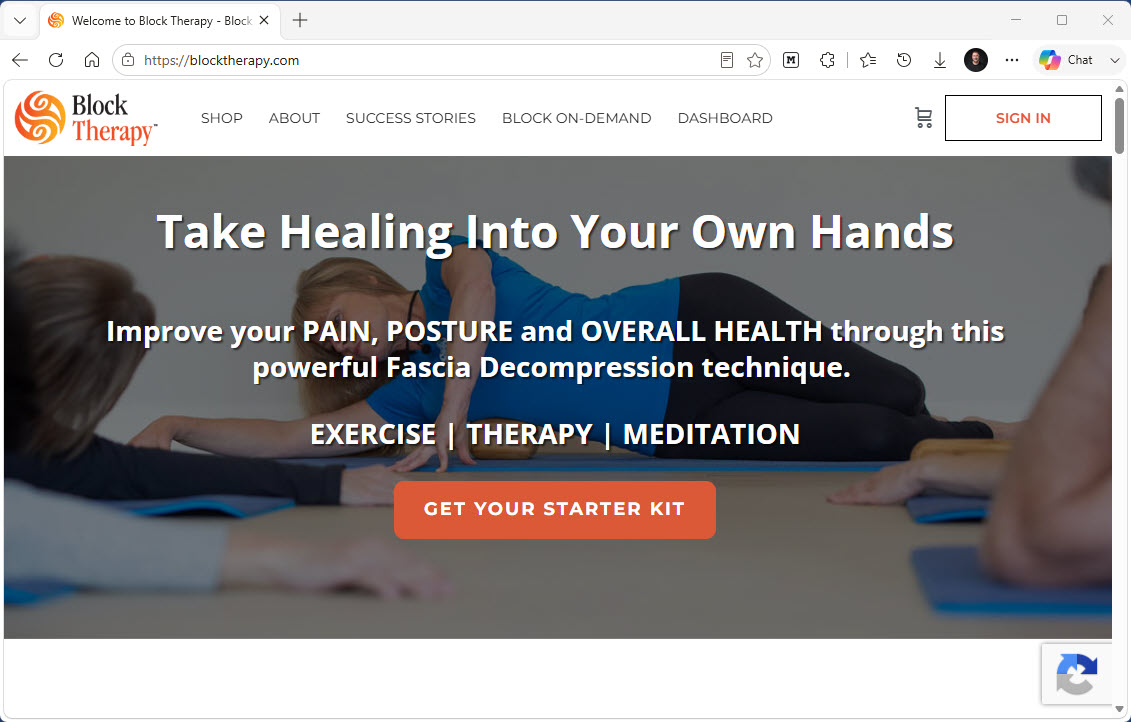
A couple different things. My website is blocktherapy.com. On my YouTube channel, which if you just look up Block Therapy, you'll find me, we have probably hundreds of hours of free content teaching people how to navigate this work. And using a rolled-up towel is what we teach people that don't have the tools to get a feel. Works really well. So even if people go to the YouTube channel and just look at some of the things that we're sharing, they're going to get a sense of what's going on. But ultimately, we have a starter program, and that's where we want people to start. And it comes with either the 1 or the 2 blocks.
Deanna Hansen [00:35:15]:
I always recommend, if you can afford to, Get both because you're going to want both. Again, they're different sizes and shapes, and there's certain positions where no matter your size or shape, one block might feel better than the other. We also have a lot of double blocking classes in my membership. People end up traveling. Having the small one is great to travel with. So again, that's where we always recommend people to start.
Mike Capuzzi [00:35:41]:
Very good. And just again, the book that you're working on that's going to be released soon, is that a consumer book or is that more for the professional?
Deanna Hansen [00:35:49]:
It's a consumer book. I haven't quite decided yet how that's going to get rolled out. I really just want everybody to have the information. So, it's just so important. And then, the information leads you into the understanding of why fascia decompression is so important to live a long healthy life.
Mike Capuzzi [00:36:05]:
Okay. So, blocktherapy.com.
Deanna Hansen [00:36:07]:
Starter program.
Mike Capuzzi [00:36:08]:
Is there anywhere else they should try to find you?
Deanna Hansen [00:36:10]:
Actually, probably one of my favorite places is I have a private Facebook community called Block Therapy Community. We have almost 25,000 members in there. I've got 2 moderators. But it's so supportive. So let's say you have MS or Parkinson's or fibromyalgia, or you've had chronic pain for 30 years, or you have anything and everything. If you ask the question there, you're going to have my community answering based on their experiences with what you're sharing. Because I don't have Parkinson's, so I mean, I know how this benefits Parkinson's, but to have the person with it sharing how it helped them is amazing. And one of my favorite people I love to refer people to is Walter Kells.
Deanna Hansen [00:36:47]:
He started this journey with me at the age of 73. He is now one of my instructors. He's just about to turn 76. He has gotten so much younger. Can I just quickly show you here what he sent me, uh, a couple days ago? We just finished a challenge, and he's always up for every challenge. It's amazing. But for anybody that doesn't believe whether or not you can start to grow your hair back, Here was the before picture is 2 years ago. The after picture was just sent.
Mike Capuzzi [00:37:19]:
Wow.
Deanna Hansen [00:37:22]:
There.
Mike Capuzzi [00:37:23]:
Amazing.
Deanna Hansen [00:37:24]:
Yeah. So, you can start at any age. It's for anybody and everybody that wants to do it. You can do it on a bed, you can do it on a floor, you can be an elite athlete or you can be bedridden and it's accessible to all of us.
Mike Capuzzi [00:37:36]:
Wow. Well, Deanna, thank you very much. Very, very eye-opening, very, you know, It's, it's obviously, it's not a topic I think in my case a lot of guys are probably familiar with. And we, you know, we, we default more to the weightlifting, the cardio, maybe the dieting if we're lucky. So thank you very much. Um, highly encourage, you know, my audience to go check out blocktherapy.com, your program, etc. Before we leave, I have my Unstoppable After 50 trifecta. It's 3 quick questions, 3 quick Deanna, what is one cold hard truth guys over 50 need to hear from you?
Deanna Hansen [00:38:13]:
So, we are like a building. And, if we have a foundation that is not solid, everything up the chain is impacted. So, if you're over 50 and you stand like a duck, that's going to impact blood flow to the pelvis and it will be harder to fill in the blanks.
Mike Capuzzi [00:38:30]:
First time I've heard that. What do you think is—
Deanna Hansen [00:38:34]:
Everything's blood flow. If you don't have blood flow there— Yeah, that's going to be an issue, but that's going to be the foundational reason from an alignment perspective, right?
Mike Capuzzi [00:38:44]:
What is something most men are doing right now that's quietly wrecking their future?
Deanna Hansen [00:38:50]:
Believing that weights are the answer for strength. You can combine doing weight training, but when we're doing that, we are getting— the idea is that you want to have a hard body. The hard body lacks flow. Over time, that adds up because we become less adaptable over time. So as we get older and older and older, if we keep doing weight training, we keep reinforcing those negative patterns on purpose. So at least combining weight training with some sense of putting the space back into the body that time has taken away will again change the outcome of how you feel as you age.
Mike Capuzzi [00:39:29]:
And finally, Deanna, what's one thing every guy listening or watching right now can do this week to remain unstoppable?
Deanna Hansen [00:39:38]:
What I'm going to share is the work I share between the toes. Because again, toe strength and longevity, they've now shown a direct connection to. And, as we start to pattern negatively, the toes start to become offline kind of like the diaphragm and the rest of the body. But, if we don't have toes that are participating for balance and mobility, Then we are letting gravity take the wheel. So what every person can do, and I've got videos on my YouTube with this as well, working between the toes. So if you put your finger or a pencil between your toe and you press deeply enough to feel some discomfort, the pain, as your breath allows, spending that 3 minutes is going to create more space between the toes. So if your toes are like curled or you've got bunions or you've got hammer toes or whatever, Your toes aren't working for you. So we want to release those tension between— that tension between the toes and strengthen them so that now you have them to balance and to be mobile.
Deanna Hansen [00:40:34]:
That is going to help bring your center of gravity onto your heels. We should have 60% of our body weight on our heels. The average person has 80% or more on the balls of their feet. That's causing you to tip forward and it's causing those adhesions to accumulate in your feet. We want to pump up the tires. So So that releasing the toes and then standing and focusing on gripping the toes into the floor with 10 slow breaths, it's like now you've released the tire from that negative alignment and now you're pumping it up so you can start walking with a spring in your step. So I would highly recommend, and the people that do it, they're blown away by the changes. And you can start that right away and it's free.
Mike Capuzzi [00:41:12]:
Yeah, yeah, for sure. Well, Deanna, again, thank you very much. Congratulations on the upcoming book and appreciate all that you shared today.
Deanna Hansen [00:41:19]:
Thank you so much, Mike. It was a pleasure.
Mike Capuzzi [00:41:21]:
Well, I hope you found that interview with Deanna Hansen interesting and eye-opening. I think the very fact that she was able to demonstrate some of what she teaches others was helpful. As a matter of fact, I had a, a little bit longer conversation off camera with her about some of my physical challenges with some of my joints and fascia issues. So again, very eye-opening. I personally need to to explore block therapy a little bit further and see, you know, if it can help me. So by all means, check out blocktherapy.com and check out, you know, her YouTube channel. And if you like what I'm doing here with Unstoppable After 50, please make sure you like and subscribe to the show. Go check out the YouTube channel, appreciate you subscribing there.
Mike Capuzzi [00:42:05]:
And also make sure you check out unstoppableafter50.com and sign up for my weekly playbook. Every week I send a recap to my group of men who've asked for it, a PDF that's designed to be printed and saved, and it's a recap of that previous week's episode. So check out unstoppableafter50.com.


 Apple Podcasts
 Spotify
 Amazon Music
 YouTube
 iHeartRadio
 CastBox
 PocketCasts
 Deezer
 Podcast Addict
 Listen Notes
 Podchaser
 Player.fm
 Castro
 Goodpods
 RSS